Head + controller. No chiller.
All you need to start production. No chiller beside the machine and no water lines to route through its frame.

- Head
- Controller
Other companies
- Head
- Controller
- Chiller
- Water loop
A passively air-cooled laser head, based on a patented design developed together with FTMC. The architecture of a LITILIT laser changes how it integrates, what it costs to run and how far a system can scale.
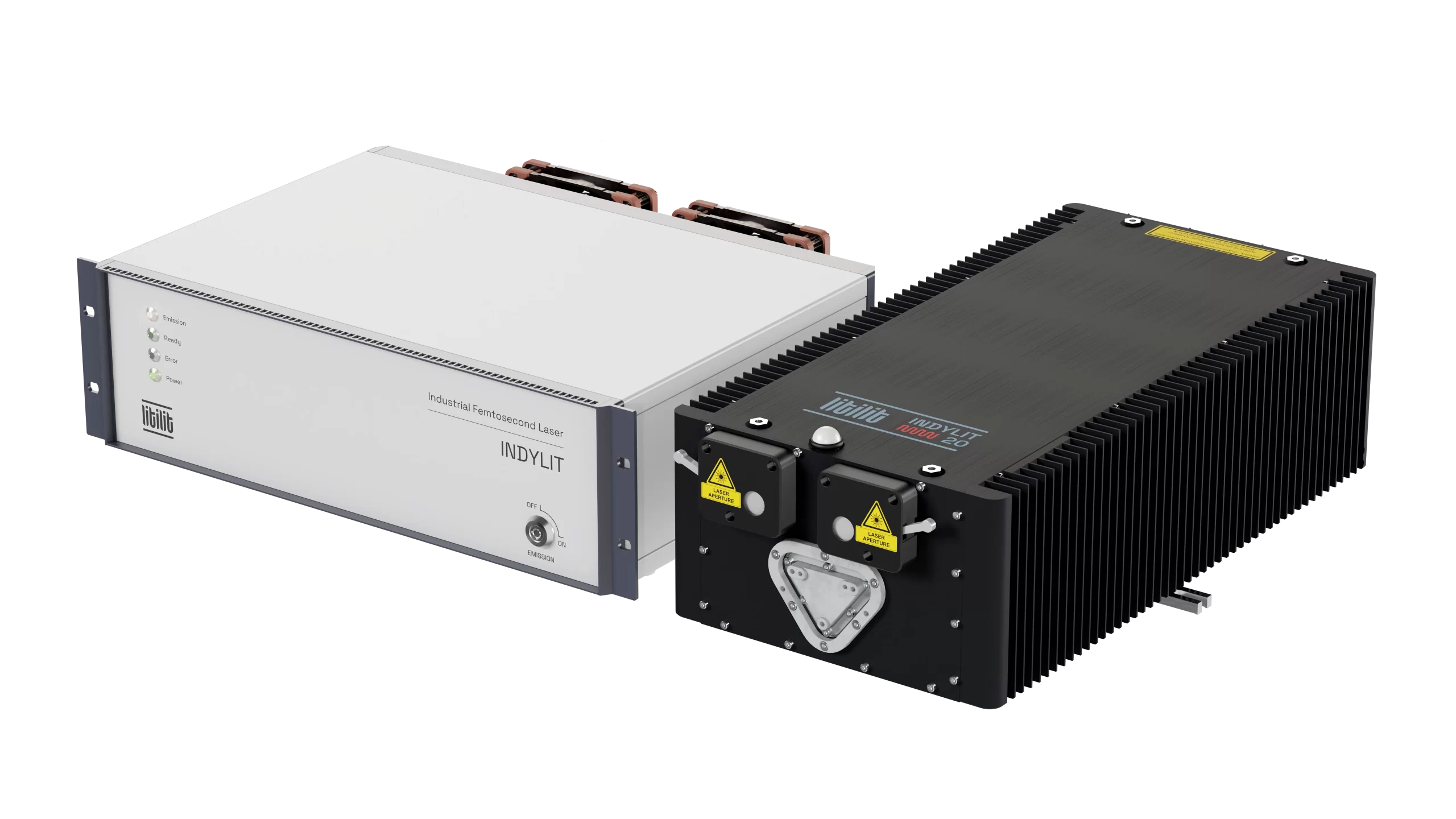
All you need to start production. No chiller beside the machine and no water lines to route through its frame.
0
Passive air cooling. Nothing to plumb, top up or leak inside the machine. Water coldplate available as an option.
17 L
Compact enough to mount on the machine's motion axis.
482 × 248 × 143 mm
1 → N
Add laser heads, not a bigger laser. Heads are air-cooled as standard; water cooling is available if a layout needs it.
Linear and matrix configurations · for machine builders
Shock-tolerant
Knock on the laser housing while it runs: the output power stays stable.
Flexible fibre
The fibre is folded while the laser runs, and the output power stays stable.
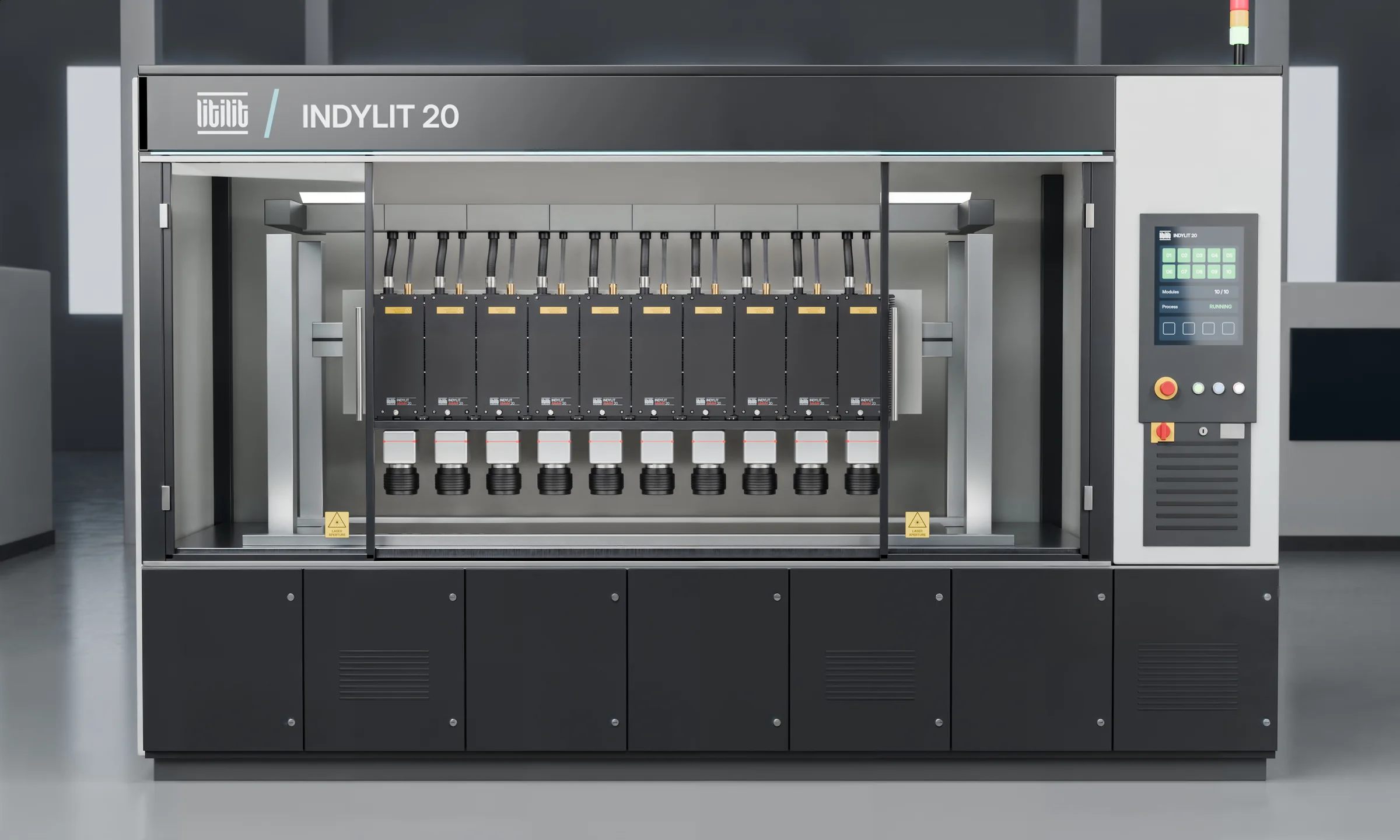
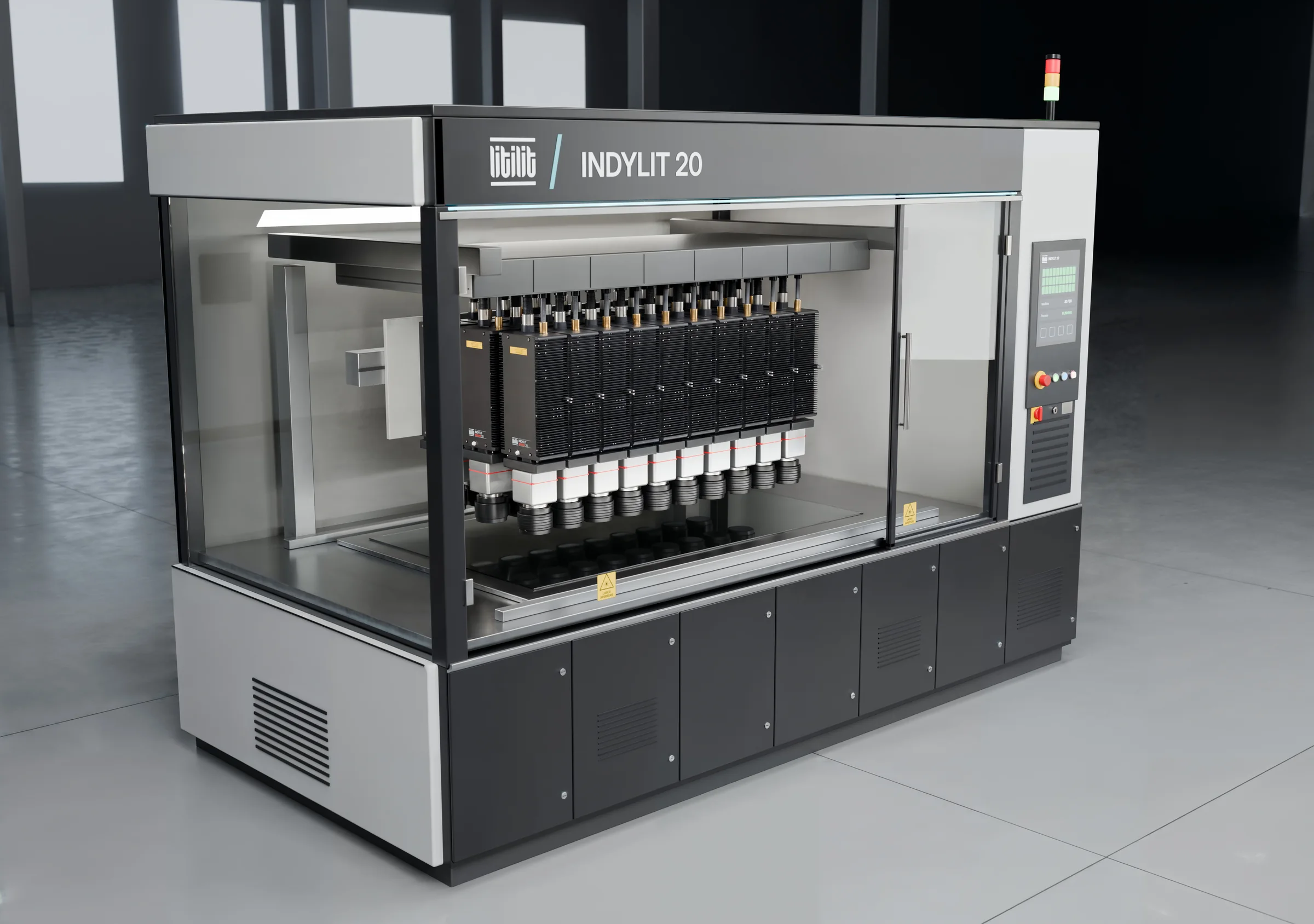
Because each laser head is compact, several can be joined into one system that processes a larger area in a single pass. Throughput grows by adding lasers, not by building a bigger one. The images are concept illustrations of possible layouts.
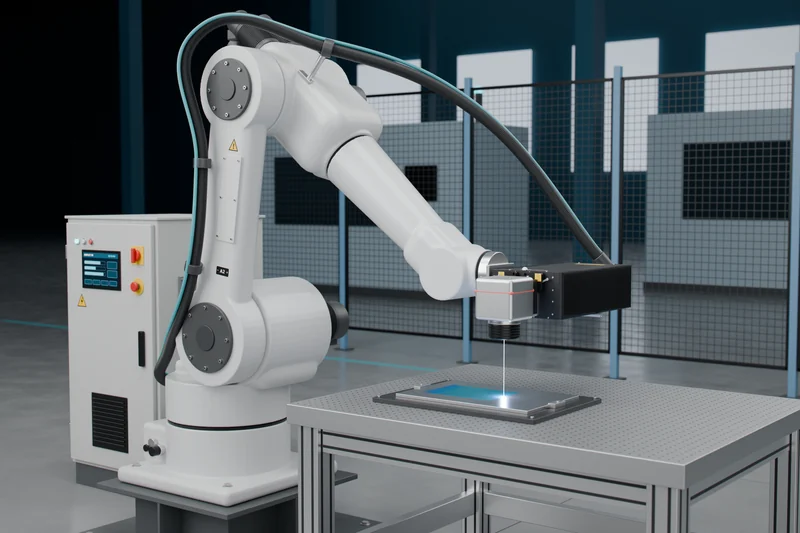
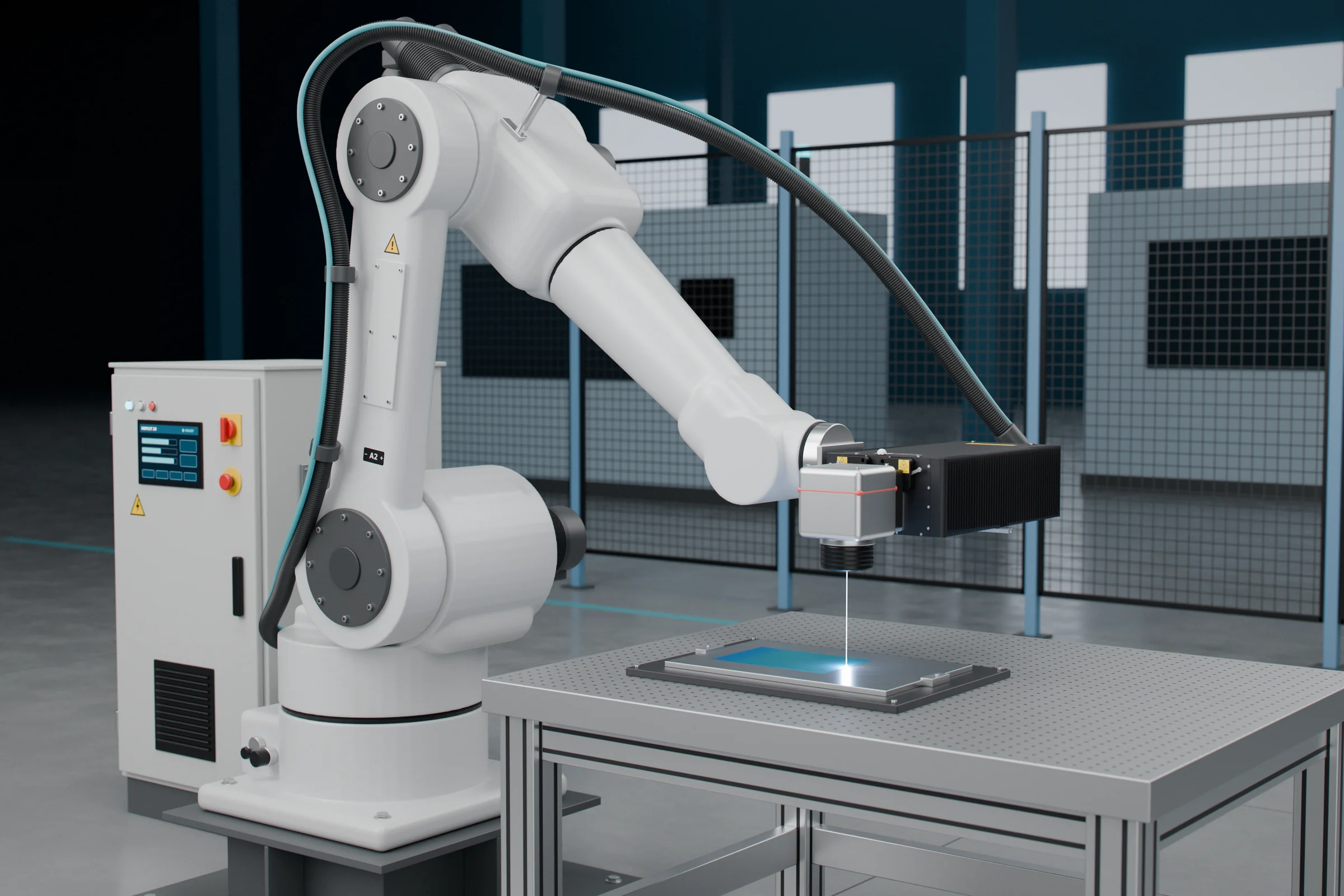
Small and self-cooling, so a single head rides on a robot arm or fits inside a machine tool.
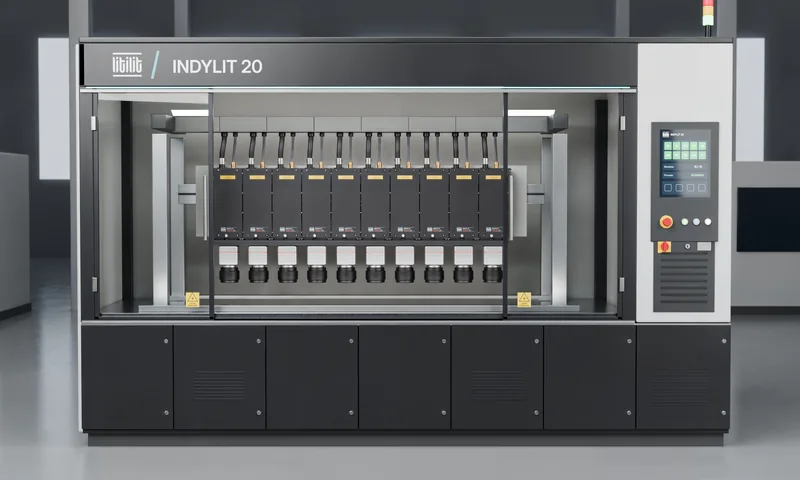
Compact heads can be mounted side by side in one machine. Shown here: ten in a line.
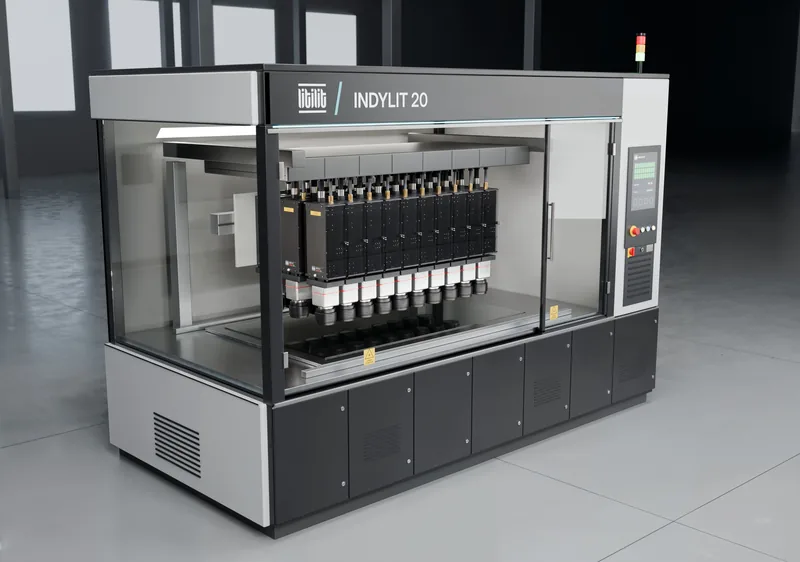
Three rows of ten: thirty heads can work as one matrix and cover a wider area in a single pass. Discuss the layout with an engineer before you design the machine around it.
Talk to an engineerFor machine builders who put LITILIT lasers into their own systems: engineering support during integration and a supplier that can follow your volumes.
Evaluate
Our application engineers review your material, process and machine, and suggest a laser and configuration before you commit.
Integrate
Drawings, STEP models, the control command reference and an engineer who works with your team on the first machines.
Scale
Agreed lead times, volume pricing and long-term availability, from a Vilnius plant built for up to 3,000 lasers a year.
WHY FEMTOSECOND
A nanosecond pulse lasts long enough for heat to spread, so the material around the cut melts and cracks. A femtosecond pulse is tens of thousands of times shorter: the material is removed before significant heat can spread. The result is clean edges with minimal cracking, melting or discolouration, from display glass to medical parts.

Tell us about the system, the volumes and the timeline. An engineer will walk through the integration with your team.