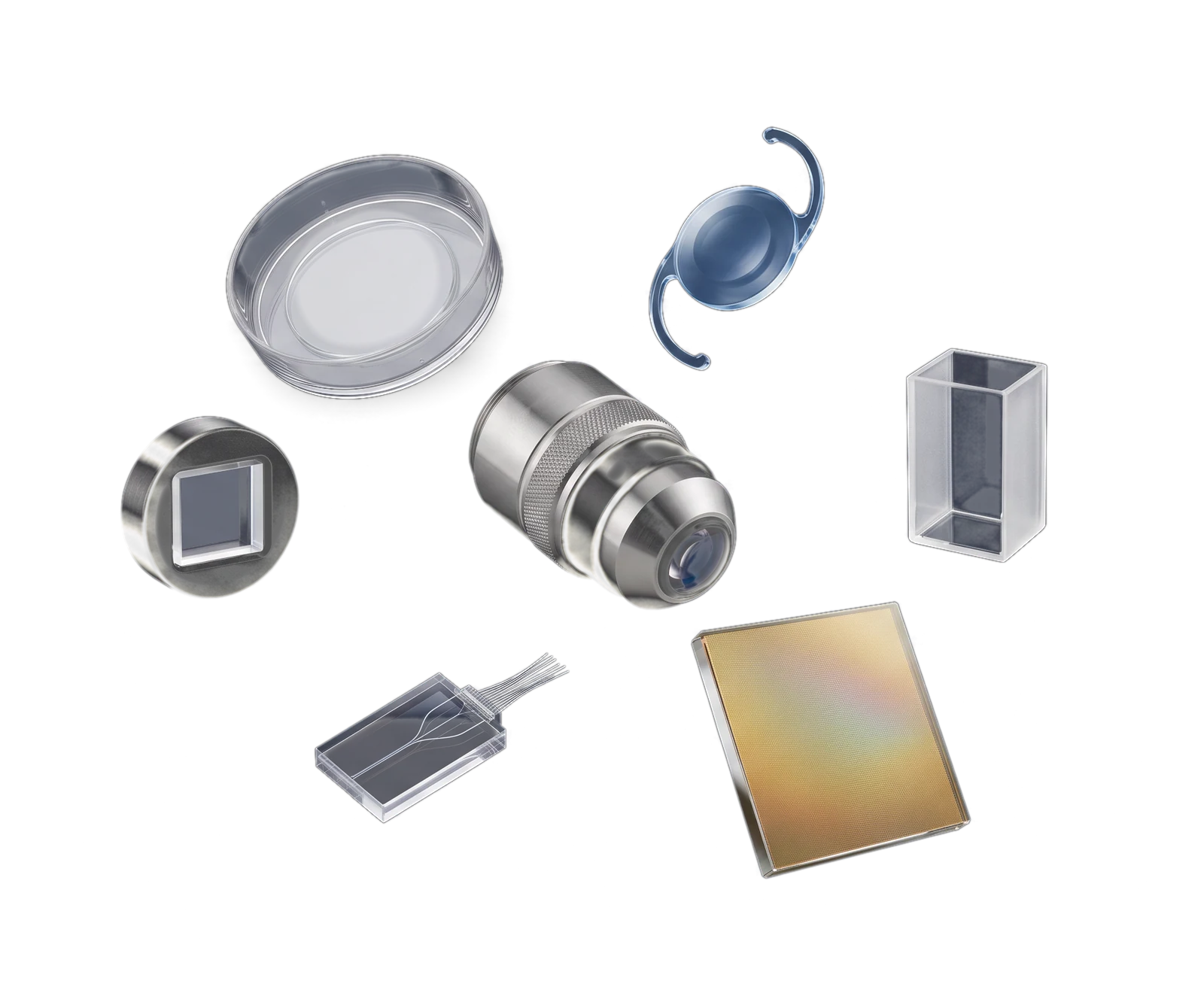
Multiphoton microscopy, two-photon polymerisation, ophthalmic research, photonics and spectroscopy. Short, clean and stable femtosecond pulses from a compact, air-cooled source that fits next to the instrument.
Where femtosecond pulses work in research and biomedicine, from imaging and 3D microfabrication to photonics and spectroscopy.
Multiphoton microscopy
Two-photon microscopy images deep into living tissue with near-infrared light. Short, clean pulses raise the signal for the same average power, which means brighter images and less heat in the sample. A compact, air-cooled source also fits next to the microscope without a chiller or water loop.
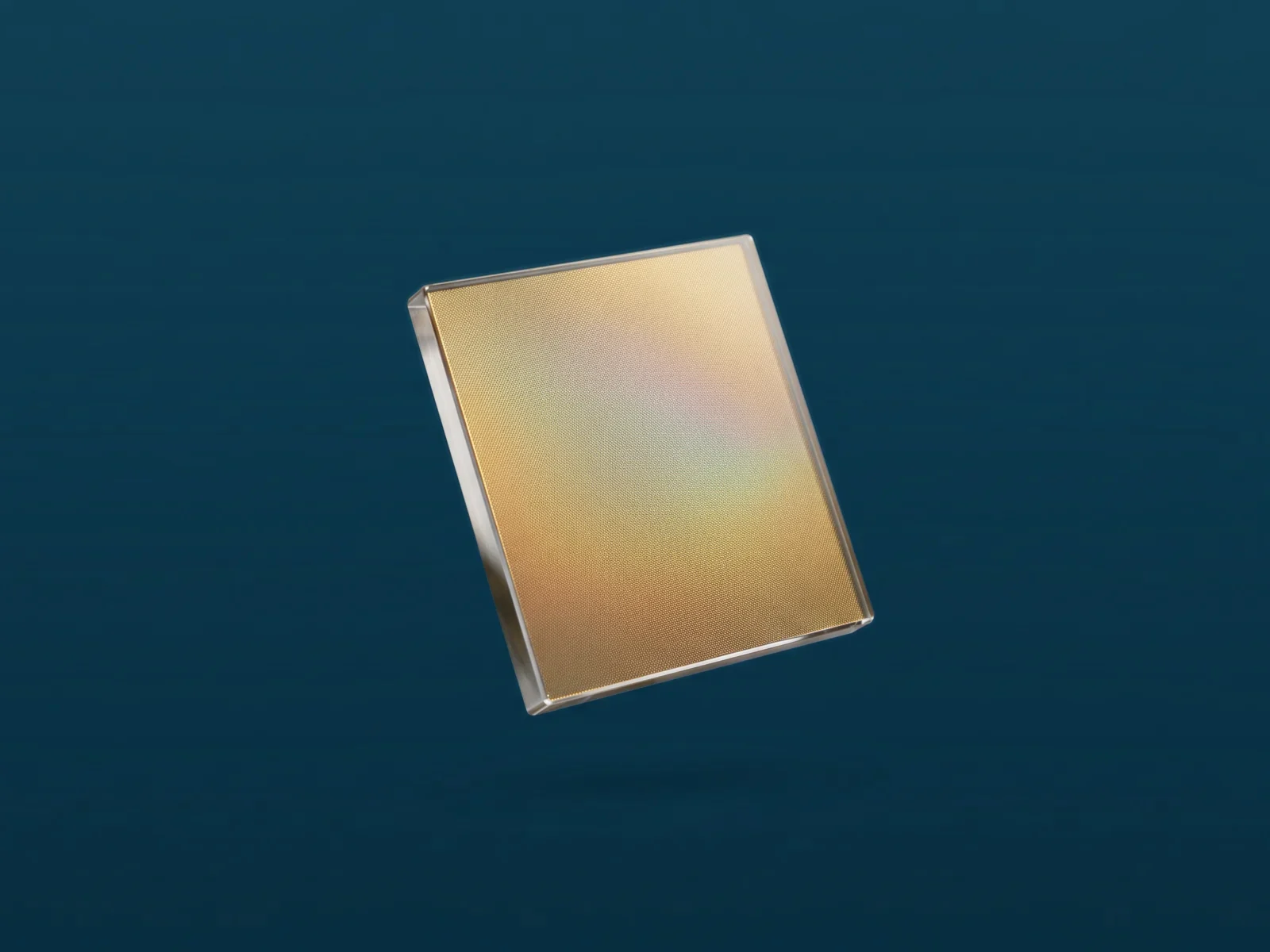
Two-photon polymerisation writes true 3D structures inside a photoresist, voxel by voxel, with features below a micrometre. It is used for micro-lenses, gratings, scaffolds for cell growth and other parts that no mould or mask can make.
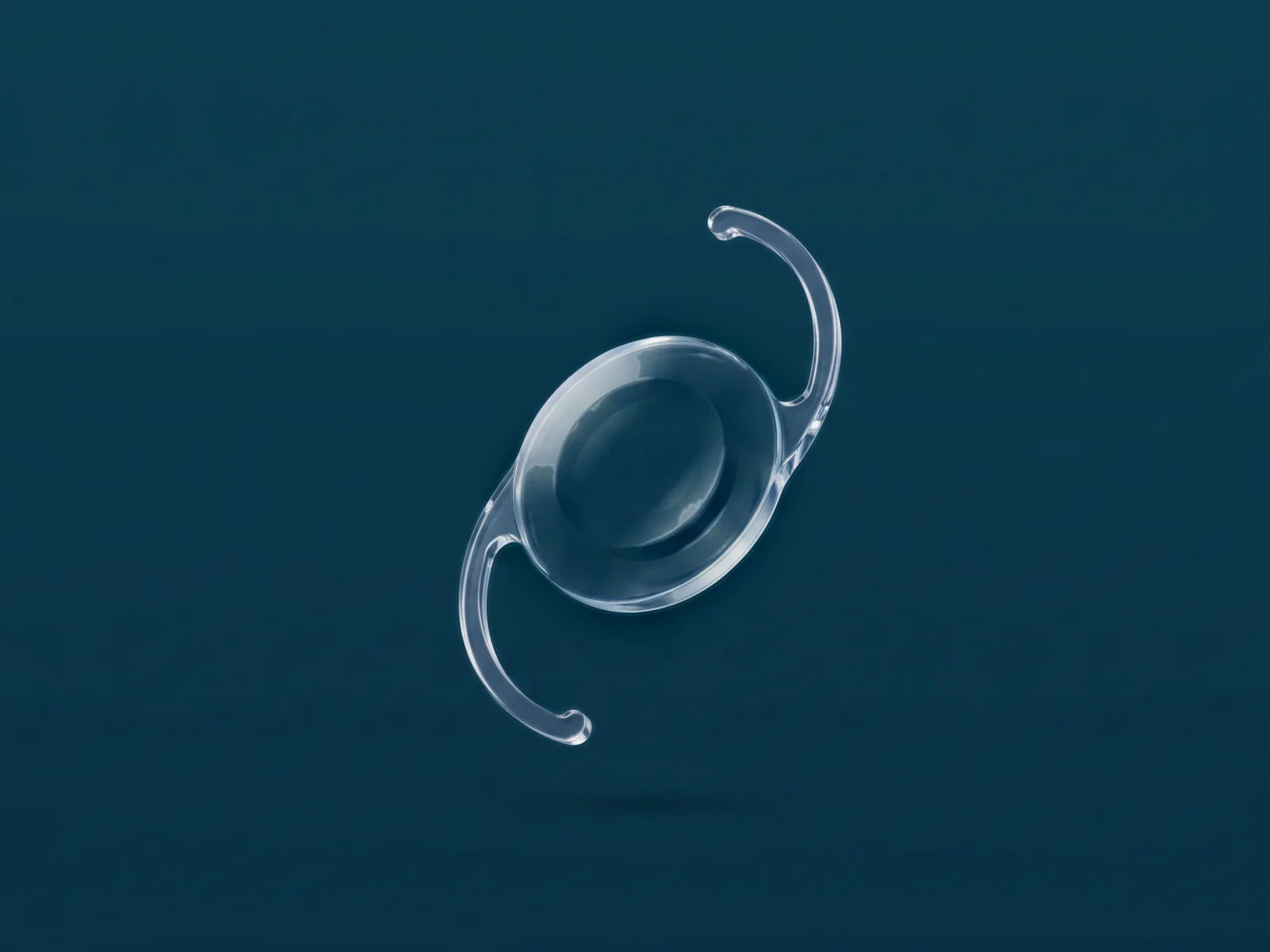
In research setups, femtosecond pulses image eye tissue by multiphoton microscopy and change the refractive index of lens materials with little heat. Research groups use them to study eye tissue and to develop new intraocular and contact lens materials.
Application
Eye-tissue imaging, refractive index changes in lens materials
Repeatable results need a source you can trust to stay put.
Imaging sessions, 3D prints and pump-probe scans only compare when the source does not drift. Any change in power or pulse duration shows up in the data.
Drift and downtime cost measurements
Research and biomedical setups run for hours, and a drifting source wastes samples and invalidates comparisons. Bulky lasers with water loops add vibration, heat and service visits to a bench that has no room for them.
What the process needs
Short pulses with stable energy over long runs
A compact, quiet source that fits the instrument
Wavelength and repetition rate matched to the sample
Repeatable results and long-term availability for validation
Ultrashort pulses, low thermal load
Femtosecond pulses deliver peak power for multiphoton excitation and photopolymerisation while keeping average power, and heat in the sample, low. A compact, air-cooled head keeps the beam path short and the alignment stable.
Cell biology and nanosurgery
Focused femtosecond pulses can cut a single axon, open a cell membrane for a moment to load DNA or drugs, or remove one cell with minimal effect on its neighbours. The effect stays inside the focal volume, so the rest of the sample stays largely unaffected.
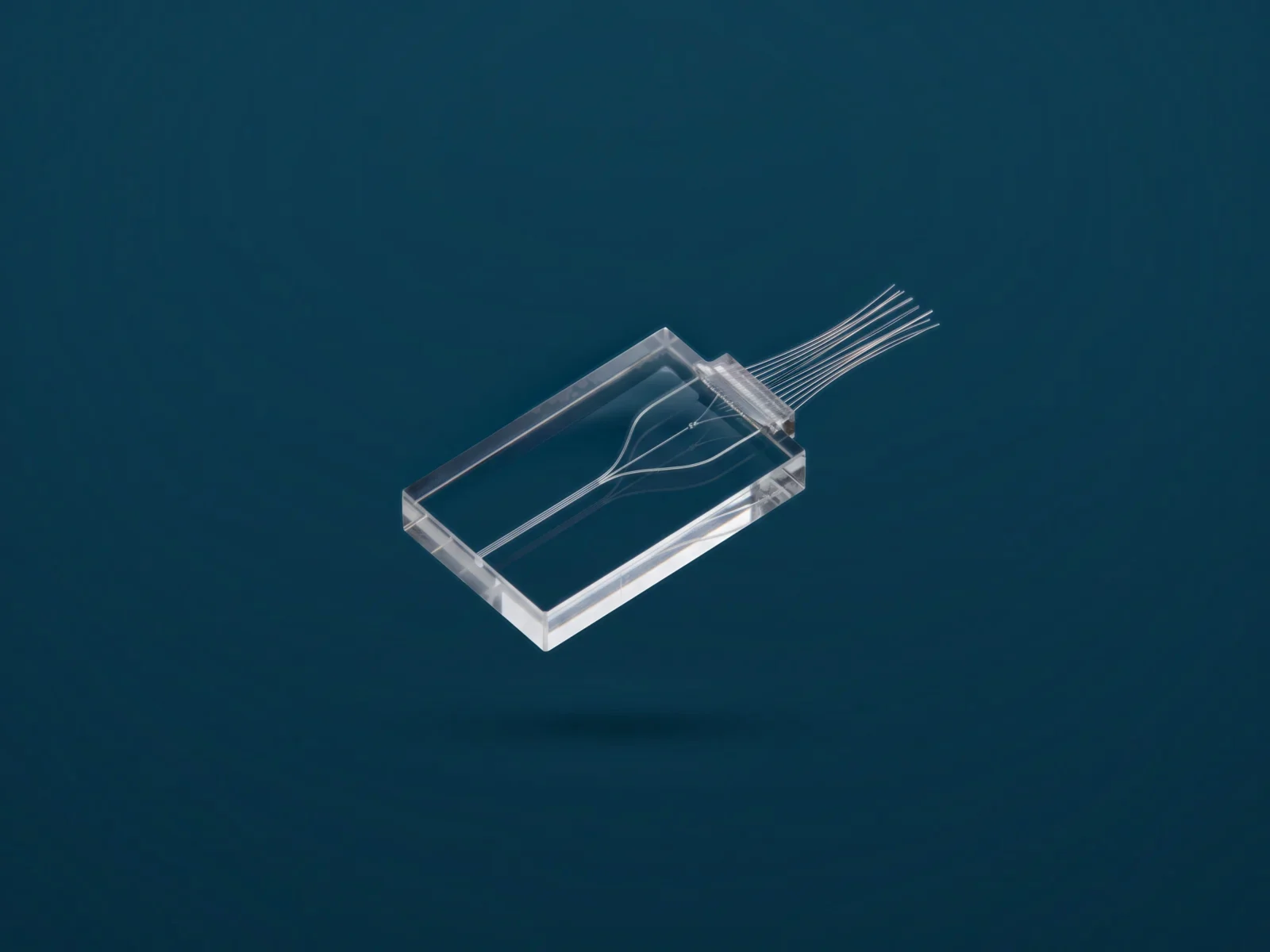
Focused inside glass, femtosecond pulses write waveguides, couplers and channels in three dimensions. Research labs use this to build photonic chips, fibre-to-chip couplers and lab-on-chip devices in a single piece of glass, without cleanroom lithography.
Nonlinear spectroscopy, pump-probe experiments and optical parametric amplifiers need short, stable pulses with enough energy per pulse. A clean pulse with low noise keeps measurements comparable from one day to the next.
Fits into microscopes, imaging heads and OEM instrument housings.
Passive air cooling
The Indylit 10 laser head is passively air-cooled. No chiller or water loop near the sample.
Stable pulse energy
Stable output keeps images and structures comparable from one run to the next.
Simple integration
CAN and USB control for lab software and instrument controllers.
Femtosecond sources for research compared.
Research labs choose between tunable systems and fixed-wavelength lasers. The right choice depends on how many wavelengths you need and how much time you want to spend on the laser instead of the experiment.
Tunable Ti:sapphire oscillator
Wide tuning range; large, needs a pump laser, chiller and regular alignment
Optical parametric oscillator
Reaches longer wavelengths; complex, needs a pump source
Water-cooled fibre laser
Fixed wavelength, robust; needs a chiller near the setup
Passively air-cooled femtosecond laser
Fixed wavelength, turn-key and compact; no chiller, no water, little maintenance
The laser for research setups.
Short, clean pulses and stable power in a compact, passively air-cooled head.
Why does pulse duration matter for multiphoton imaging?
Multiphoton signal grows with peak power. At the same average power, shorter pulses give a higher peak power and so a brighter image, or the same image with less light and less heat in the sample.
What is dispersion pre-compensation?
The glass in a microscope stretches a femtosecond pulse before it reaches the sample. Pre-compensation stretches the pulse the opposite way at the laser, so it arrives at the focus short again.
Which wavelength suits multiphoton microscopy?
Near-infrared light around 1030–1050 nm excites red-shifted fluorescent proteins and dyes and penetrates deeper into tissue than shorter wavelengths, with less scattering. Biolit 2 works at 1050 nm.
What is two-photon polymerisation?
A focused femtosecond beam hardens a photoresist only where two photons are absorbed at once, in a tiny volume at the focus. Moving the focus through the resist prints a 3D structure with features below one micrometre.
Can a femtosecond laser be built into an instrument?
Yes. A compact, passively air-cooled head with CAN and USB control fits into microscopes and OEM instruments. There is no chiller to place, no water to route and little to maintain over the life of the instrument.
Which LITILIT laser fits research and biomedicine?
Biolit 2 is built for multiphoton microscopy and biophotonics: over 2 W at 1050 nm, pulses under 70 fs at 20 MHz, with dispersion pre-compensation. Indylit 10 covers most other research setups: 10 W at 1030 nm, 380 fs pulses, 80 kHz – 1.6 MHz, passively air-cooled. Indylit 20 suits experiments that need more energy per pulse.
How does buying a laser work?
Tell us your material, process and volume. An application engineer reviews your request and suggests a laser and configuration. You then receive a quotation with pricing, lead time, payment and support terms.
Describe your instrument or experiment. Our engineers suggest a laser and configuration, and we send a quotation with pricing, lead time and support terms.