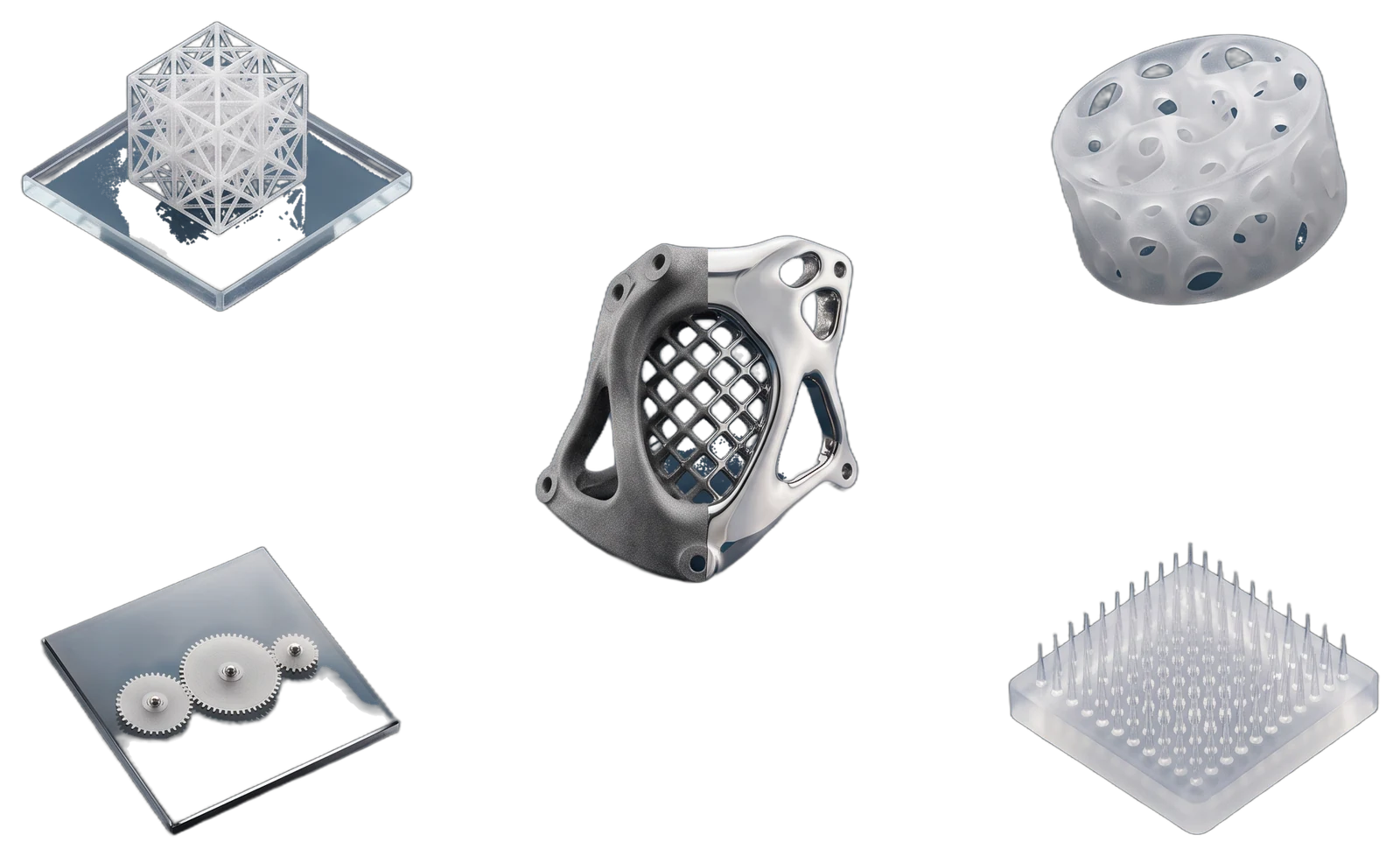
Two-photon polymerisation of micro-optics, micro-mechanics, microneedles and cell scaffolds, and femtosecond finishing of metal 3D-printed parts. True 3D structures with features below a micrometre, written straight from the CAD file.
Key applications, from micro-optics to metal parts.
Where femtosecond lasers work in additive manufacturing, from two-photon polymerisation of micro-optics, micro-mechanics, microneedles and scaffolds to finishing of printed metal parts.
Two-photon polymerisation
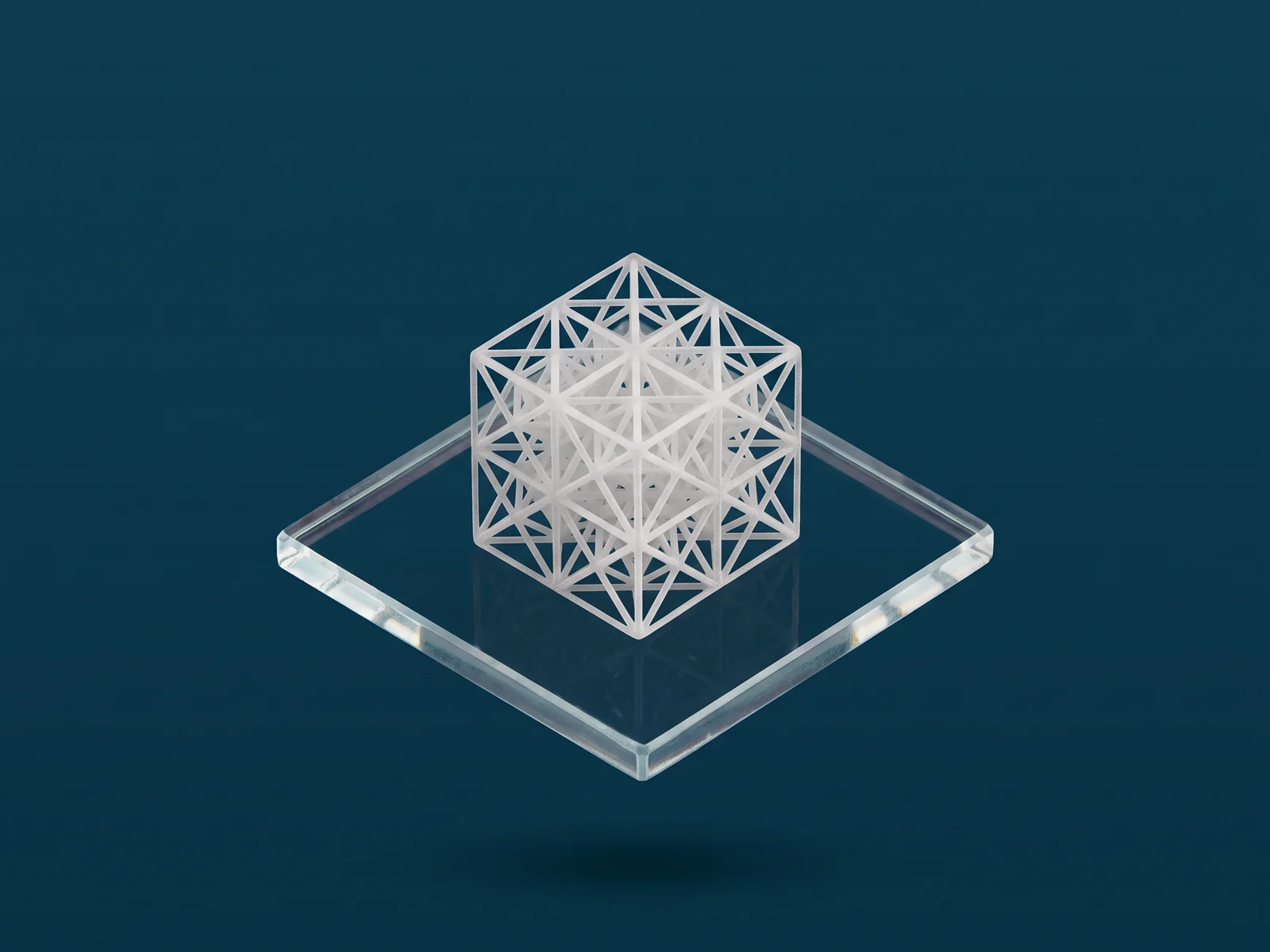
Two-photon polymerisation cures a photoresist only in the tiny focal volume, so true 3D structures are written voxel by voxel inside the resin, with features below a micrometre. Lattices and micro-parts that conventional printing methods cannot make come out in one step.
Micro-lenses, lens arrays, diffractive elements and fibre-tip optics are printed directly onto chips, fibres or glass. The shape is defined in software, so free-form optics need no mould or master.
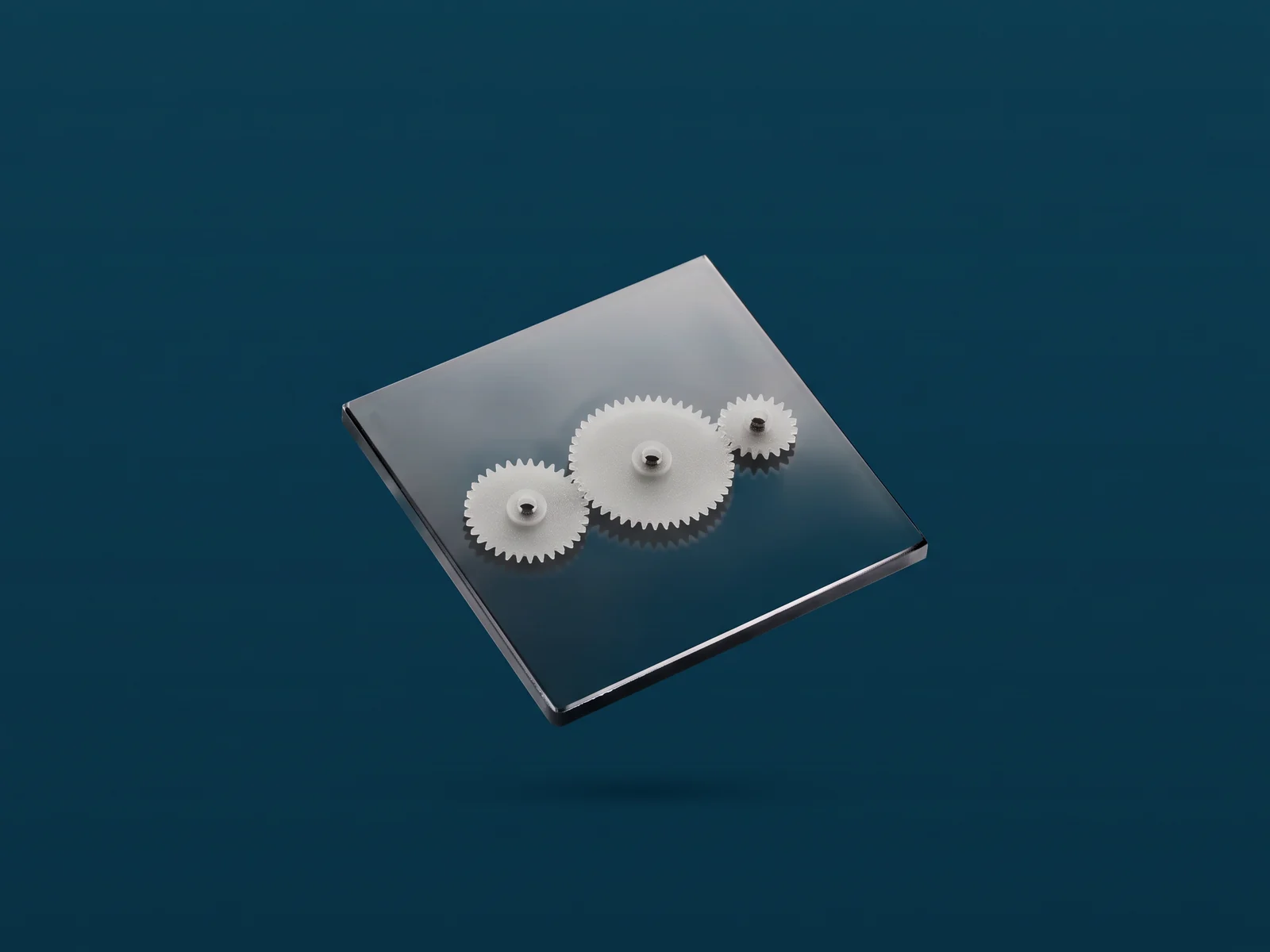
Gears, springs, grippers and other moving micro-parts are printed in place, sometimes already assembled. Feature sizes below what moulding and micro-machining can reach make new micro-mechanisms possible.
Many micro-parts need true 3D shapes at the micrometre scale: optics, lattices, scaffolds, needles. Moulding needs a master for every design, lithography builds only in layers, and conventional 3D printers stop at tens of micrometres.
Conventional methods stop at the micro scale
Moulding and embossing need a master for every design. Lithography builds structures layer by layer in 2.5D. Extrusion and resin printers reach tens of micrometres at best. None of them makes free-form 3D structures with sub-micrometre detail.
What the process needs
True 3D shapes, not stacked layers
Features below a micrometre
Design changes without new masters
Printing directly on chips, fibres and glass
Print with light, voxel by voxel
A femtosecond pulse focused inside a photoresist cures it only where the intensity is high enough for two-photon absorption. Moving the focus through the resin writes the part directly in 3D, from the CAD file.
Microneedles
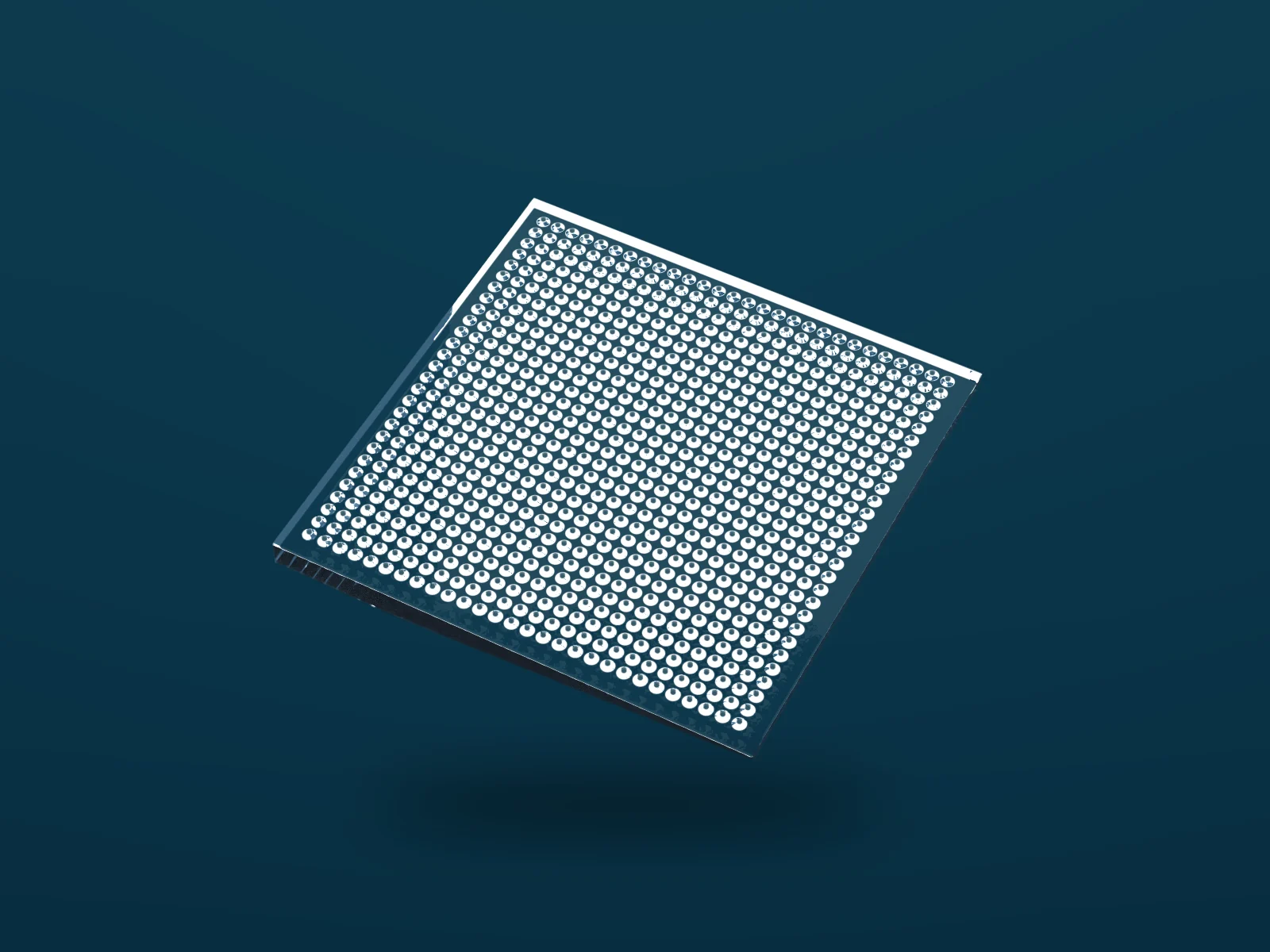
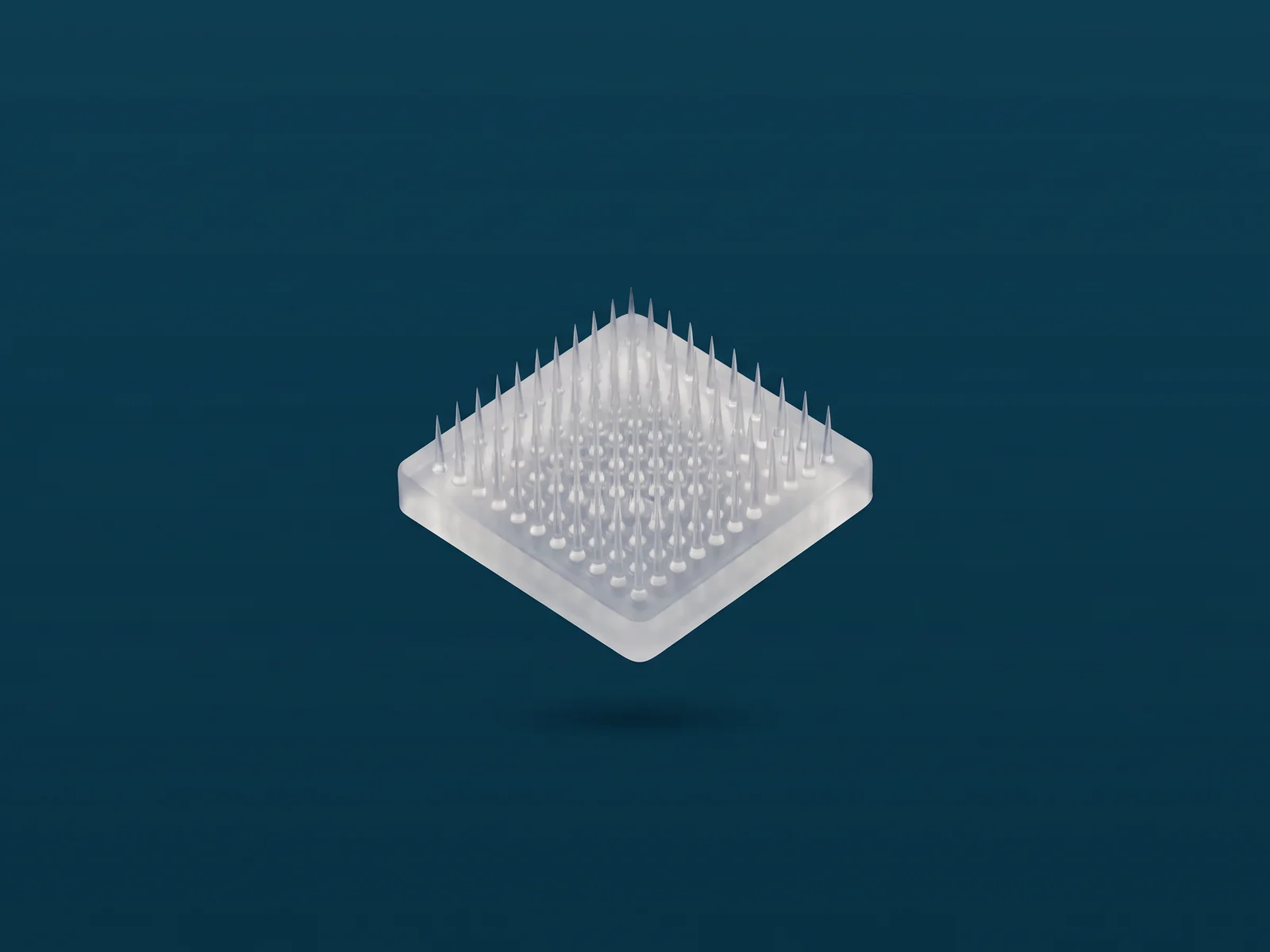
Microneedle arrays deliver drugs or sample fluid through the skin with little pain. Needle shape, tip sharpness and channel design decide how well they work, and two-photon printing makes masters and prototypes with exactly the needed geometry.
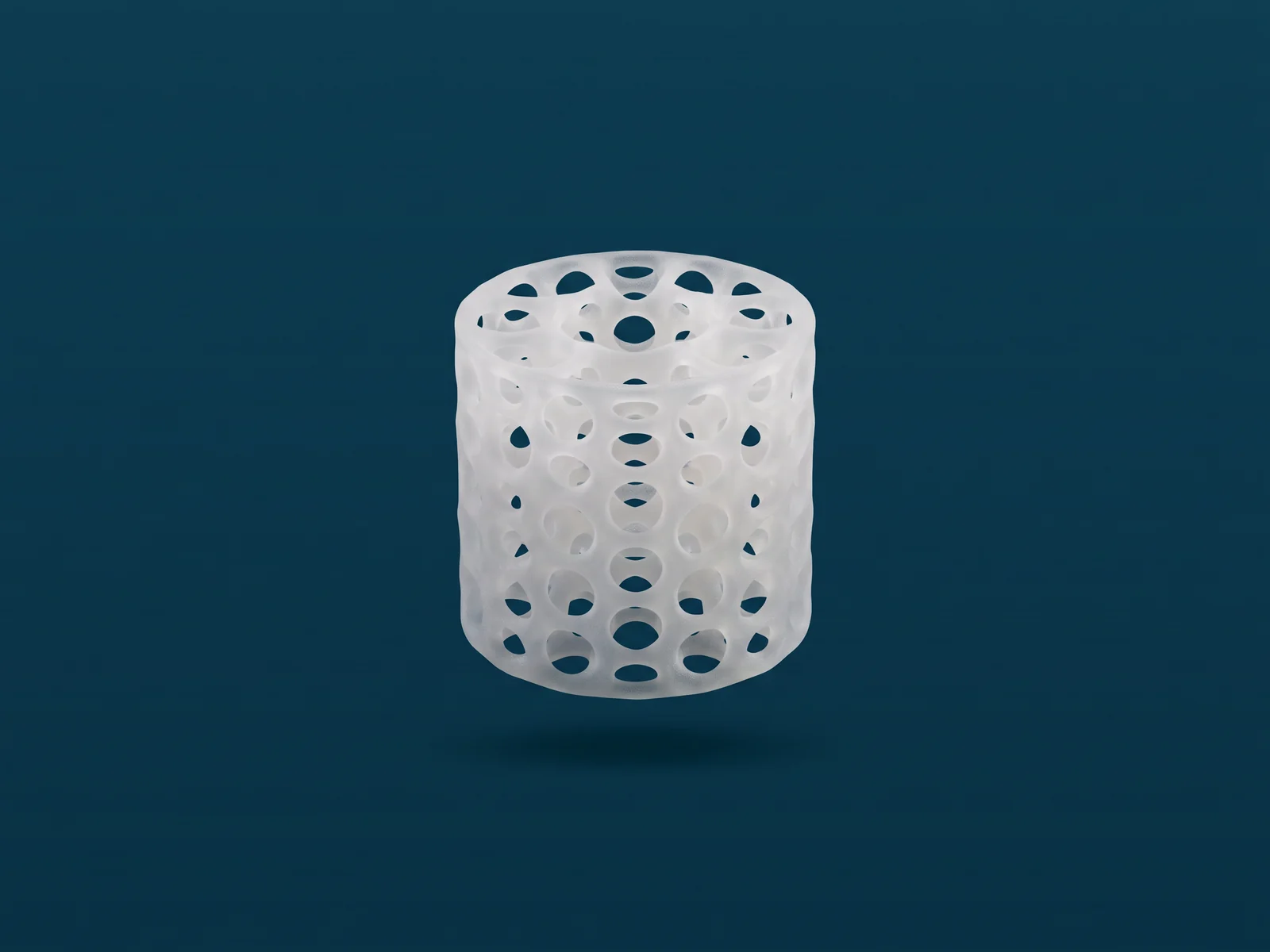
Cells grow differently on structures with a defined pore size and shape. Printed scaffolds give researchers control over that geometry at the cell scale, for tissue engineering and studies of cell behaviour.
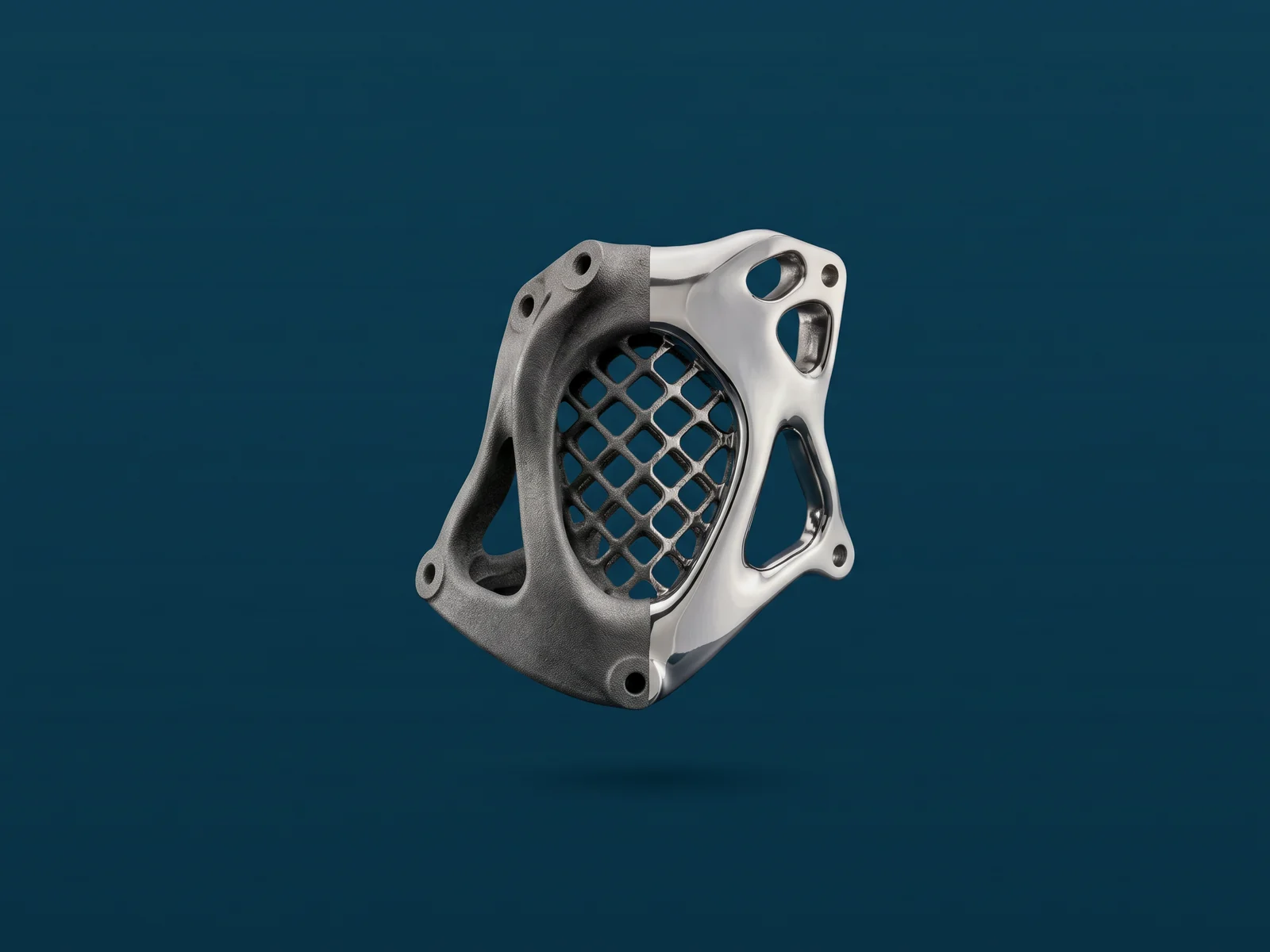
Metal parts from powder-bed printing come out with rough surfaces, support marks and features that need finishing. Femtosecond machining drills fine holes, cleans critical surfaces and adds textures to printed parts with minimal heat input to the alloy.
Two-photon polymerisation (2PP) is a 3D printing method in which a femtosecond laser cures a photoresist only at the focal point, where the intensity is high enough for two photons to be absorbed at once. Moving the focus writes free-form 3D structures with features below a micrometre.
What can be printed with 2PP?
Micro-lenses and other micro-optics, photonic structures, micro-mechanical parts, microneedles, cell scaffolds and master structures for moulding, from a few micrometres up to millimetre-sized parts.
Which materials are used?
Commercial negative photoresists, hybrid organic-inorganic polymers, hydrogels and biocompatible resins. The resin sets the feature size, the mechanical properties and the post-processing.
Why does pulse duration matter for 2PP?
Two-photon absorption depends on peak intensity. Shorter pulses reach the same peak intensity with less average power, which keeps the printing window wide and reduces heat in the resin.
Can a femtosecond laser finish metal 3D-printed parts?
Yes. Ultrashort pulses drill fine holes, remove support marks, clean functional surfaces and add textures on printed titanium, nickel alloys and steel, with minimal heat input to the alloy near the surface.
Which LITILIT laser fits additive manufacturing?
Indylit 10 for two-photon polymerisation: 380 fs pulses at 1030 nm, 10 W, passively air-cooled. Biolit 2 for 2PP research setups that need shorter pulses: under 70 fs at 1050 nm and 20 MHz. Indylit 20 for finishing and micro-machining of printed metal parts.
How does buying a laser work?
Tell us your material, process and volume. An application engineer reviews your request and suggests a laser and configuration. You then receive a quotation with pricing, lead time, payment and support terms.
Tell us your material, process and volume. Our application engineers suggest a laser and configuration, and we send a quotation with pricing, lead time and support terms.