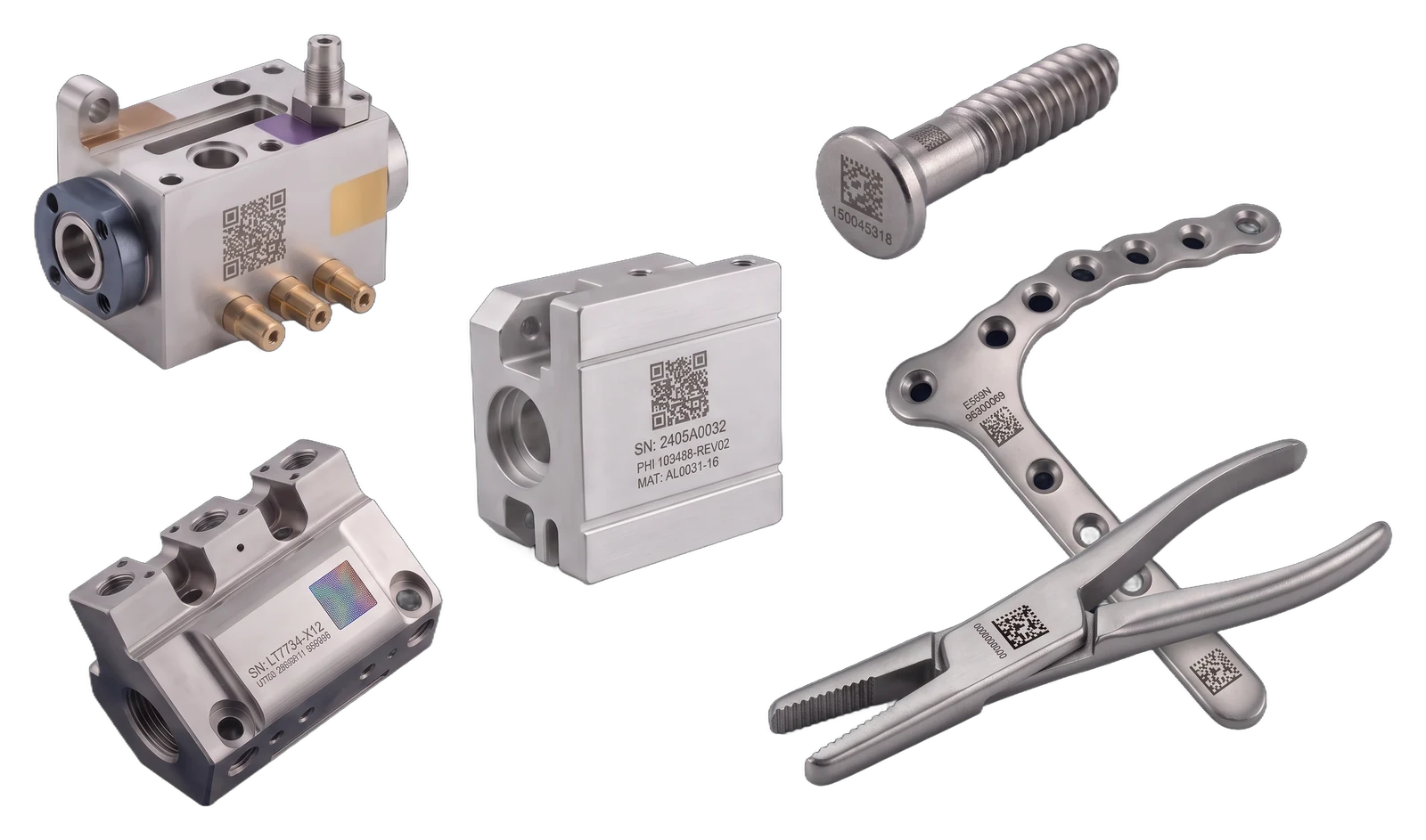
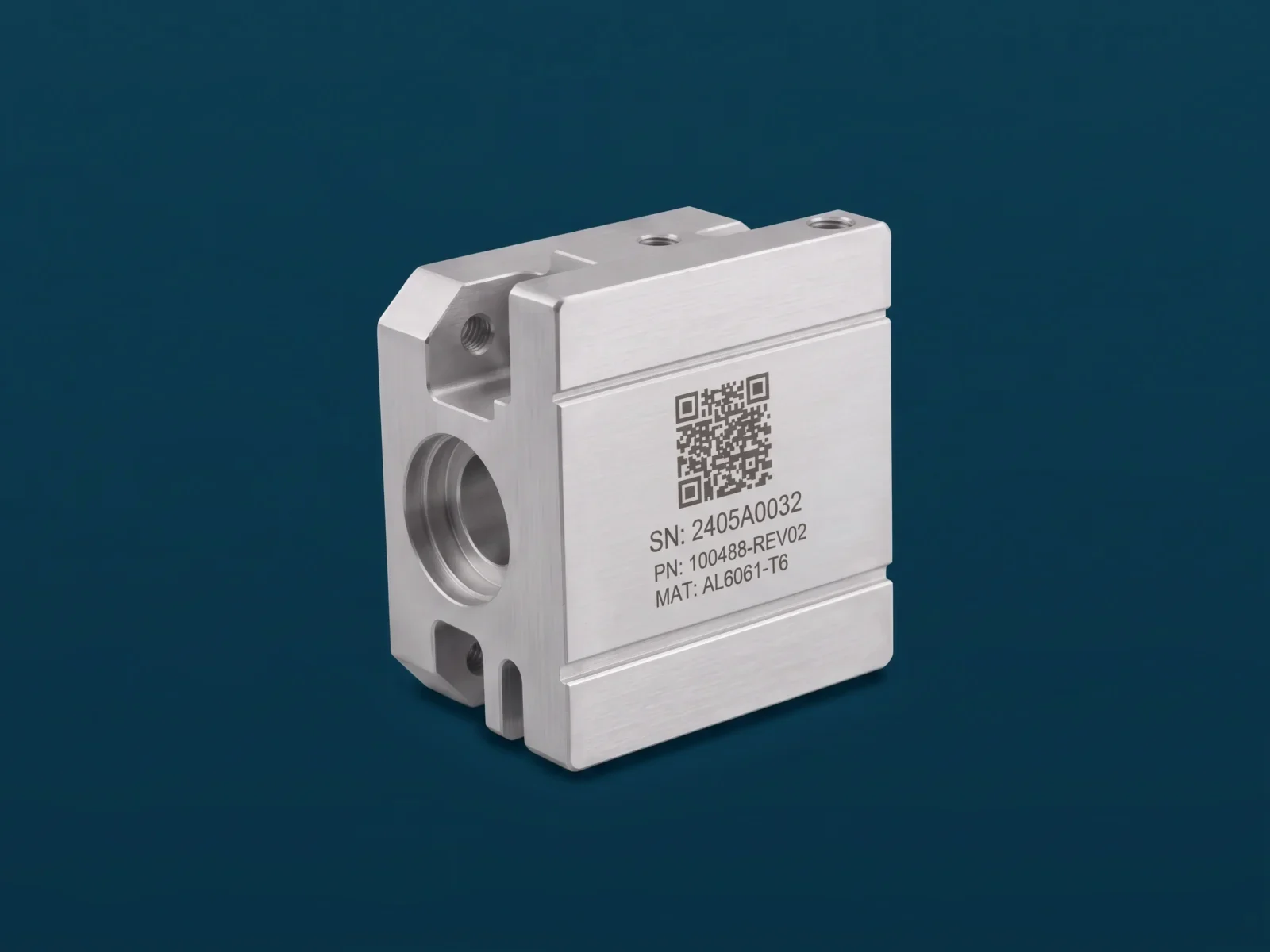
Permanent black, colour and micro marks on stainless steel, titanium, aluminium, glass and polymers. Femtosecond pulses structure the surface instead of melting it, so marks stay readable through cleaning, sterilisation and corrosion tests.
Where femtosecond marking works, from shop-floor traceability and medical UDI to colour marks and covert security codes.
Industrial traceability
Ink fades and chemical etching needs a consumable and a rinse step. A black, corrosion-resistant mark goes straight into the surface, so a data matrix or serial number stays readable through the part's working life.
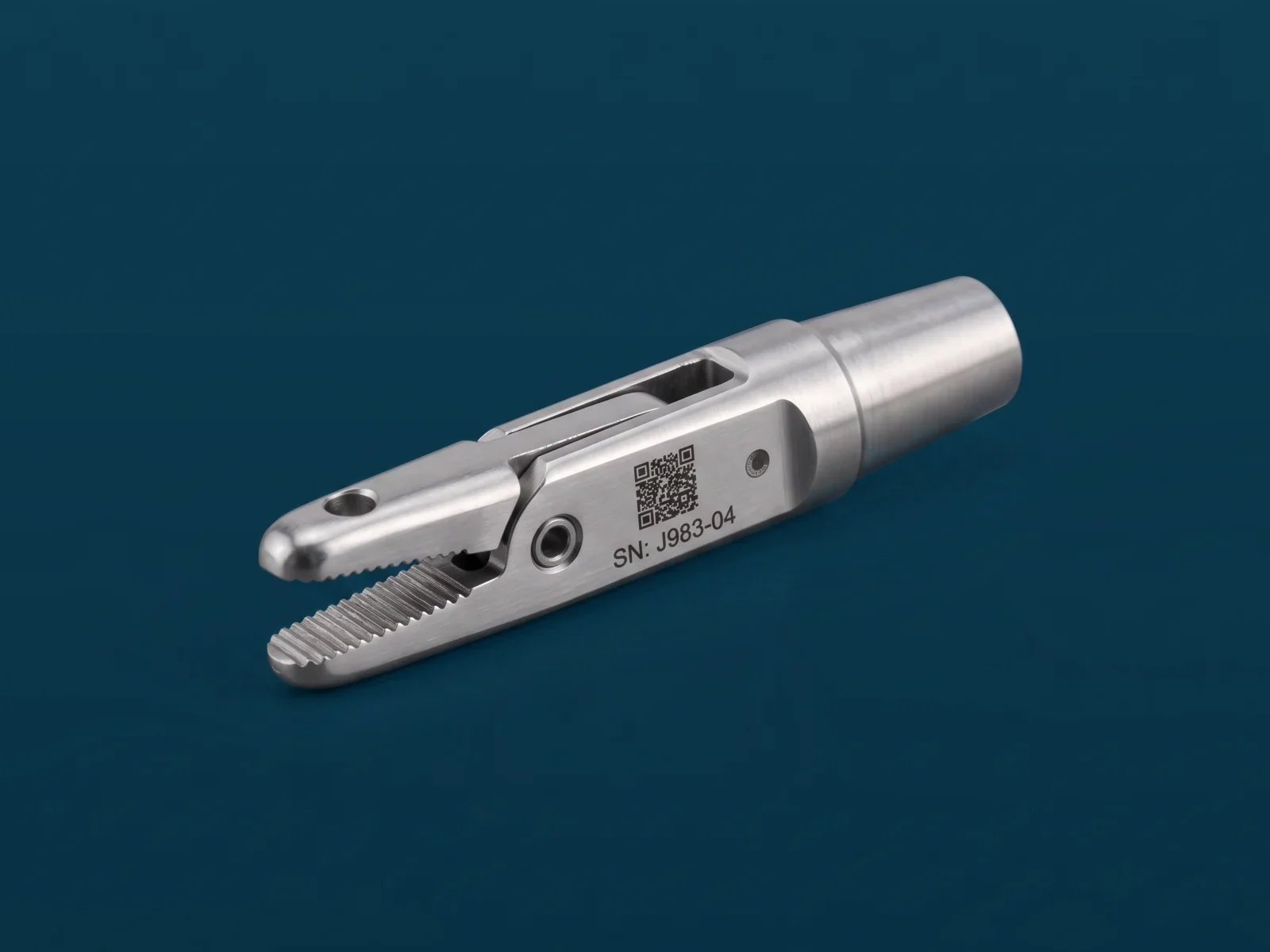
A Unique Device Identifier on an implant or surgical tool has to survive repeated steam sterilisation without the mark degrading or shedding particles. The laser writes the code without ink or coating and changes only a very thin surface layer.
Material
Stainless steel, titanium implants and instruments
Process
UDI codes made to stay readable through repeated sterilisation
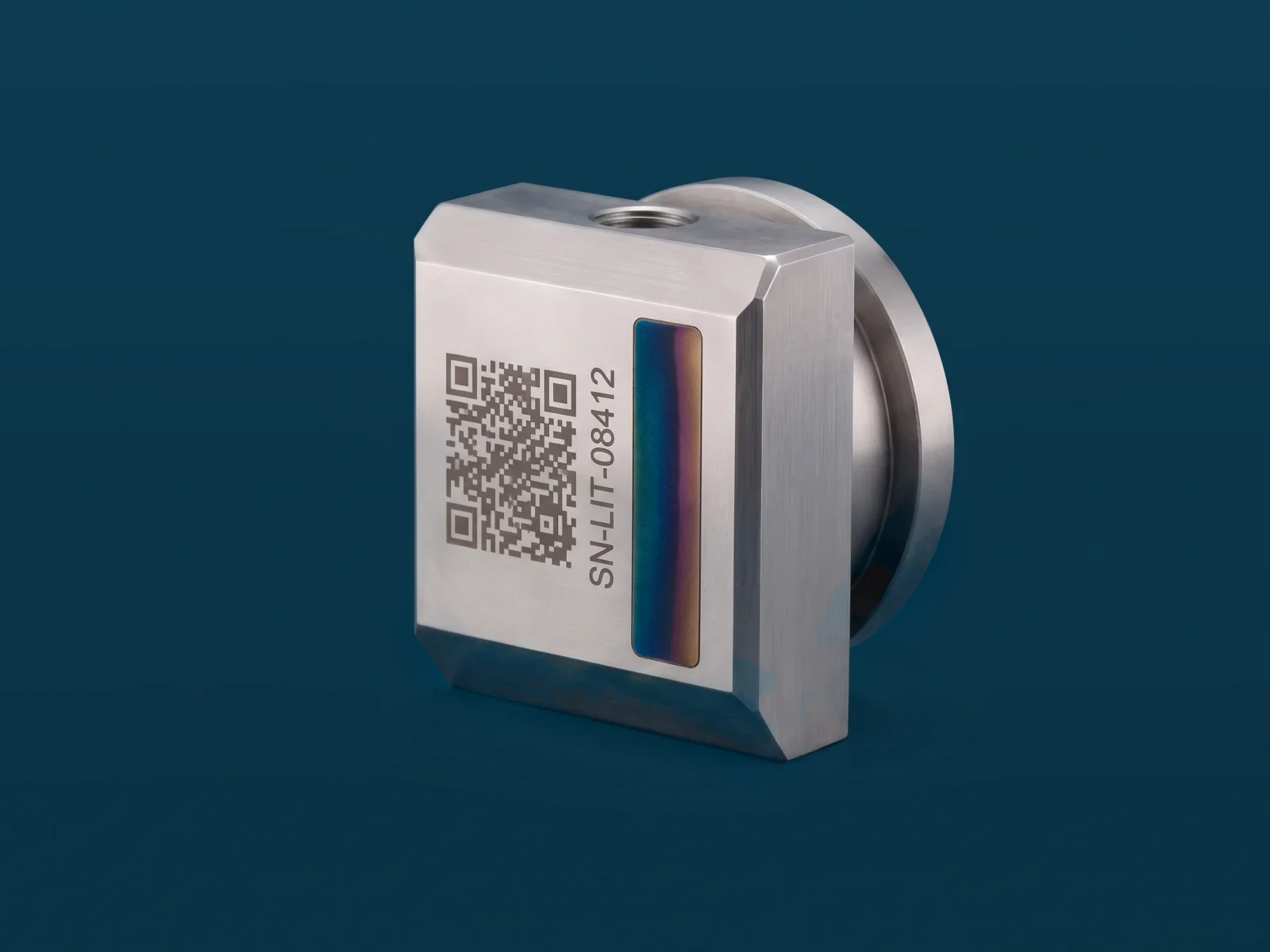
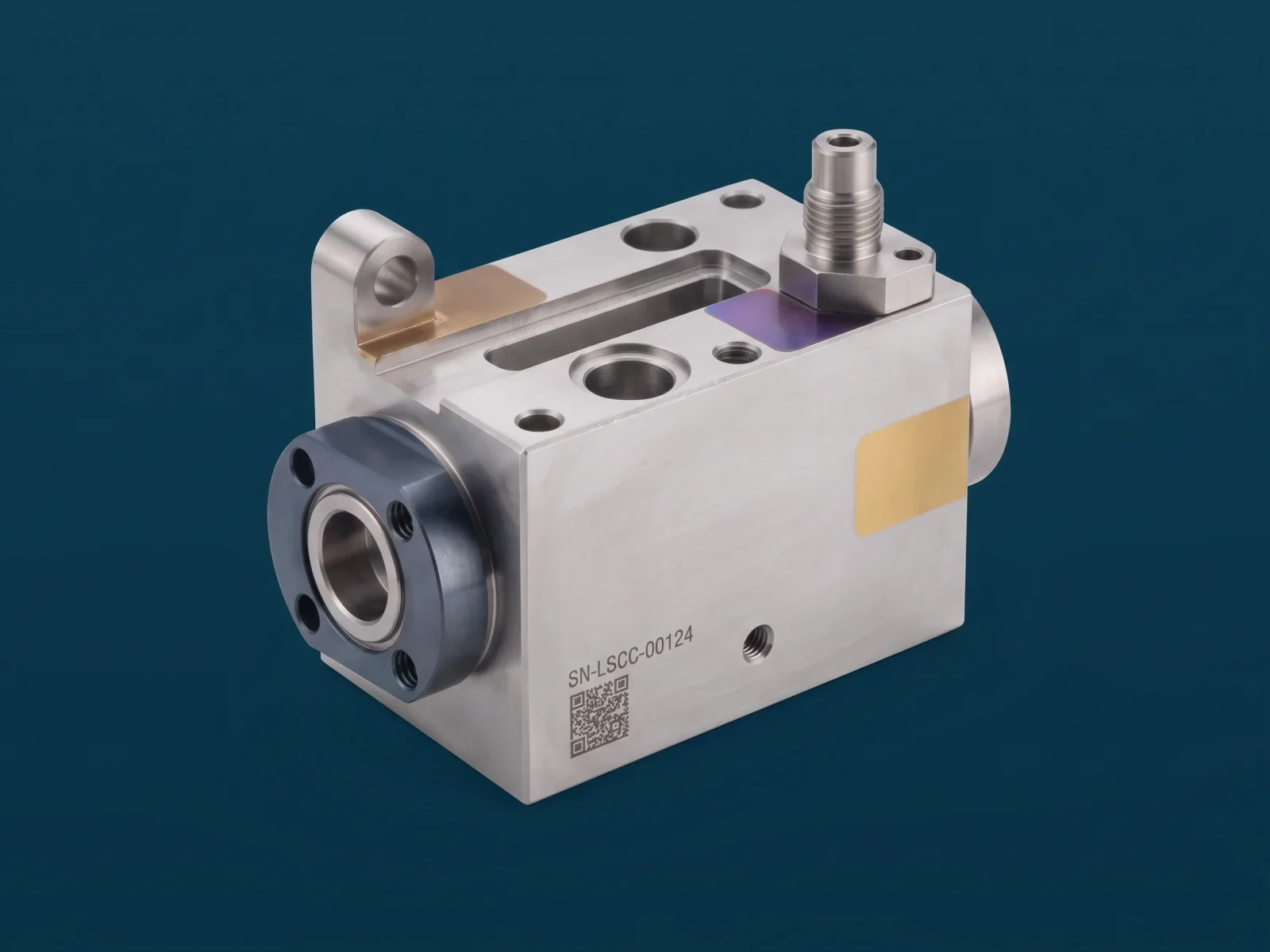
Controlling the thickness of the oxide layer the laser grows on stainless steel or titanium produces a visible colour, not just a black mark, with nothing added to the surface.
A mark has to last as long as the part. Cleaning should not erase it.
A code that fades, corrodes or cannot be read breaks traceability. Nanosecond marking melts and oxidises the surface, and on medical steel that oxide is where corrosion starts.
Marks that fade or corrode
Nanosecond marking melts and oxidises the surface. On medical instruments and implants these marks can fade after passivation or autoclaving, and the melted zone can start to corrode.
What the process needs
High contrast made to last through cleaning and sterilisation
Minimal melt and oxide at the mark
Readable 2D and UDI codes at small sizes
Marking on curved and reflective surfaces
Structure the surface, don't burn it
Femtosecond pulses create a fine structure on the surface that absorbs light and appears black, over a wide range of viewing angles. There is minimal melting, so the surface keeps its corrosion resistance.
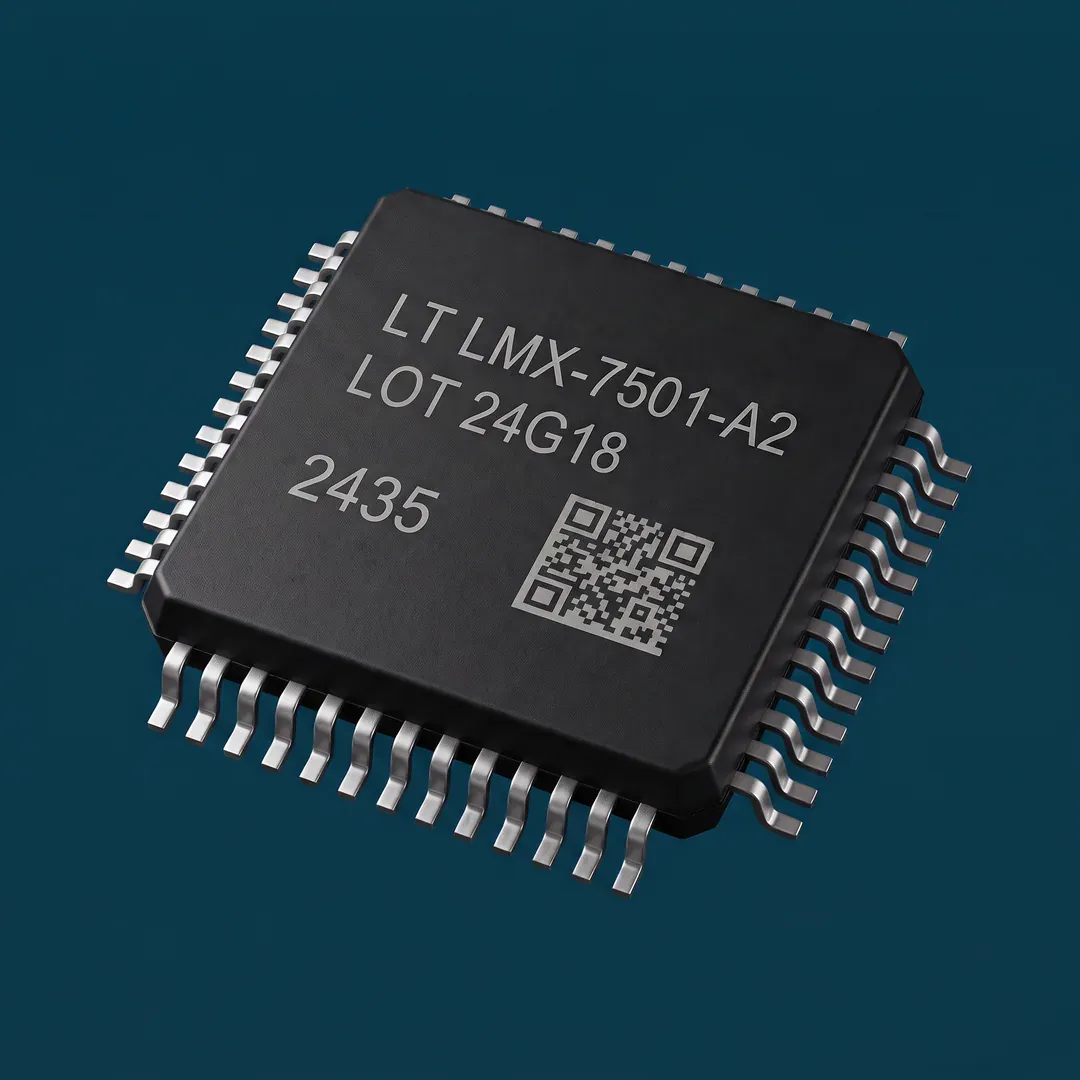
Electronics components
PCBs and connector housings sit close to other components, so marking has to avoid heat spread to nearby parts. The short pulse keeps the affected area to the mark itself.
Engine and drivetrain components need a permanent part ID that survives machining fluids, heat cycling and the part's service life, without a mark deep enough to weaken a load-bearing surface.
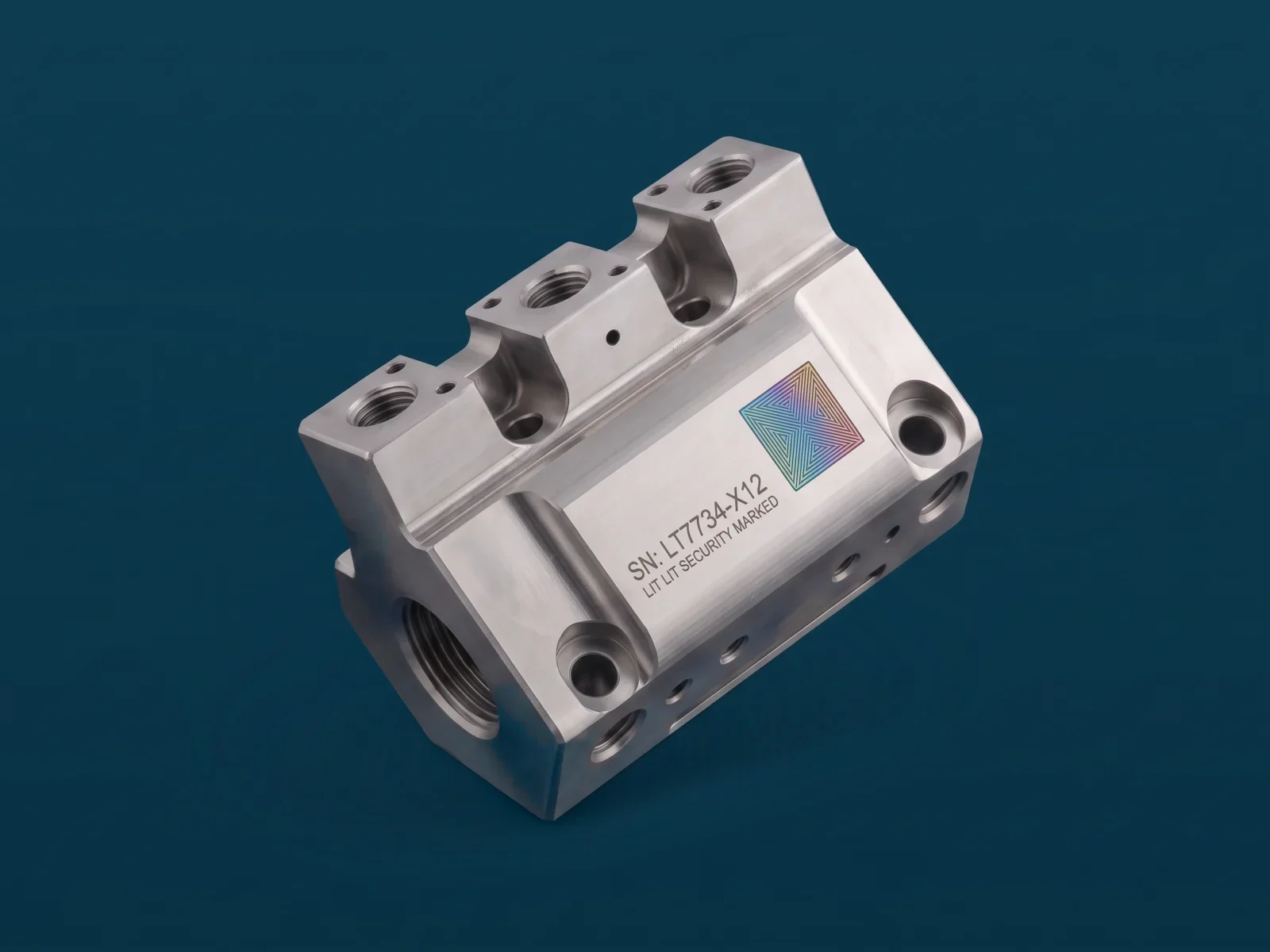
A micron-scale mark, too fine to copy or scan with ordinary equipment, lets a brand verify a part or package is genuine. The laser writes covert marks at a resolution mechanical and ink methods can't reach.
Femtosecond pulses write a fine structure into the metal surface that traps light, so the mark looks deep black from most angles. Because the surface is structured rather than melted or oxidised, the mark keeps its contrast and is far less likely to become a starting point for corrosion.
Is femtosecond marking suitable for medical UDI?
Yes. UDI codes on implants and surgical instruments have to stay readable through repeated cleaning, passivation and sterilisation. Black marks made with minimal melt or oxide are increasingly used for this because they keep the corrosion resistance of the steel or titanium.
How does laser colour marking work?
On stainless steel and titanium, the laser grows a thin, controlled oxide or structure on the surface. Its thickness sets the colour through light interference, so blue, gold, violet and other tones come from the process itself, with no ink or paint.
Which materials can be marked?
Stainless steel, titanium, aluminium, copper, glass, sapphire, ceramics and most engineering polymers. Glass and sapphire can also be marked below the surface, where the mark is protected from wear.
Can the laser make covert security marks?
Yes. Micro-codes a few tens of micrometres in size and diffractive structures that show colour only at certain angles are too fine to copy with ordinary tools and are used against counterfeiting.
Which LITILIT laser fits marking?
Indylit 20 covers black, UDI, colour and security marking, with the average power to keep cycle times short on production lines. Indylit 10 suits fine marks on small electronic parts, where 10 W is enough.
How does buying a laser work?
Tell us your material, process and volume. An application engineer reviews your request and suggests a laser and configuration. You then receive a quotation with pricing, lead time, payment and support terms.
Tell us your material, process and volume. Our application engineers suggest a laser and configuration, and we send a quotation with pricing, lead time and support terms.