Permanent UDI codes on surgical instruments and implants. How femtosecond black marking keeps a data matrix readable through cleaning, passivation and sterilisation, and what to check before a medical marking process goes into production.
Hundreds of reprocessing cycles. One readable code.
Reusable instruments and implants carry a Unique Device Identifier that has to stay readable for the whole life of the device. Every wash, passivation and steam cycle works on the mark, and a code that fades or corrodes breaks traceability exactly where it is needed.
Marks fade after reprocessing
Nanosecond annealing marks colour the steel with a heat-grown oxide. Passivation, alkaline detergents and repeated autoclaving can lighten that oxide until the code no longer scans, and the heat-affected zone can start to corrode.
What the process needs
A code that still grades well after many reprocessing cycles
Minimal melt, recast or heat tint, so corrosion resistance is kept
Small, sharp data matrix codes on narrow and curved surfaces
The same contrast from the first device to the last, ready for validation
Structure the surface, don't burn it
Femtosecond pulses write a fine, light-trapping structure into a very thin surface layer. The mark looks black over a wide range of angles, the metal is hardly melted, and in validated processes the part can be passivated after marking with the code staying readable.
How UDI black marking works.
A UDI mark is more than a laser step. The code is written, the part goes through its normal finishing and reprocessing, and the mark has to come out the other side still readable. Three things decide whether it does: how the mark is made, what it has to survive and which material it sits on.
Black marking
The beam scans the code area with overlapping femtosecond pulses. Each pulse removes so little material that the surface is structured rather than engraved, and the structure traps light, so the data matrix reads black on bright metal. Human-readable text, lot and serial number are written in the same pass.
After marking, instruments are usually passivated, then cleaned, disinfected and steam-sterilised again and again in the hospital. A good black mark keeps its contrast through all of it, because there is no loose oxide layer to dissolve and hardly any melted zone where corrosion can start.
Survives
Passivation, alkaline cleaning, autoclaving
Why it matters
How long the code stays readable in use
Instrument and implant materials
The same process works on the metals medical devices are made of: stainless steels, commercially pure titanium and titanium alloys, and cobalt-chromium. Medical polymers such as PEEK can be marked with a tuned parameter set.
Metals
Stainless steel, titanium, cobalt-chromium
Polymers
PEEK and other medical plastics
Format
Flat, curved and small parts in fixtures
Where medical UDI marks are used.
Every device that is reused or implanted needs an identity that lasts. Geometry, material and cleaning differ from device to device, and so does the marking task.
Reusable surgical instruments
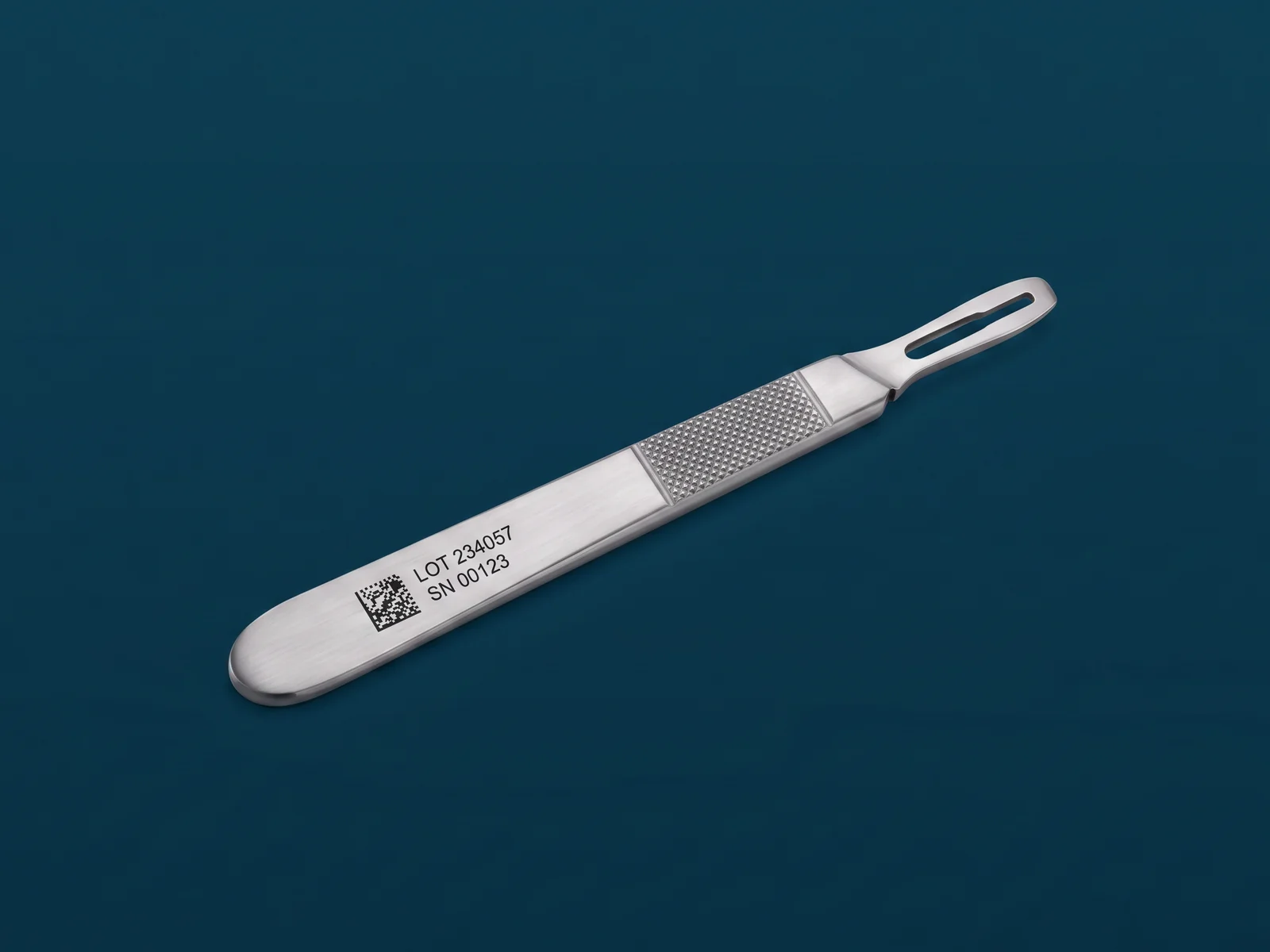
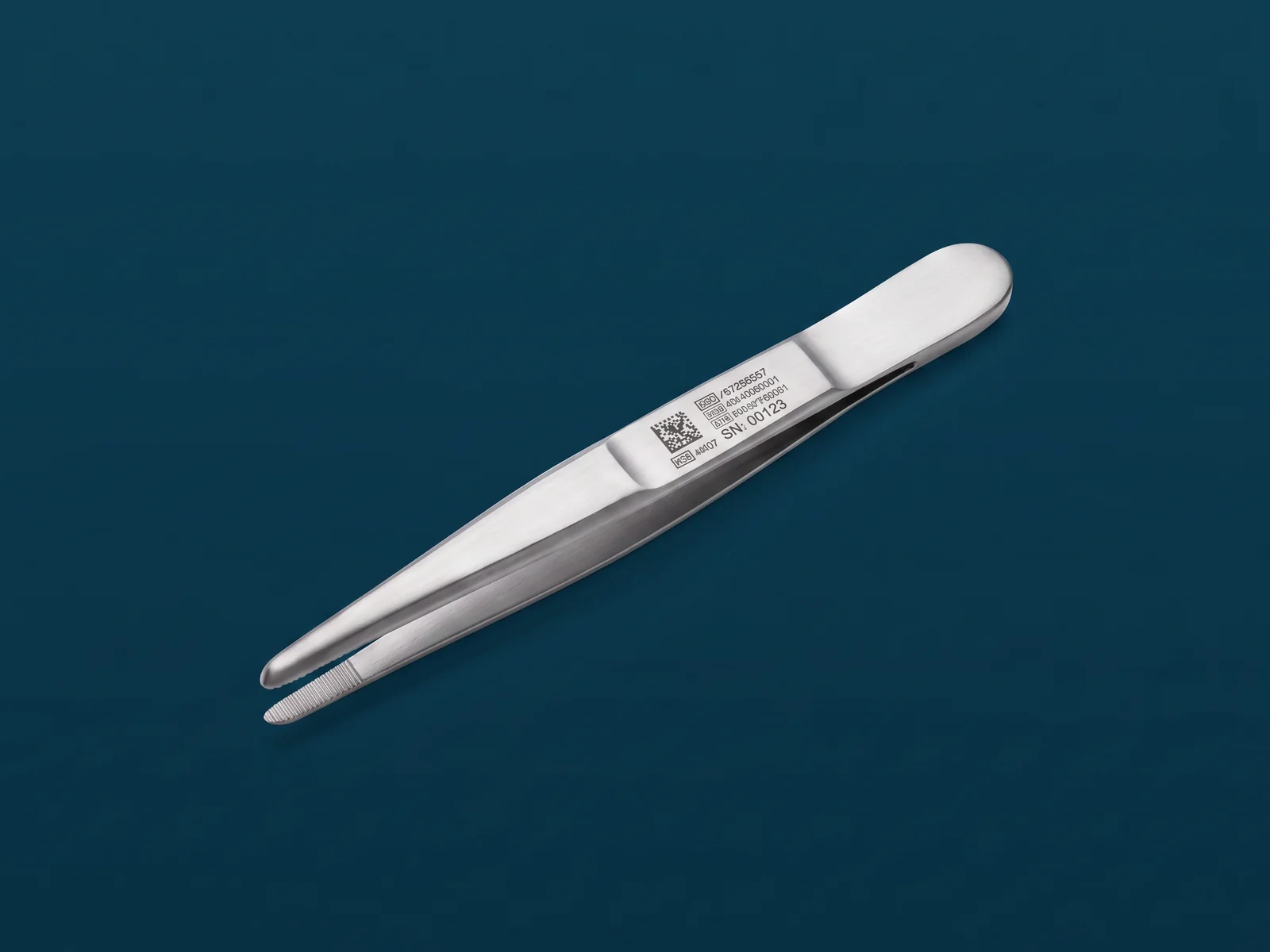
Forceps, clamps, scissors and needle holders go through hundreds of wash and steam cycles. The code sits on a narrow shank or near the joint, where space is tight and the surface is often curved. A black mark keeps scanning in sterile processing long after an oxide mark has faded.
Typical parts
Forceps, clamps, scissors, needle holders
Mark
Data matrix on the shank or joint
Minimally invasive instruments
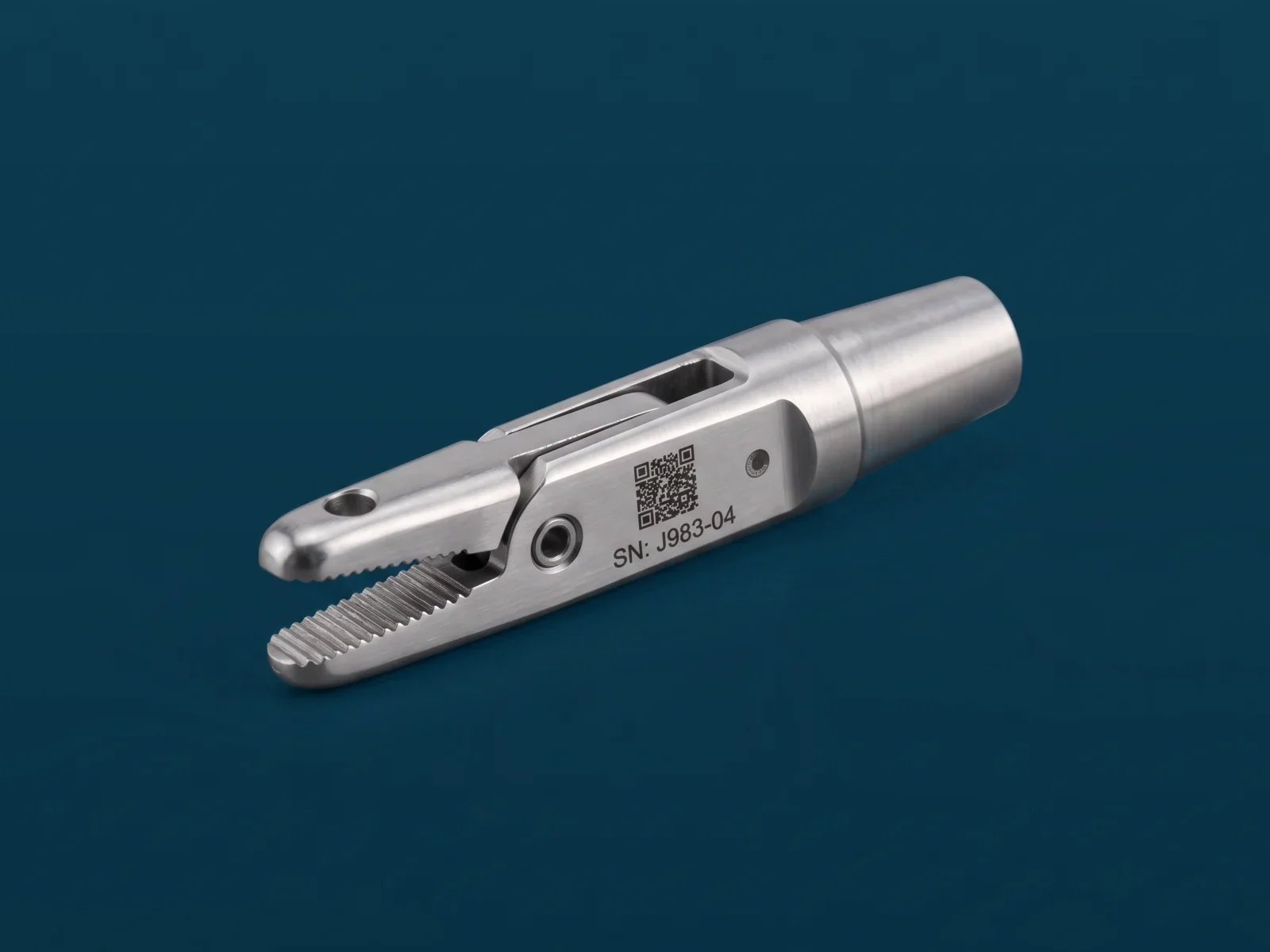
Jaw inserts, shafts and tips of laparoscopic and endoscopic tools are small and densely machined. The mark has to fit on a few millimetres of surface without weakening a thin wall or leaving a burr that traps contamination.
Typical parts
Jaw inserts, shafts, tips
Constraint
Small, thin-walled surfaces
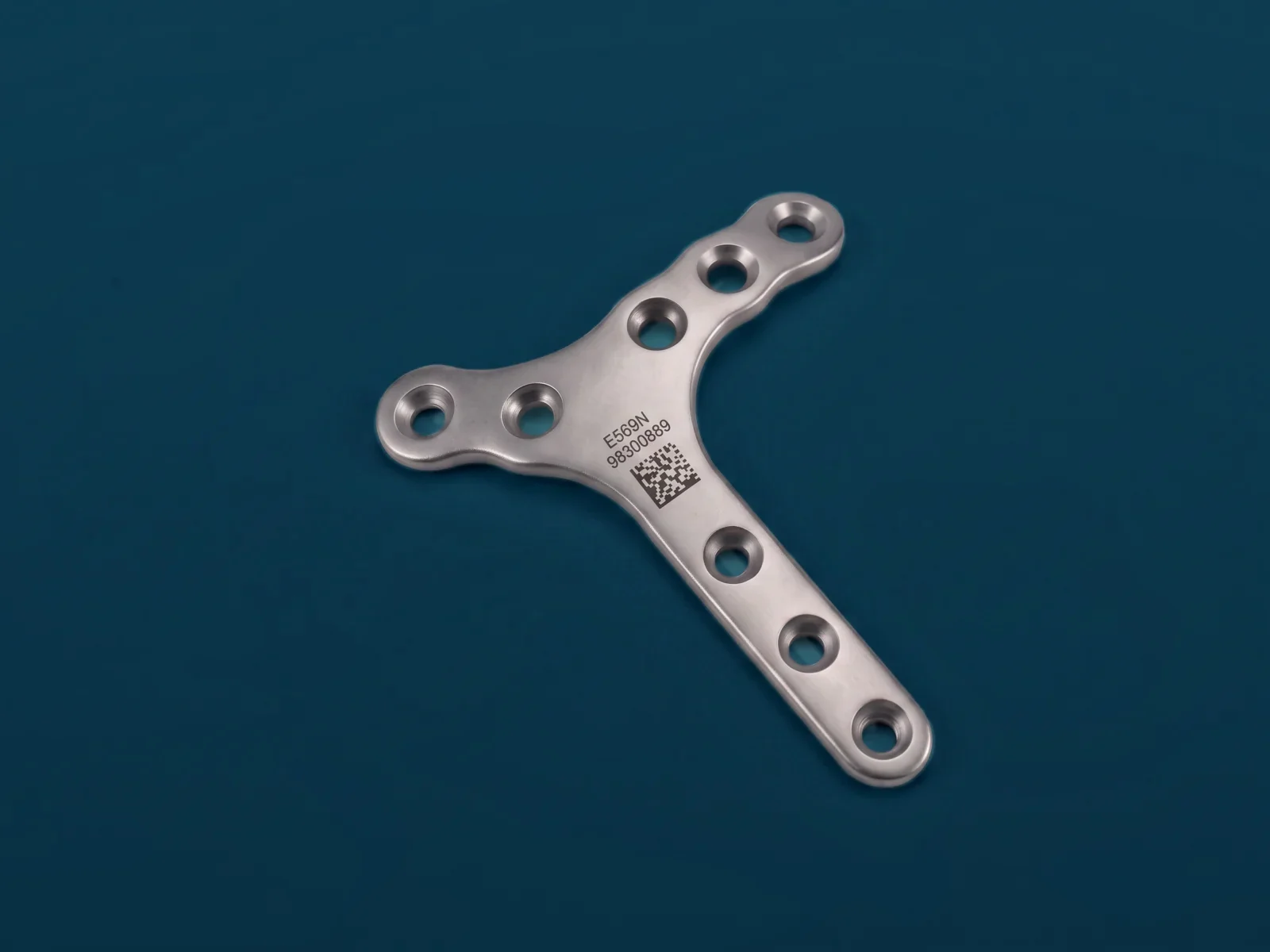
Trauma plates and screws
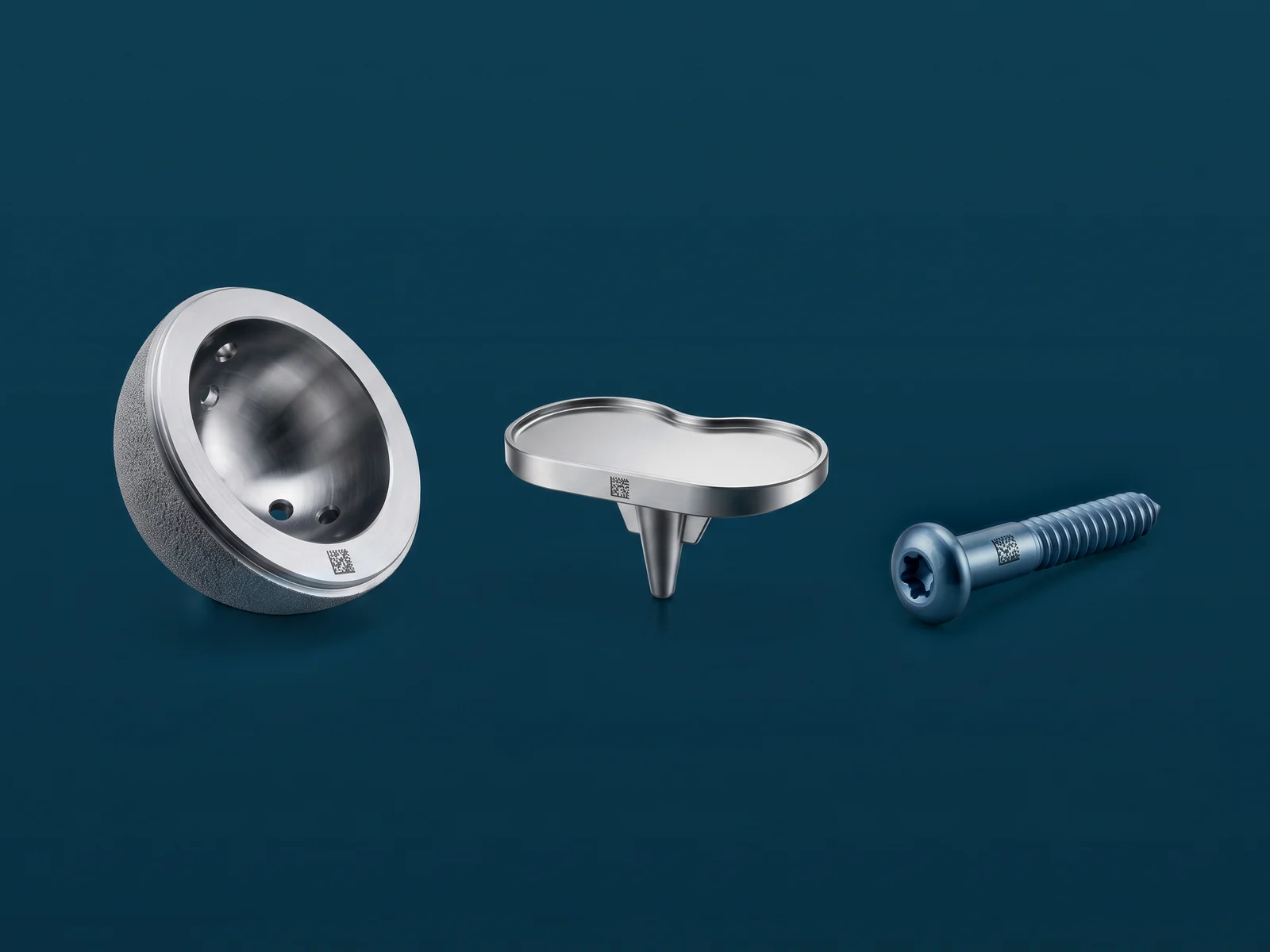
Bone plates and screws are often supplied in sets and stay in the body. Each one carries a part and lot identity that has to be readable in the hospital and after explant, while changing only a very thin layer of the implant surface.
Typical parts
Bone plates, screws, nails
Material
Titanium alloys, stainless steel
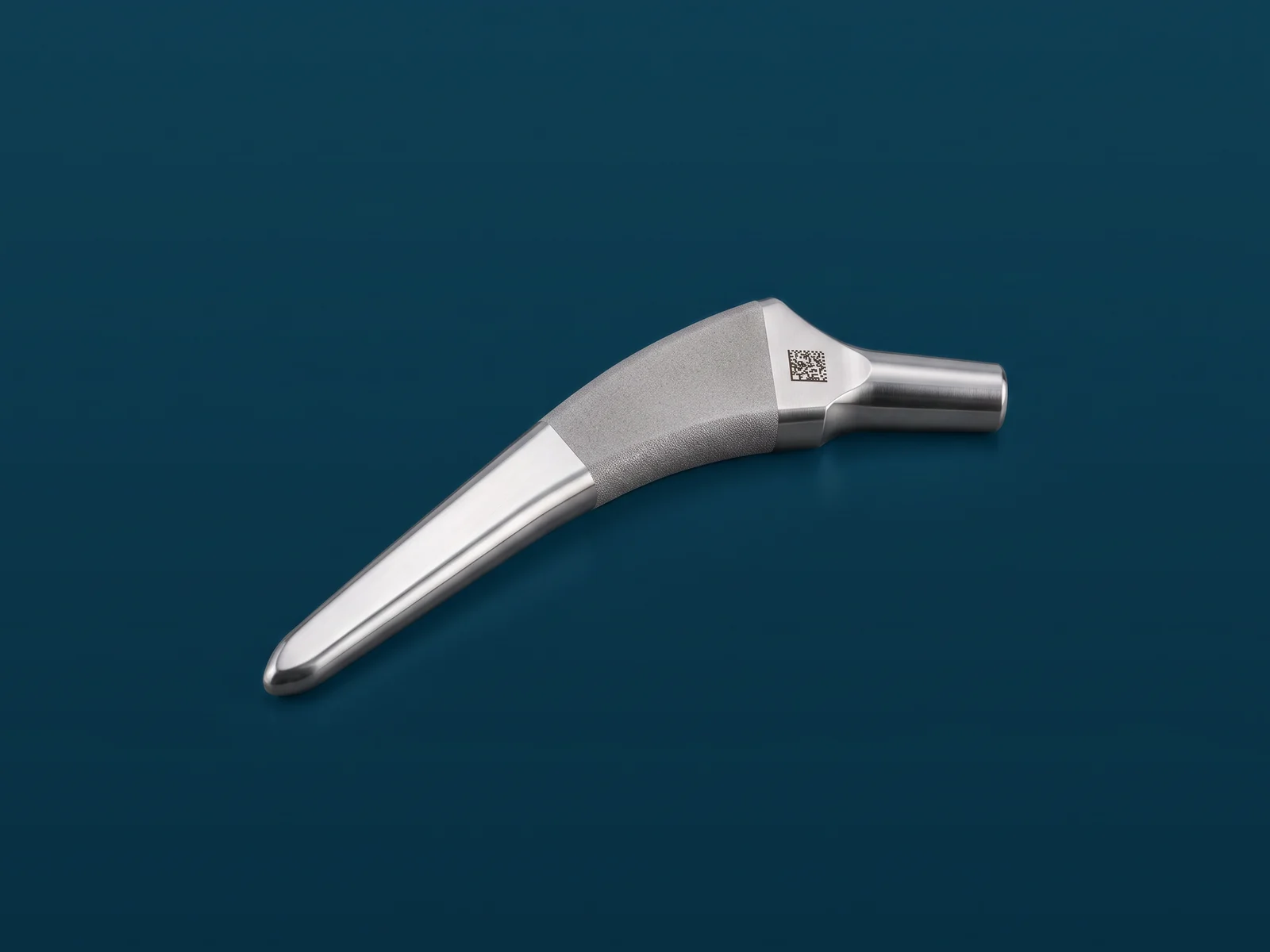
Hip and knee implants
Hip stems, cups and knee trays combine polished, blasted and coated zones on one part. The code goes on a defined area outside the bearing and fixation surfaces, with enough contrast for a reader in the operating room.
Typical parts
Hip stems, cups, knee trays
Material
Titanium alloys, cobalt-chromium
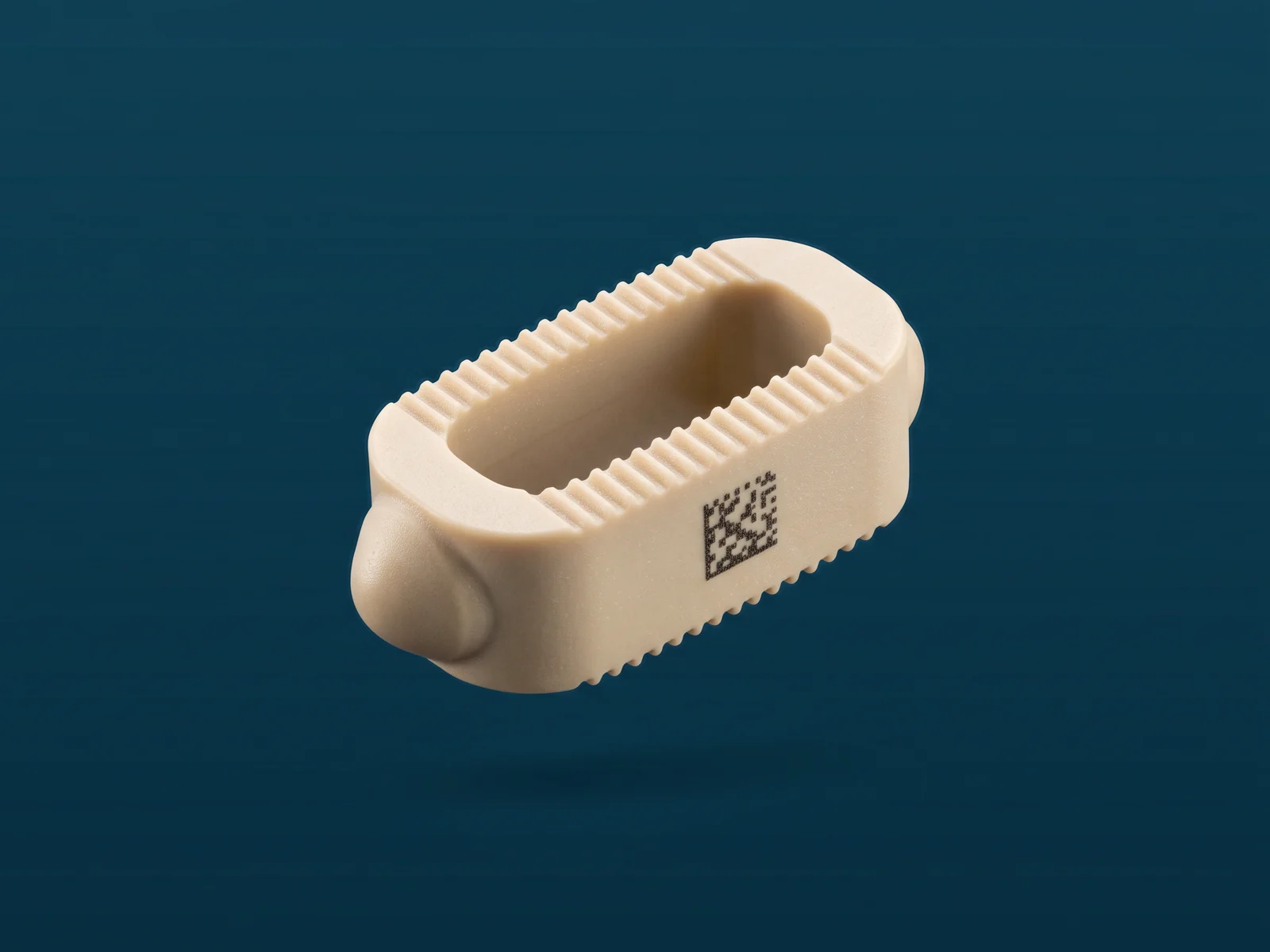
Spinal implants
Interbody cages, pedicle screws and rods combine titanium and polymer parts in one system. The marking parameters change from part to part, but the data matrix and text have to look the same across the whole set.
Typical parts
Cages, pedicle screws, rods
Material
PEEK, titanium alloys
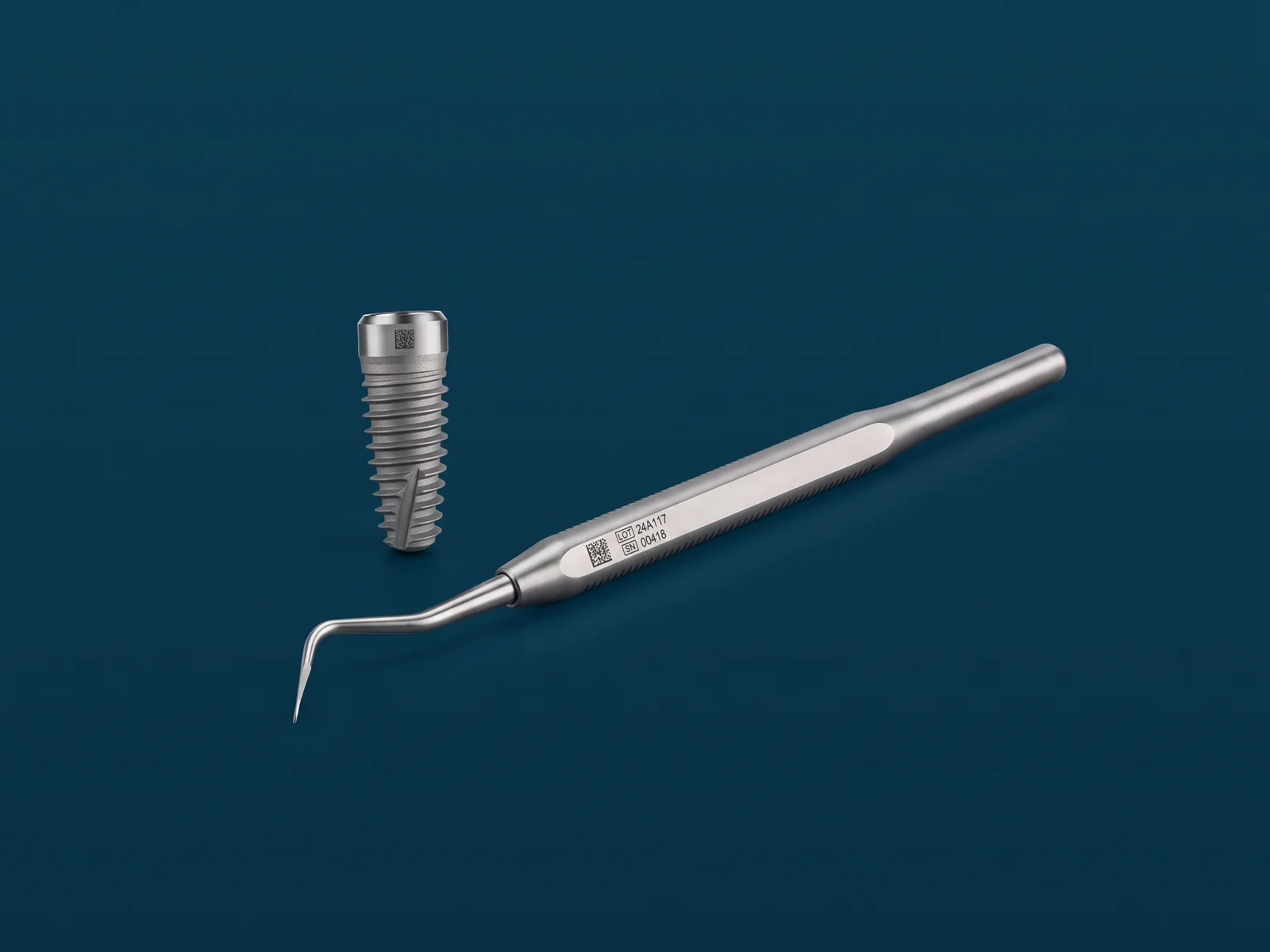
Dental implants and instruments
Dental implants and hand instruments are among the smallest parts that carry an identifier. Scalers and probes are reprocessed after every patient, so their marks face more cleaning cycles than almost any other device.
Typical parts
Implants, abutments, scalers, probes
Constraint
Very small marking areas
Medical marking methods compared.
There are several ways to put a code on a medical device. They differ most in what happens to the code, and to the surface around it, after many reprocessing cycles.
Ink and labels
Wear off in cleaning; not a permanent mark on the device
Electrochemical etching
Durable, but needs stencils, electrolyte and a rinse step
Nanosecond annealing marks
Dark oxide marks that can fade or corrode after passivation
Dot peen and deep engraving
Durable, but low contrast and edges that trap dirt
Femtosecond black marking
Black, high-contrast structure with minimal melt; keeps its contrast through passivation and sterilisation
The laser for UDI marking.
Black marking needs short, clean pulses with stable energy, so every code in a production run reaches the same contrast. This is the laser we recommend.
M² below 1.2 and pulse energy stability below 1% RMS keep the contrast even across a batch. Passively air-cooled, with a compact head and a separate controller.
Fits into marking workstations and automated cells next to the scanner, without a separate cooling cabinet.
Passive air cooling
No chiller and no water lines in a clean manufacturing area.
Stable pulse energy
Pulse energy stability below 1% RMS keeps contrast the same from the first code to the last.
Simple integration
Standard interfaces connect to marking software, vision systems and line controllers.
Typical UDI marking process window.
Typical starting points for femtosecond black marking. Material, surface finish and code size move them, so every value has to be confirmed and validated in your own process.
Materials
Stainless steel, titanium, cobalt-chromium, PEEK
Mark types
Data matrix, human-readable UDI, lot and serial numbers
Code format
GS1 or HIBCC data matrix, as your labelling requires
Mark colour
Black over a wide range of angles on bright metal
Surface
Polished, brushed or blasted; contrast tuned per finish
Post-processing
Passivation and cleaning after marking
Mark position
Outside bearing, sealing and fixation surfaces
Verification
Grading of every code as a direct part mark
Recommended laser
Indylit 20
How a UDI marking project runs.
From the first laser in your marking cell to a validated process, each step ends with results you can file in your quality records.
Feasibility
Your drawings, requirements and throughput target are reviewed with our application engineers before you order.
Process window
With the laser in your marking cell, your team or integrator sets pulse energy, scan pattern and code size for each material and finish, with our engineers' support and grade and contrast targets agreed up front.
Validation
Marked parts go through your passivation, cleaning and sterilisation cycles, and every code is graded again afterwards.
Production
The laser runs in your marking cell or your integrator's, with no chiller to install or maintain.
UDI mark quality: what to check.
A UDI mark is only as good as the scan it gives after the device has been used and reprocessed. These are the checks that usually go into a validation plan.
Code grade
Grade of the data matrix right after marking and again after reprocessing
Contrast
Black against bright metal, on every finish the part has
Corrosion resistance
No rust or staining at the mark after passivation and corrosion testing
Surface integrity
No burrs, cracks or loose particles at the mark
Content and position
Correct UDI data, in the specified place on every part
Inspection
Automatic reading and grading of every code in the line
Questions about medical UDI marking.
What is a UDI?
A Unique Device Identifier is a code that identifies a medical device model and the individual unit or lot. It has a device part, which names the model, and a production part with data such as the lot, serial number or expiry date. It appears on the label and, for many reusable devices, directly on the device.
Which devices need a direct UDI mark?
UDI rules in the United States and the European Union expect devices that are used more than once and reprocessed between uses to carry the UDI on the device itself, not only on the label. Implants also carry identification marks for traceability. The exact requirements depend on the device class and the market, so confirm them with your regulatory team.
Why femtosecond black marking for UDI?
The mark is made by structuring the surface, not by growing an oxide or melting the metal. That keeps the code dark through passivation and repeated sterilisation, and avoids the melted zone where corrosion on marked instruments usually starts.
Will the mark survive passivation?
Black marks made with femtosecond pulses are used on parts that are passivated after marking, because there is no loose oxide layer for the acid to dissolve. Each combination of material, finish and passivation process should still be tested and validated.
How small can the code be?
It depends on the reader, the surface and the amount of data. Ultrashort pulses write fine modules with sharp edges, so data matrix codes fit on narrow instrument shanks and small implants where other methods run out of space.
How does buying a laser work?
Tell us your material, process and volume. An application engineer reviews your request and suggests a laser and configuration. You then receive a quotation with pricing, lead time, payment and support terms.
Can the same laser mark instruments and implants?
Yes. Stainless steel instruments, titanium and cobalt-chromium implants and PEEK parts can all be marked with one laser by switching to the parameter set for each material.
Does the mark change the implant surface?
The structure stays inside the marked area and in a very thin surface layer. The mark is placed outside bearing and fixation surfaces, and its effect on the device is part of your design verification.
Which code formats can be marked?
Data matrix codes in GS1 or HIBCC format, human-readable UDI text, lot and serial numbers, logos and part numbers, all in the same marking job.
Is a mark that looks black always readable?
Not always. Readers need enough contrast and well-formed modules on the real surface, including curved and blasted ones. That is why codes are graded after marking and again after reprocessing, not only checked by eye.
Tell us your material, process and volume. Our application engineers suggest a laser and configuration, and we send a quotation with pricing, lead time and support terms.