
Indylit 10
A compact, robust, passively air-cooled femtosecond laser for industrial and medical applications, built for 24/7 operation in demanding industrial environments.
- Average power
- 10 W
- Pulse energy
- Up to 100 µJ
- Wavelength
- 1030 nm
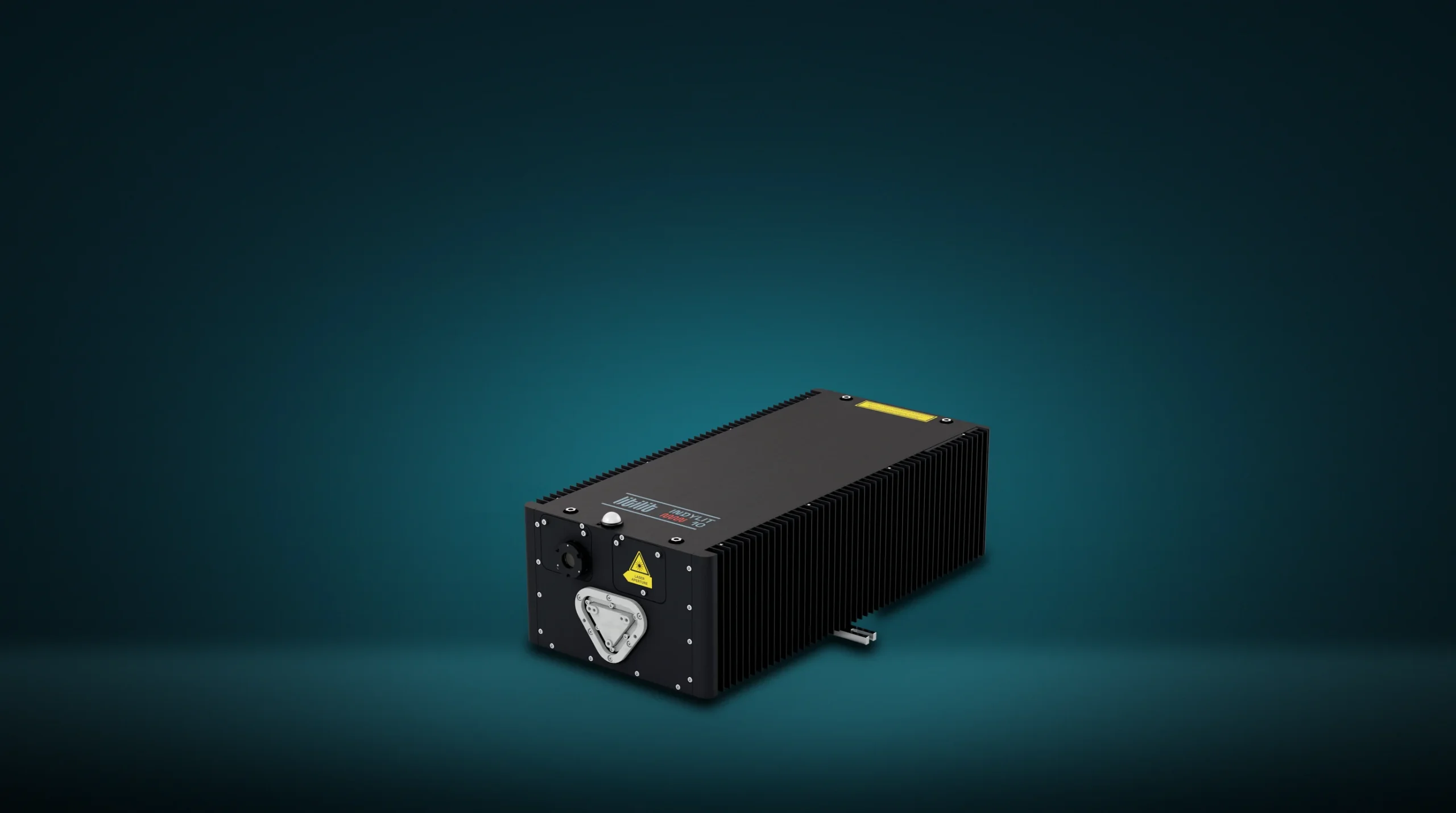
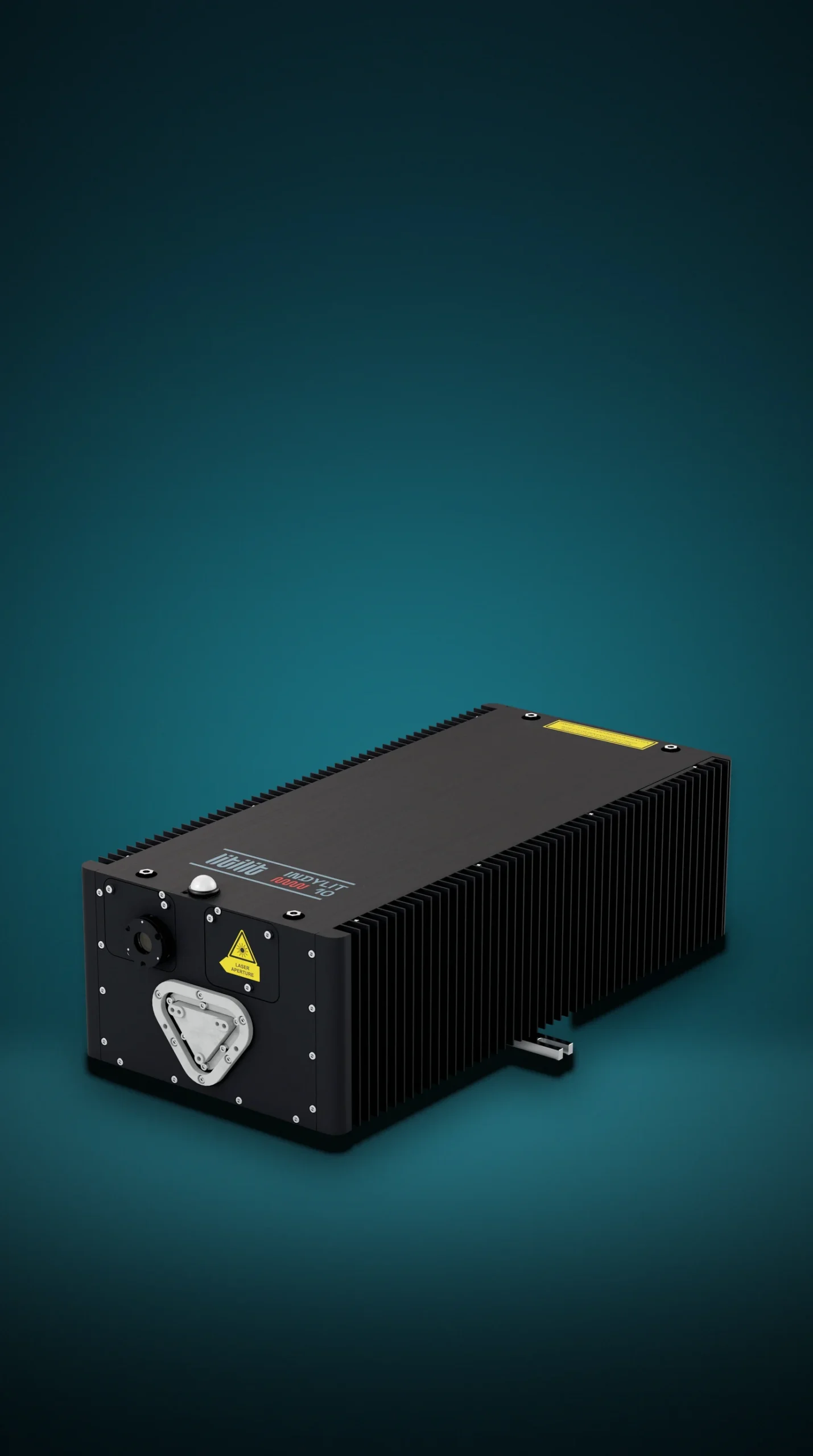
Get to know Indylit 10.
Power
10 W at 1030 nm.
Pulses
380 fs – 4 ps
Pulse duration, at 80 kHz – 1.6 MHz.
Made for
Industrial and medical micromachining, 24/7.
Photos. Indylit 10 from every side.
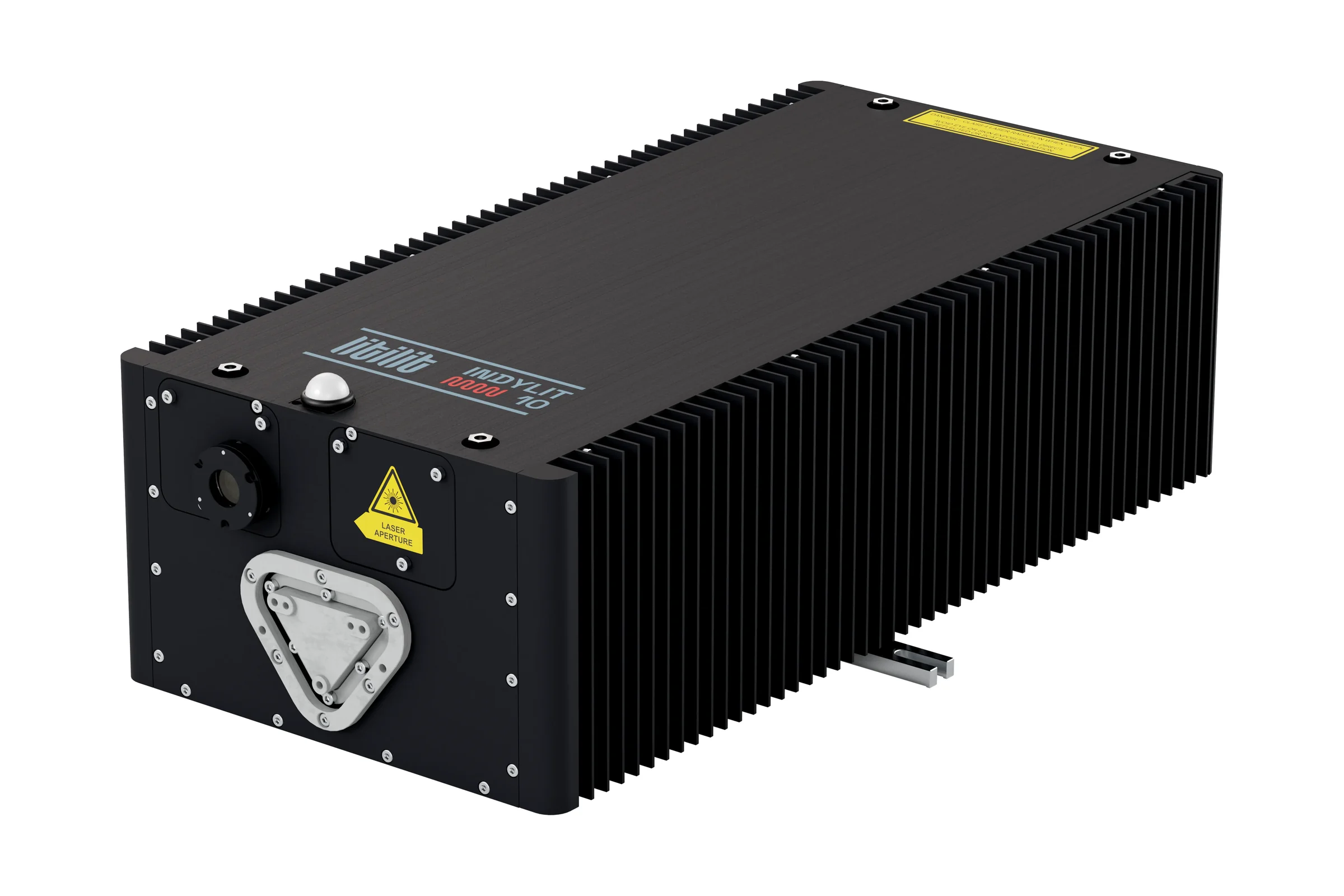
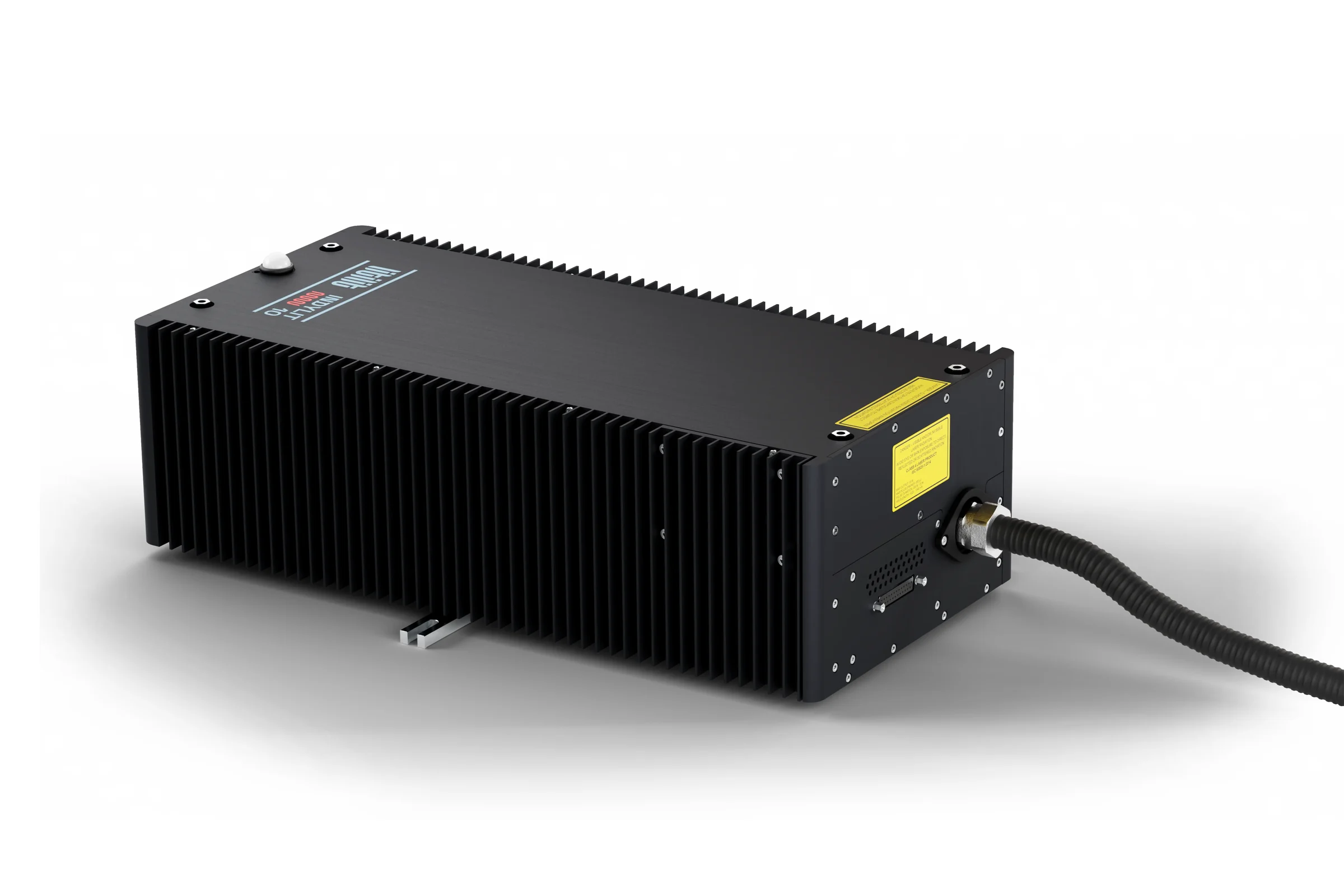
Indylit 10 femtosecond laser head, three-quarter front view with the laser aperture and mounting rails
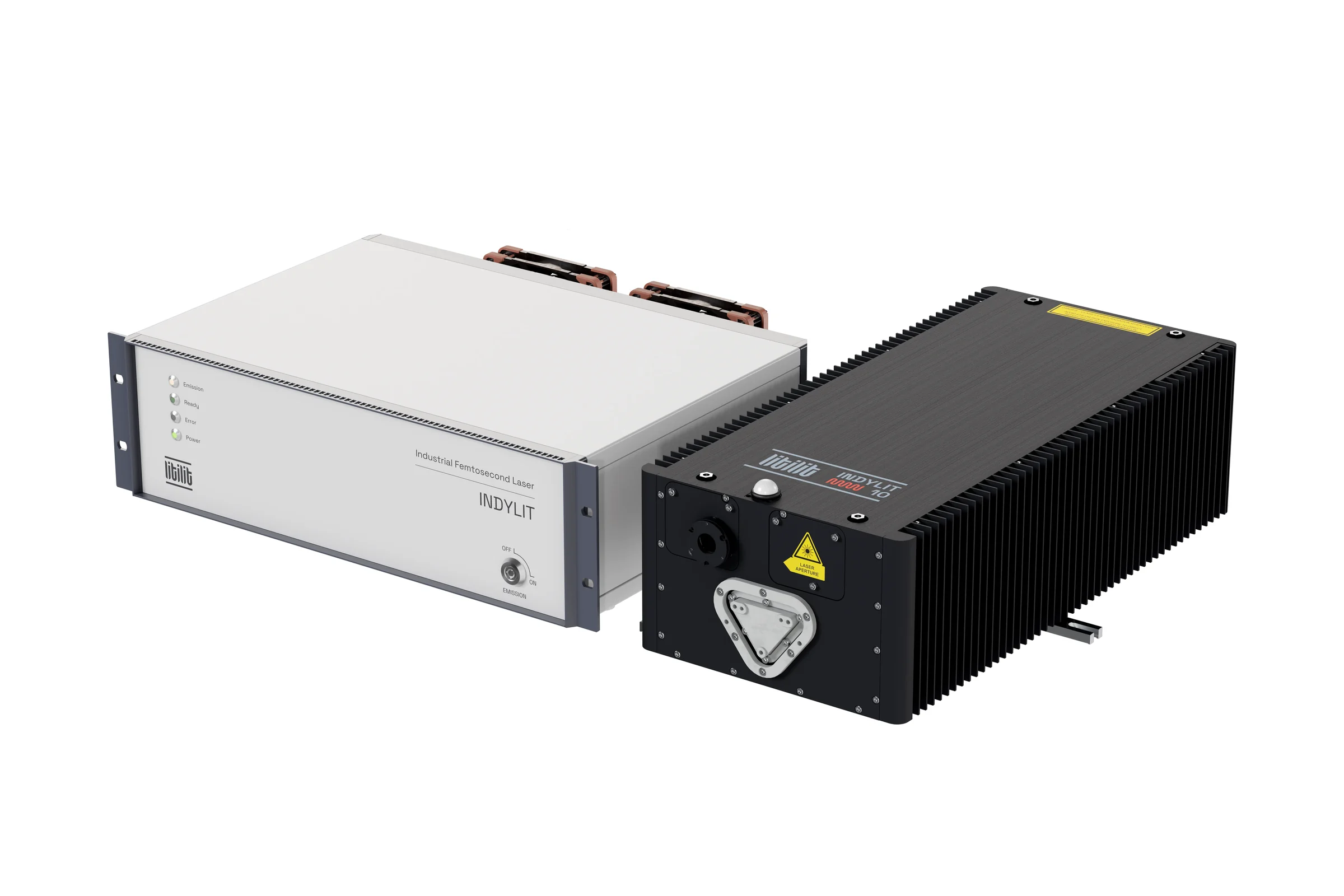
Indylit 10 laser head beside its control unit
Indylit 10 laser head from the rear with the umbilical attached
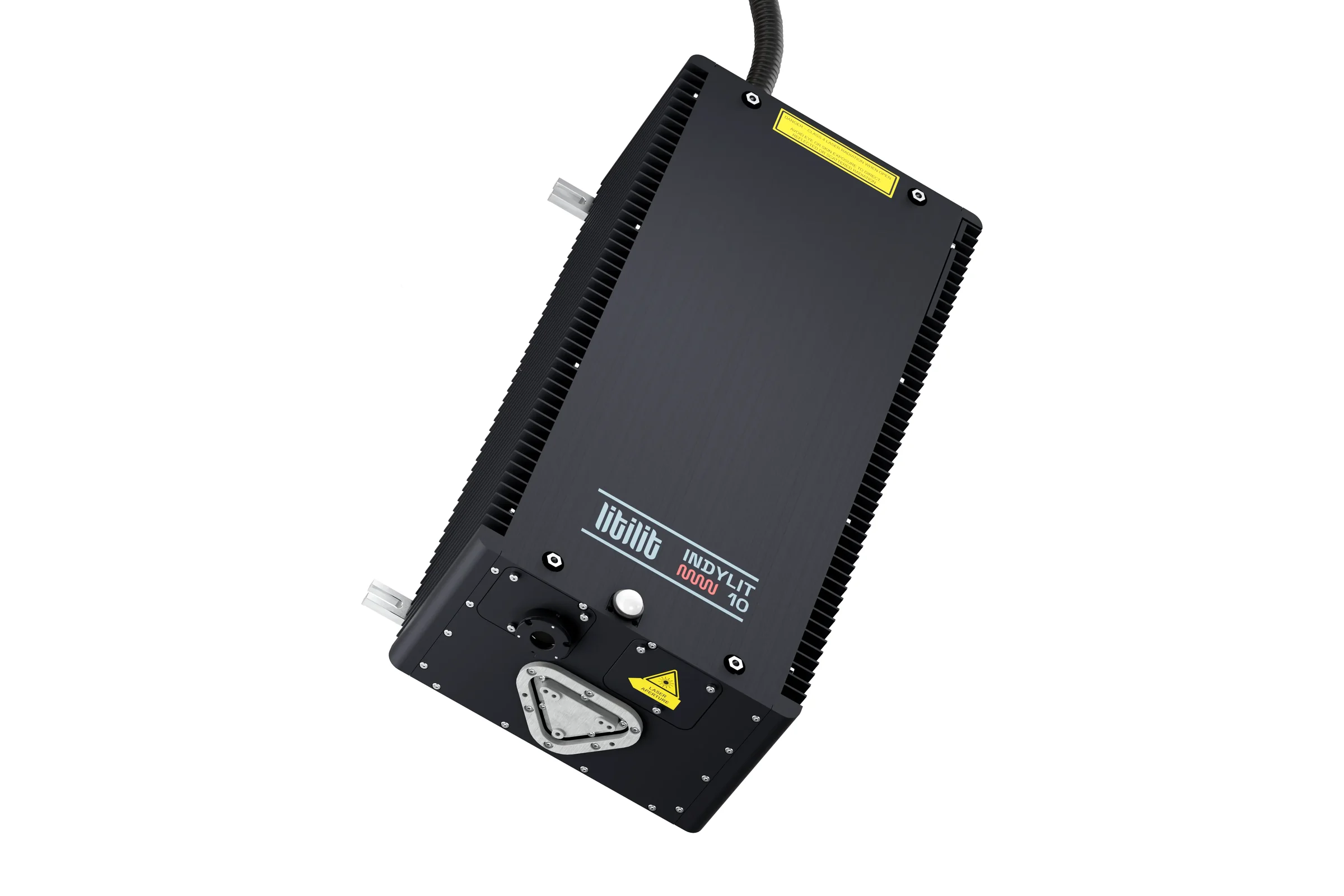
Indylit 10 laser head standing on end, front panel and laser aperture
Technical specifications.
From the Indylit 10 datasheet. Numbered notes are in the Notes tab.
- Central wavelength
- 1030 ± 2 nm
- Average power1
- > 8 W @ 80 kHz > 10 W @ 1 MHz
- Max. pulse energy1
- Up to 100 µJ @ 80 kHz > 10 µJ @ 1 MHz
- Pulse duration
- 380 ± 20 fs
- Pulse duration tunability
- 400 fs – 4 ps
- Internal pulse repetition rate
- 80 kHz – 1.6 MHz down to 25 kHz in Burst Mode
- Pulse picker
- Integrated
- Triggering mode
- Pulse picker control via TTL gate
- Burst length
- 1...12 pulses
- Max. energy in burst
- > 300 µJ at 25 kHz
- Power attenuation2
- 100 – 1%
- Beam quality
- M² < 1.2
- Beam circularity3
- > 0.90
- Beam diameter (at 1/e² level)
- 2.6 ± 0.3 mm 5.0 ± 0.5 mm (optional) 7.5 ± 0.7 mm (optional)
- Polarisation
- Linear horizontal, >1000:1 extinction
- Prepulse contrast
- > 1:1000
- Post pulse contrast
- > 1:100
- Beam divergence (full angle)
- < 1 mrad (for 2.5mm beam)
- Beam pointing (RMS)4
- < 20 µrad
- Beam pointing vs temp.
- < 20 µrad/°C
- Power Stability (RMS)5
- < 1%
- Pulse Energy Stability (RMS)6
- < 1%
- Warm-up time (cold start)
- < 30 min
- Warm-up time (warm start)
- < 5 min
- Laser control interface
- CAN, USB
- Operating voltage
- 24V, 25A (100...240 V AC, 47...63 Hz to 24V AC/DC converter included)
- Average power consumption (after warm-up)
- 200 W
- Maximum power rating
- 700 W
- Operating temperature
- 18 – 33 °C7
- Humidity
- Non-condensing
- Transportation/storage temperature
- -20 – +70 °C
- Dimensions – Laser head (L × W × H)
- 482 × 230 × 163 mm
- Dimensions – Control unit (L × W × H)
- 449 × 385 × 140 mm
- Dimensions – AC/DC converter (L × W × H)
- 250 × 125 × 60 mm
- Umbilical length
- 3 ± 0.1 m
- Cooling – Laser head
- air (passive)
- Cooling – Control unit
- forced air (fans)
- Please refer to the power and energy vs. pulse repetition rate curves for typical values.
- Attenuation can be controlled by a few different methods: a) by PC user interface, b) by CAN register, c) by analog input (0 – 1 V, rise time < 1μs). Beam quality specifications are maintained down to 10% power level.
- Defined as the worst case ellipticity along the z-scan (± 5 × LRayleigh) of the beam.
- Measured during 8 h operation starting 30 minutes after warm-up. Environmental temperature stability within ± 1 °C.
- Measured with integration time of 1s at the same conditions as (4).
- Measured within 10 s time interval for at least 1000 pulses.
- Higher operational temperature is available on request. Please contact LITILIT for details.
- Technology is protected by international patents: LT6261 (B); JP6276471 (B2); US10038297 (B2); EP3178137; DK3178137 (T3); CN106575849 (B); PL3178137 (T3); LT6639 (B); LT2020 563. For details please contact LITILIT. The patented technology was developed together with FTMC (Center for Physical Sciences and Technology).
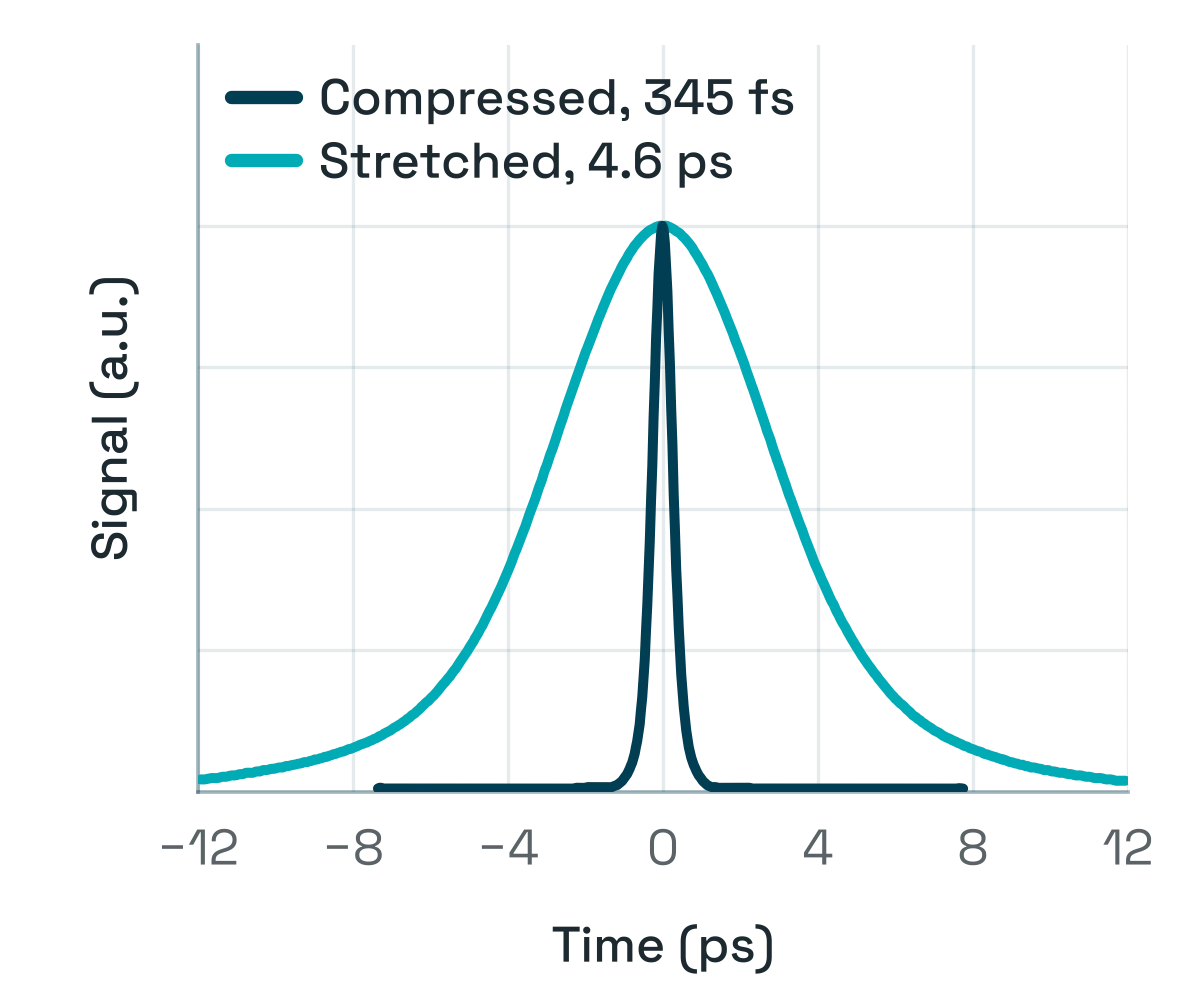
Pulse autocorrelation traces of compressed and maximally stretched 100 µJ pulses
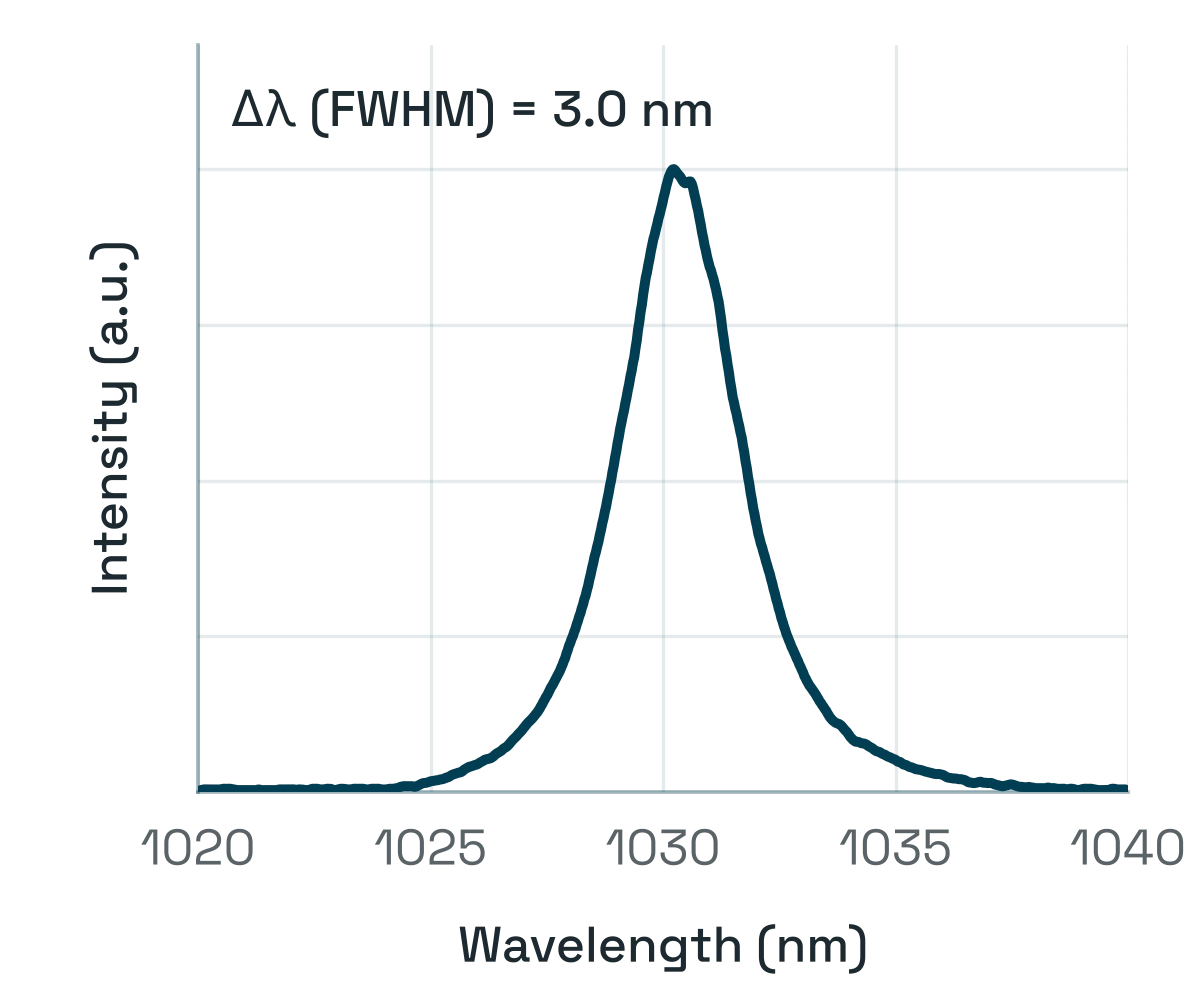
Optical spectrum
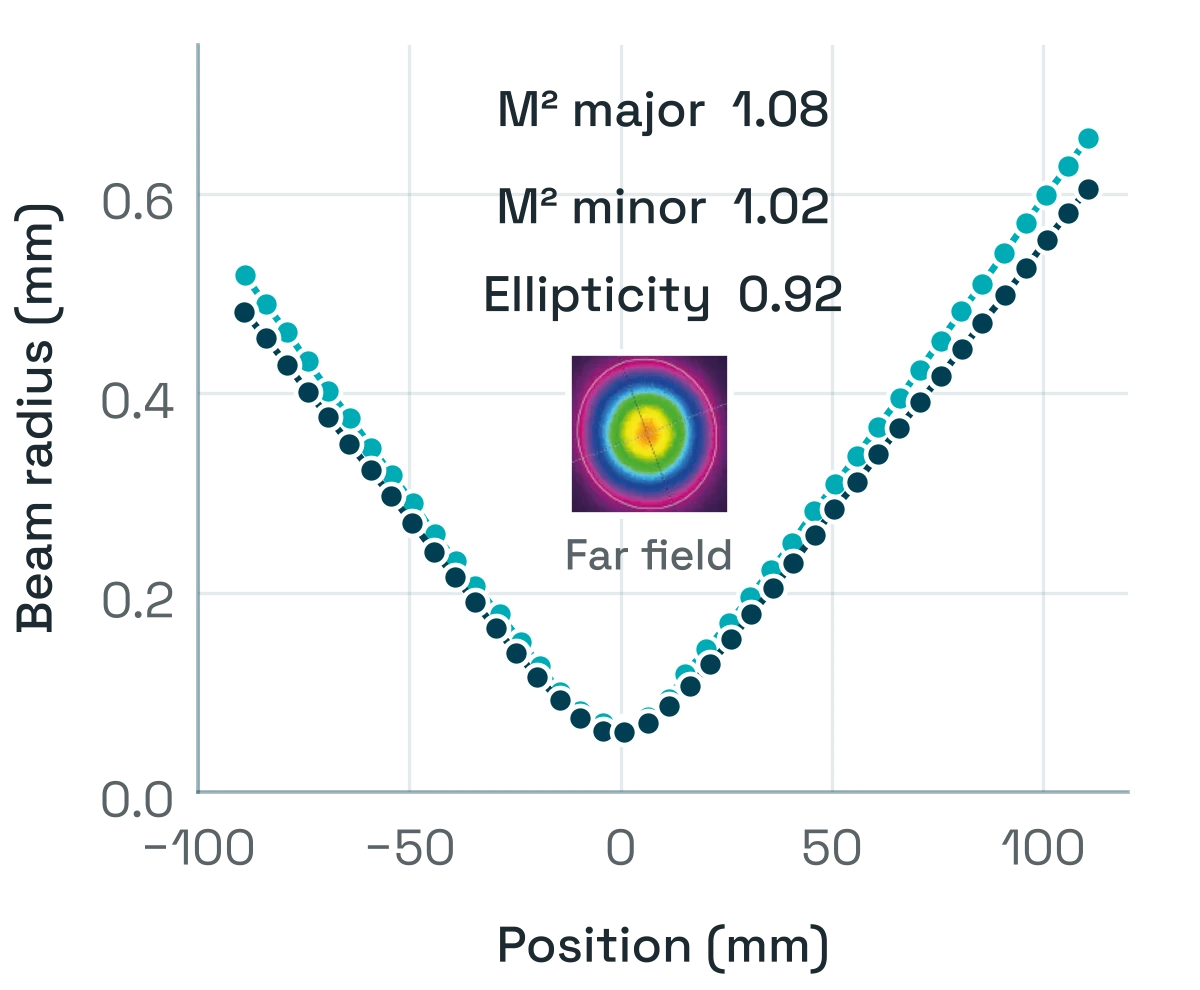
Beam quality measurement and beam profile in far field
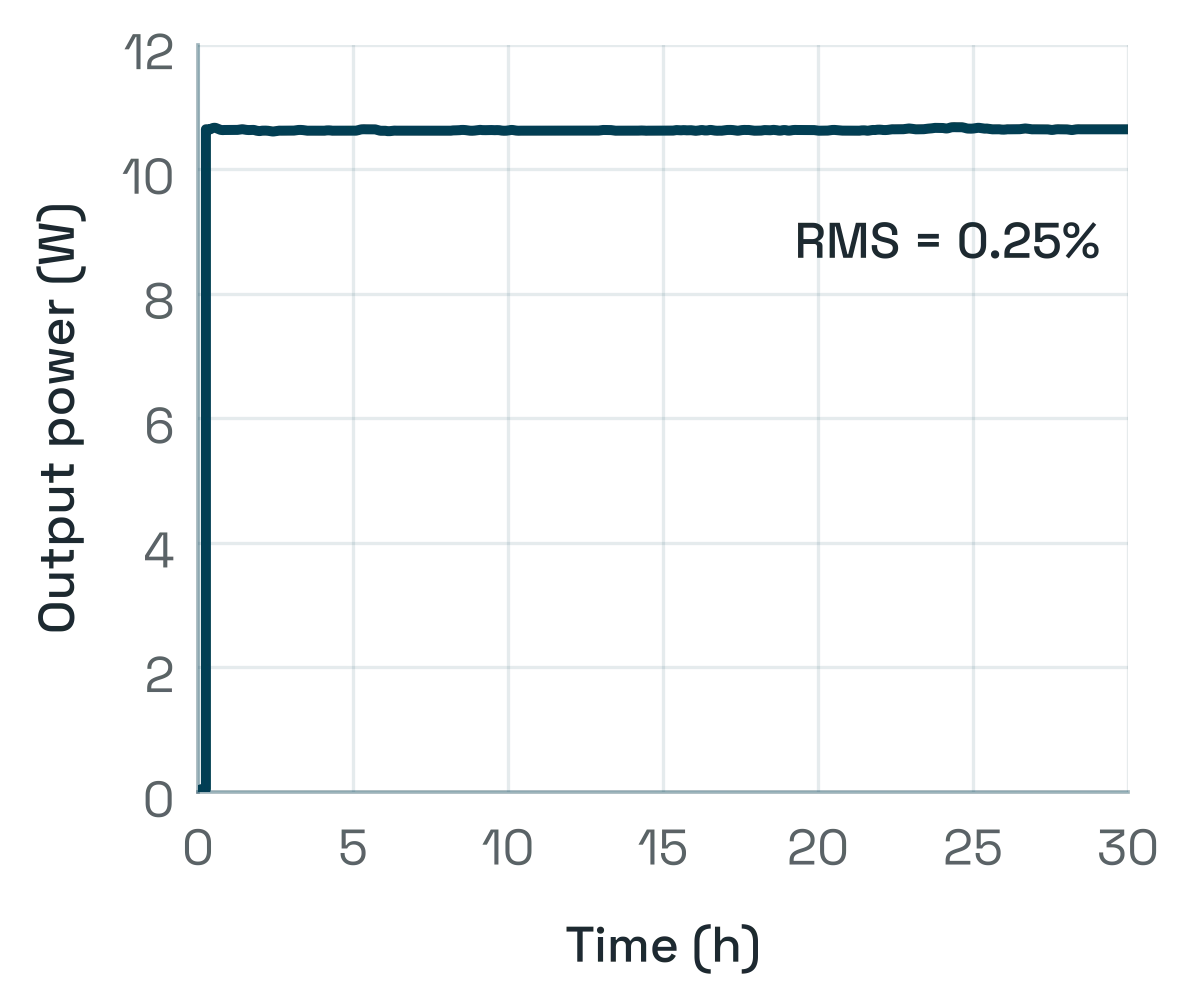
Power stability measurement after cold start
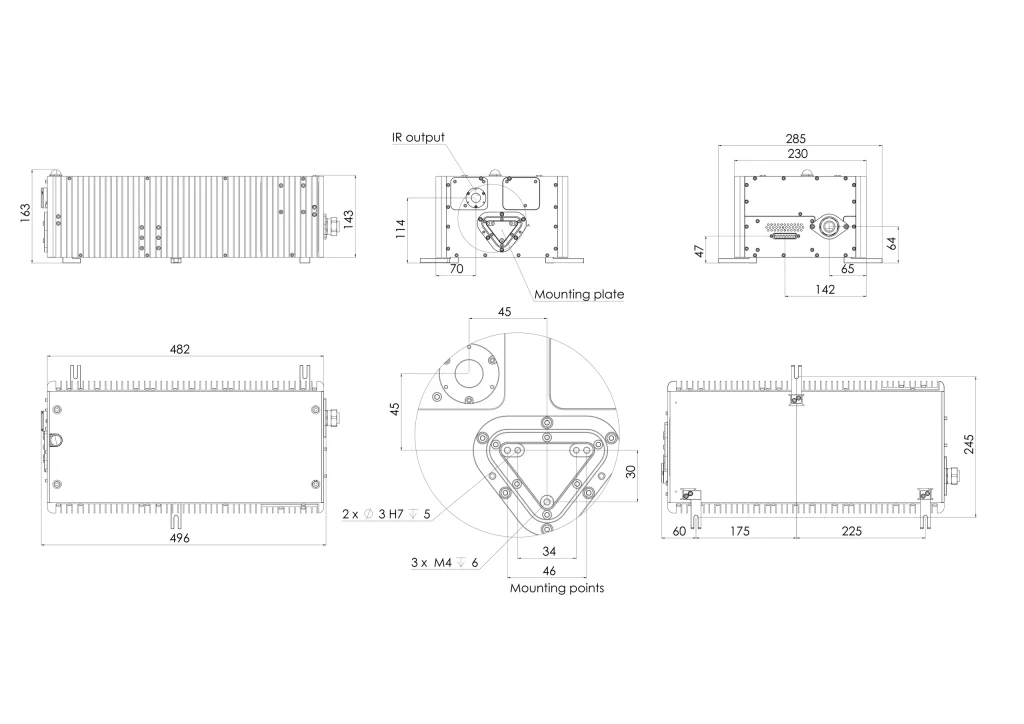
Drawing of Indylit 10 laser head (in mm)
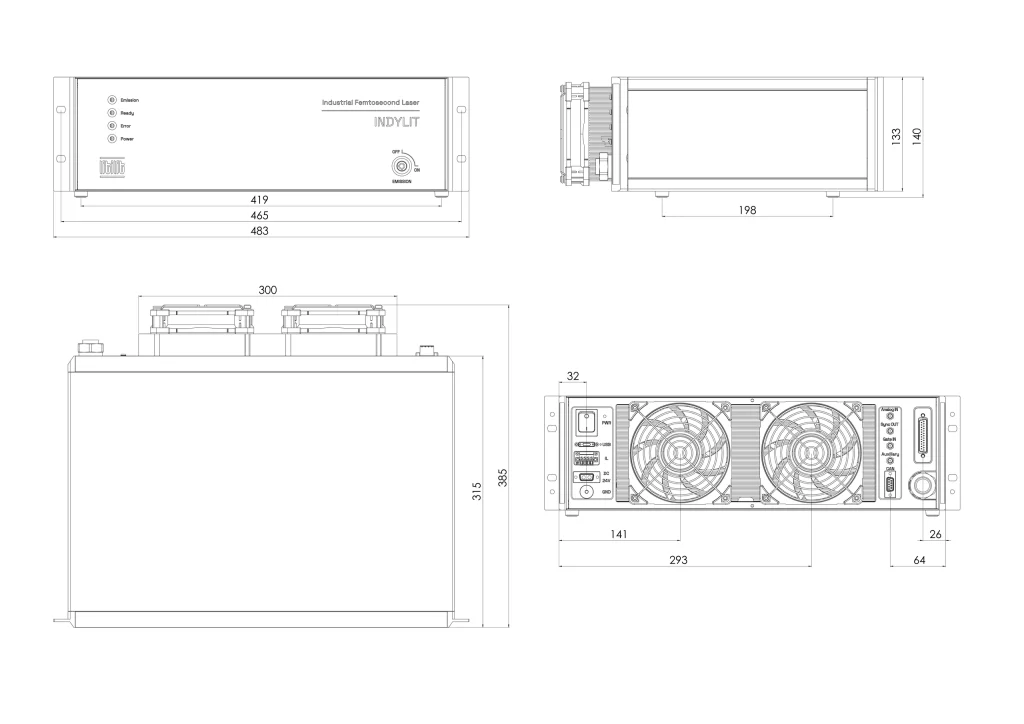
Drawing of Indylit 10 laser control unit (in mm)
Where Indylit 10 is used.
Each application page walks through the problem, the process and the laser that fits it.
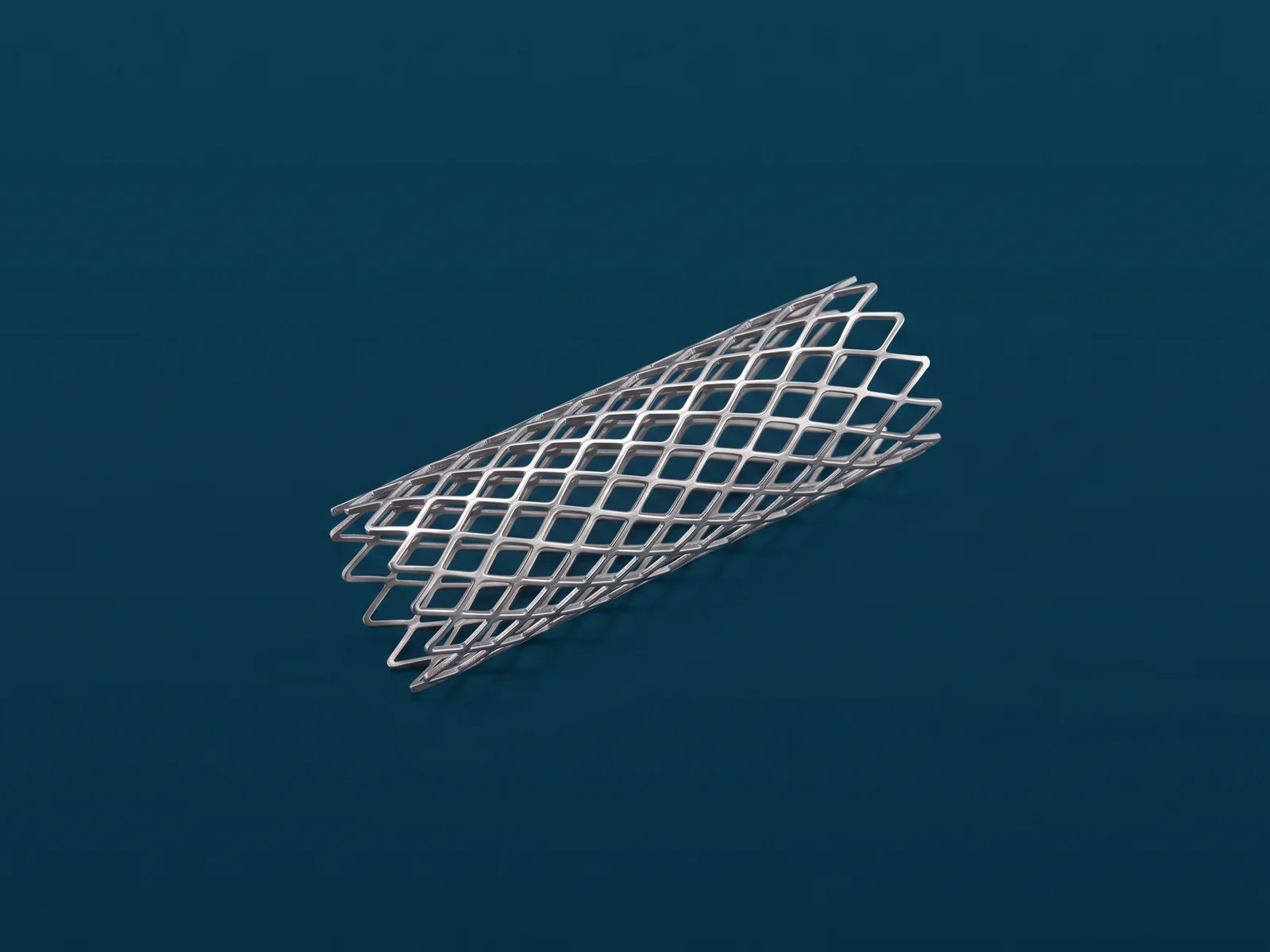 Medical device manufacturing
Cutting stents, catheters and other fine medical parts with a minimal heat-affected zone, around the clock.
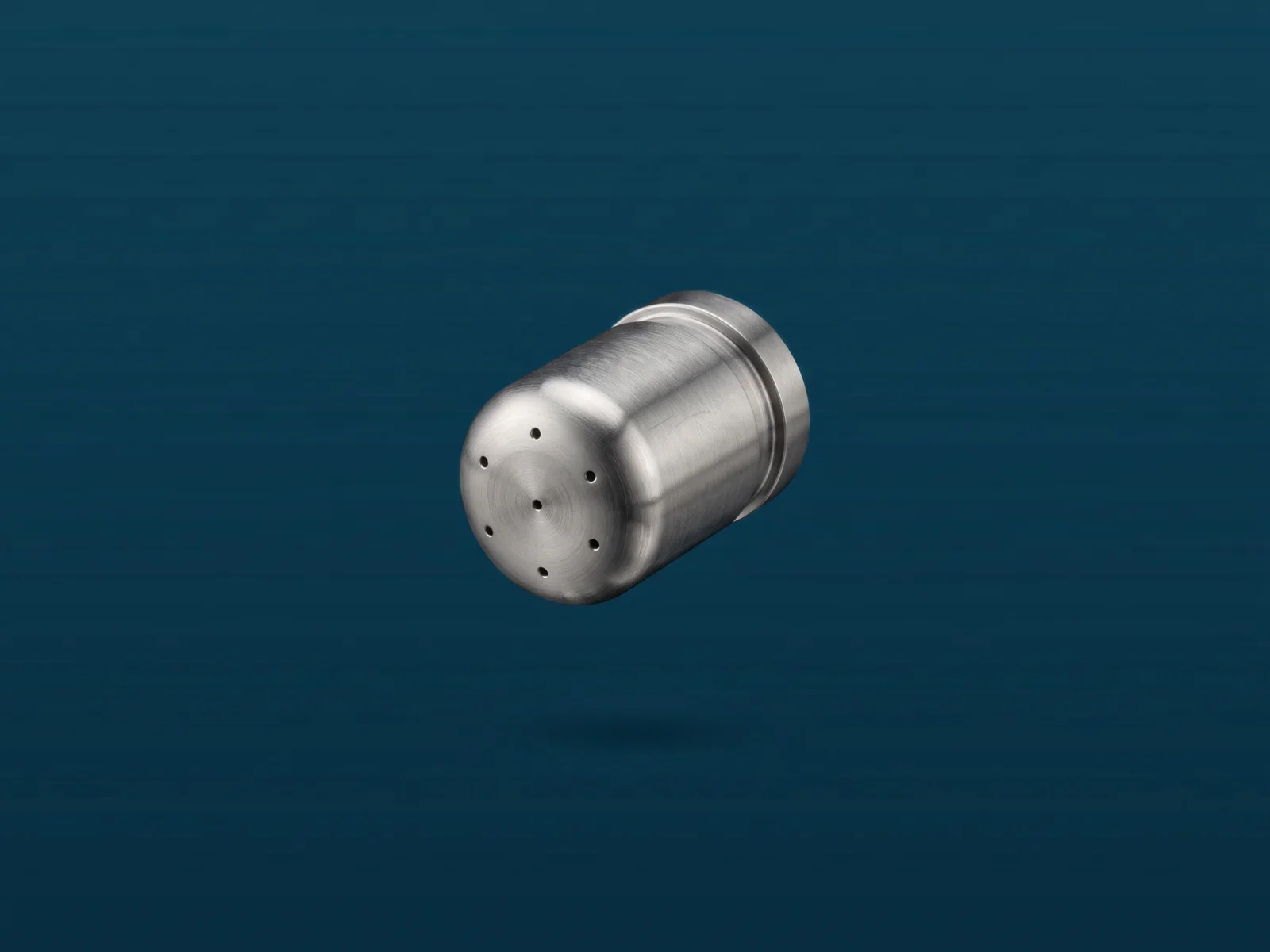 Metal and precision micromachining
Micro-drilling, cutting and texturing of small metal parts, with minimal burr and recast.
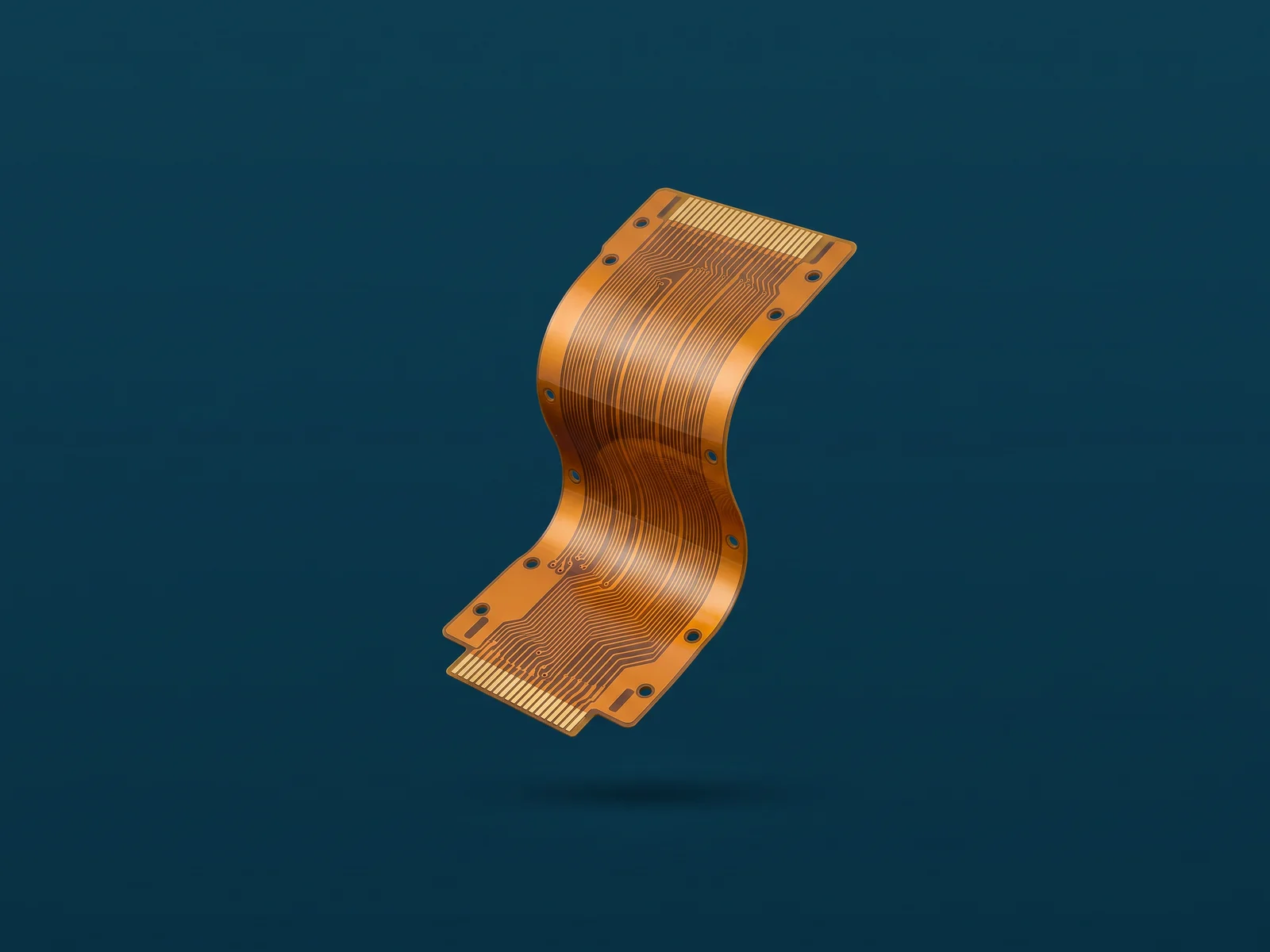 Electronics and PCB
Cutting flexible circuits, display films and other fine features where 10 W is enough.
Discuss your application with an engineer.
Tell us the material, the part and the result you need. A LITILIT engineer replies by email.