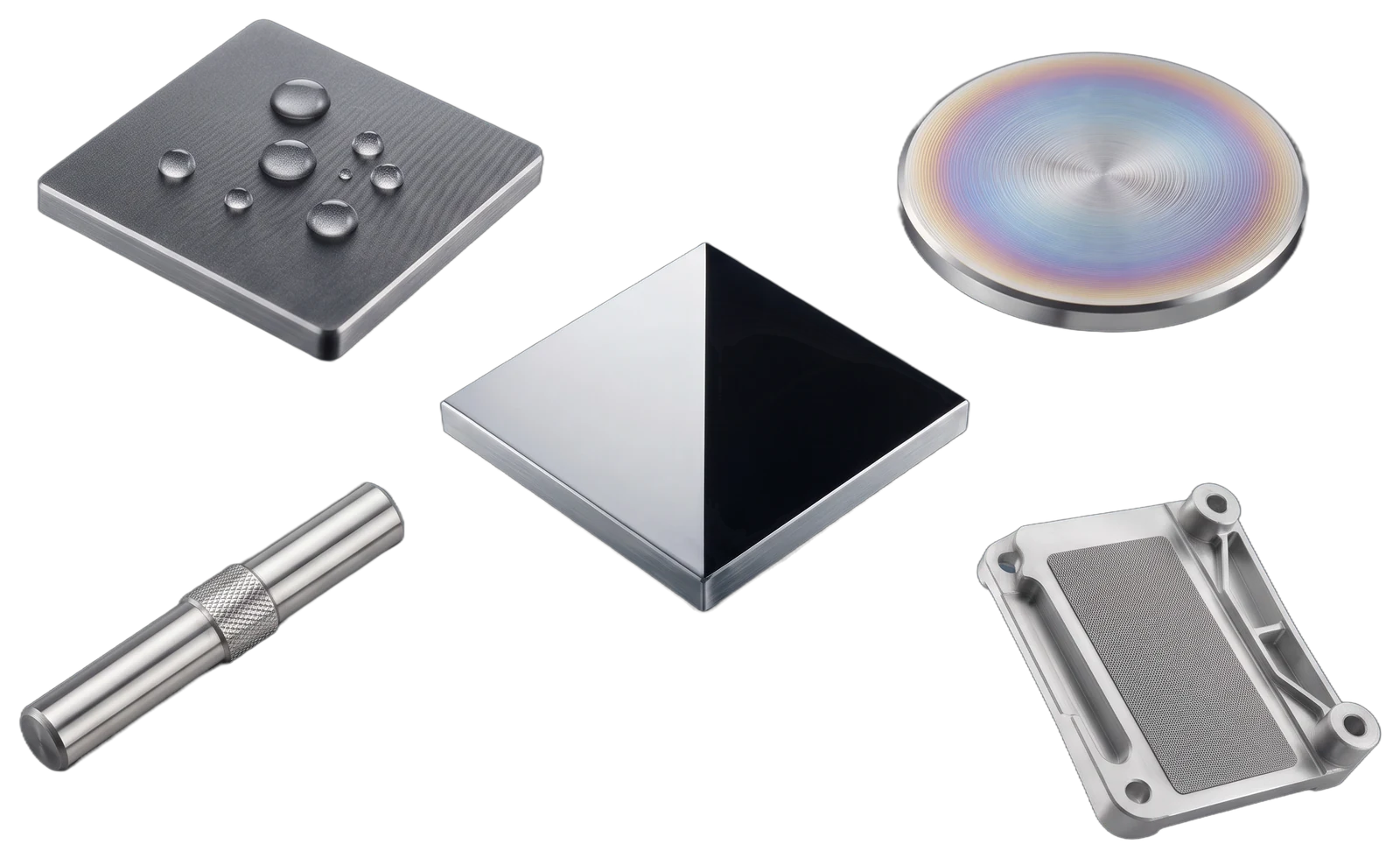
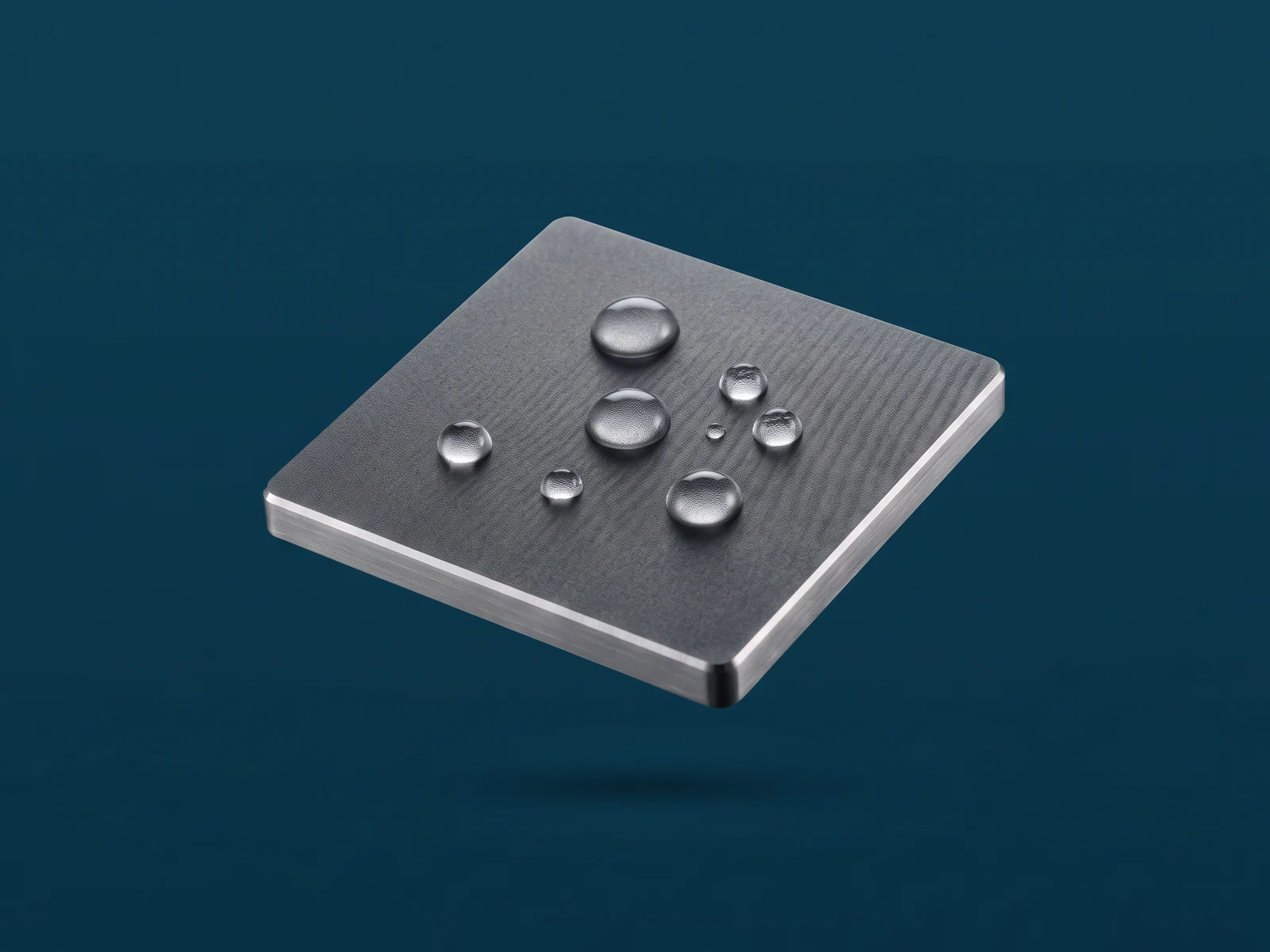
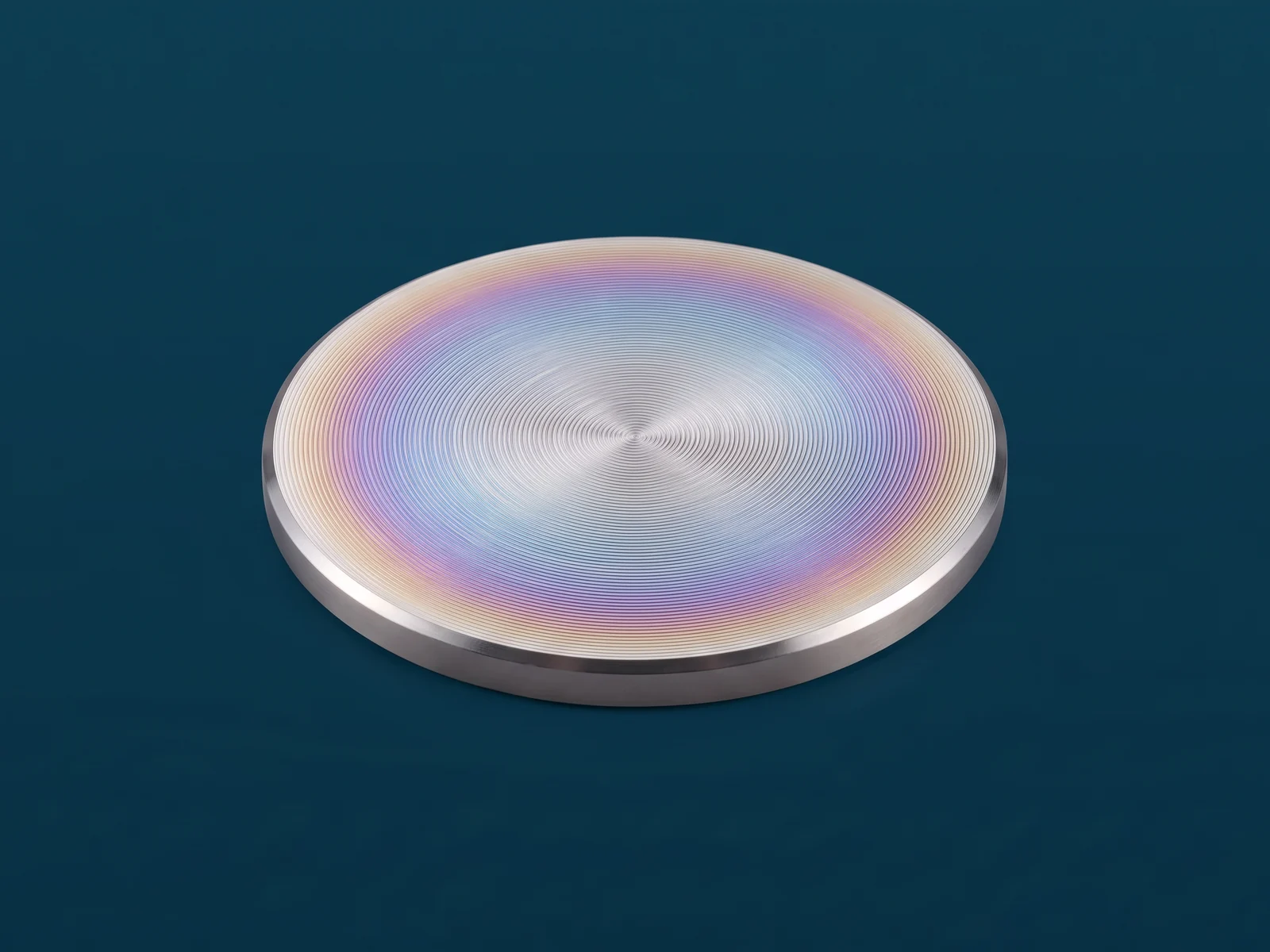
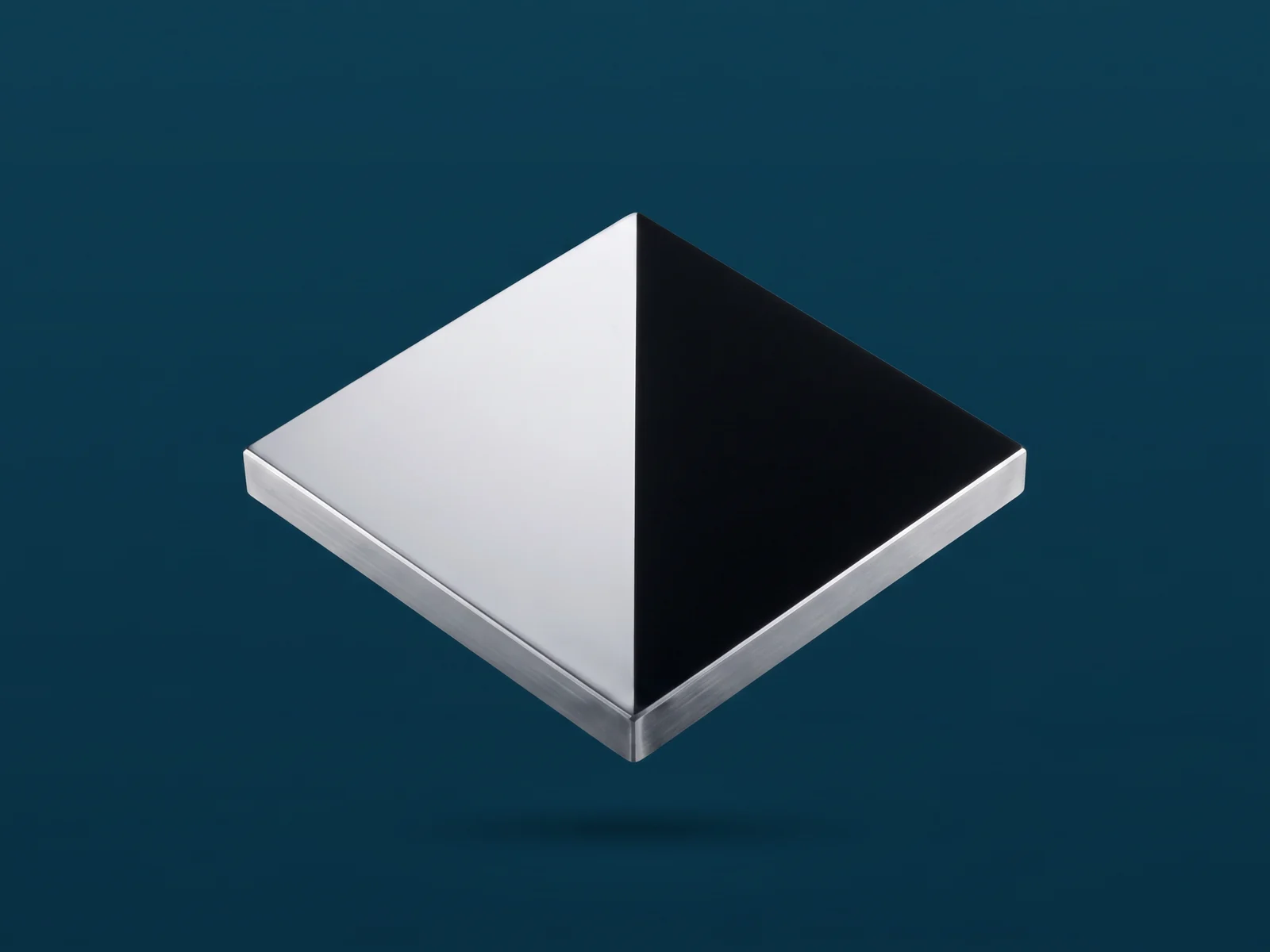
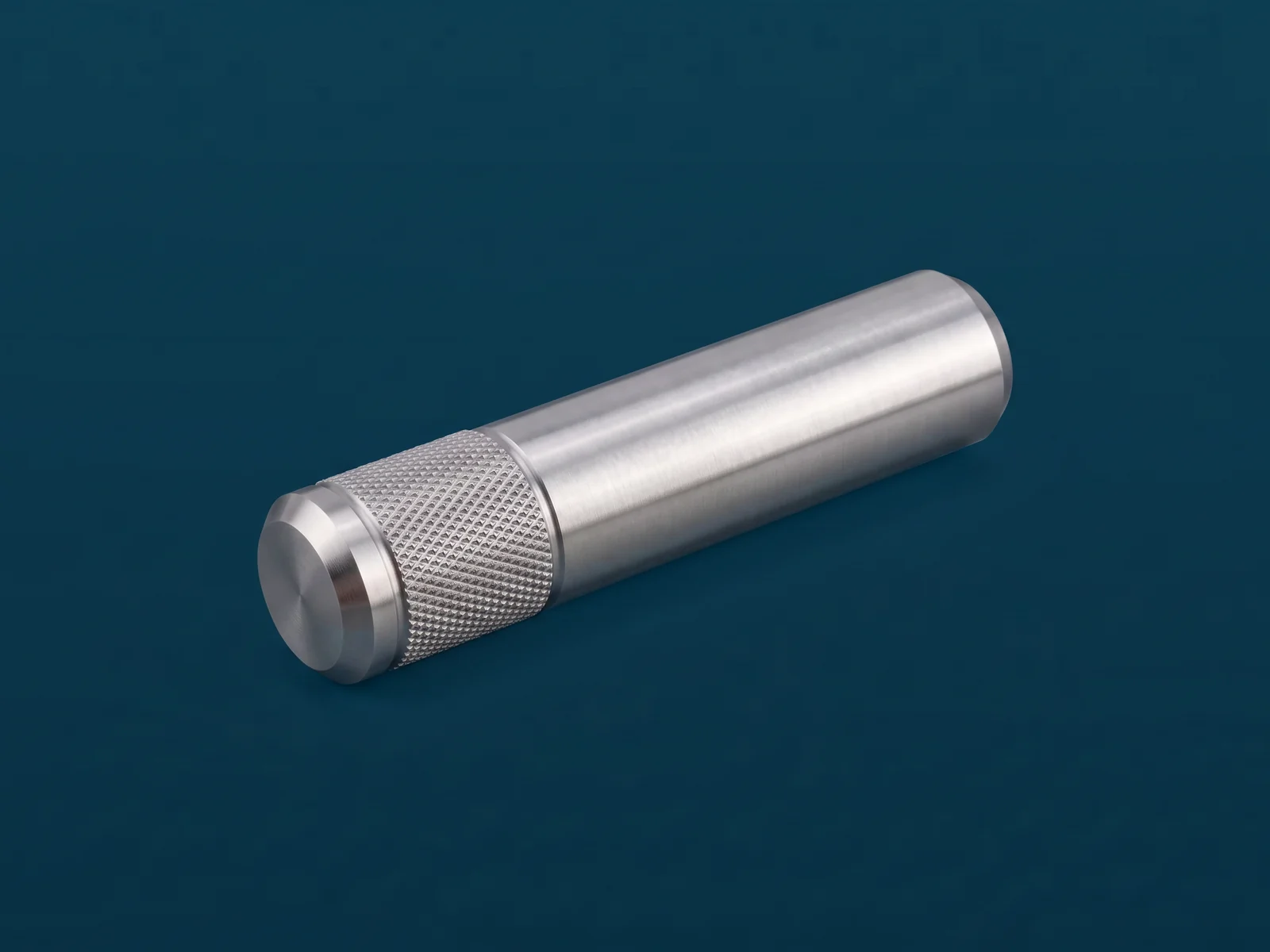
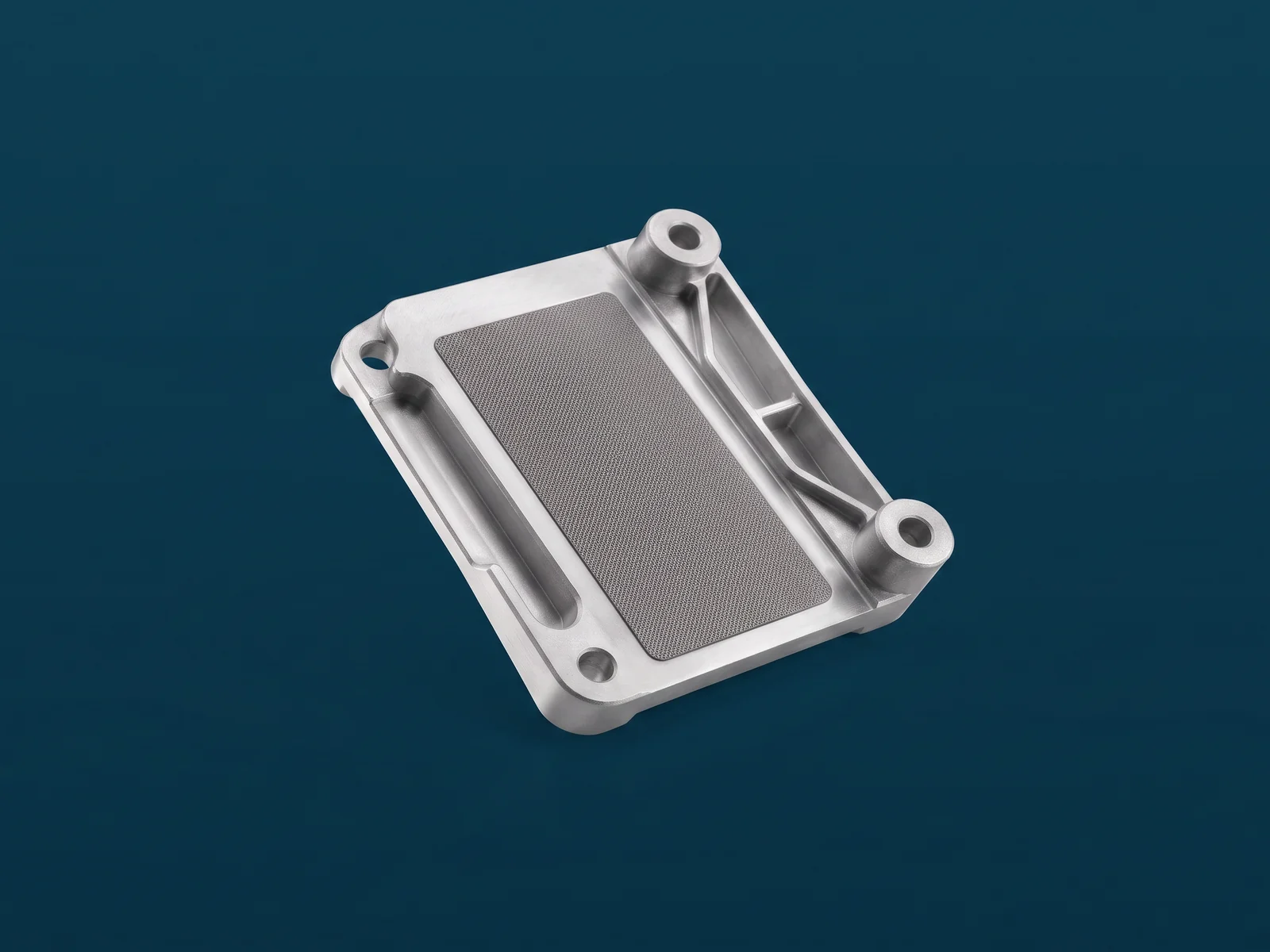
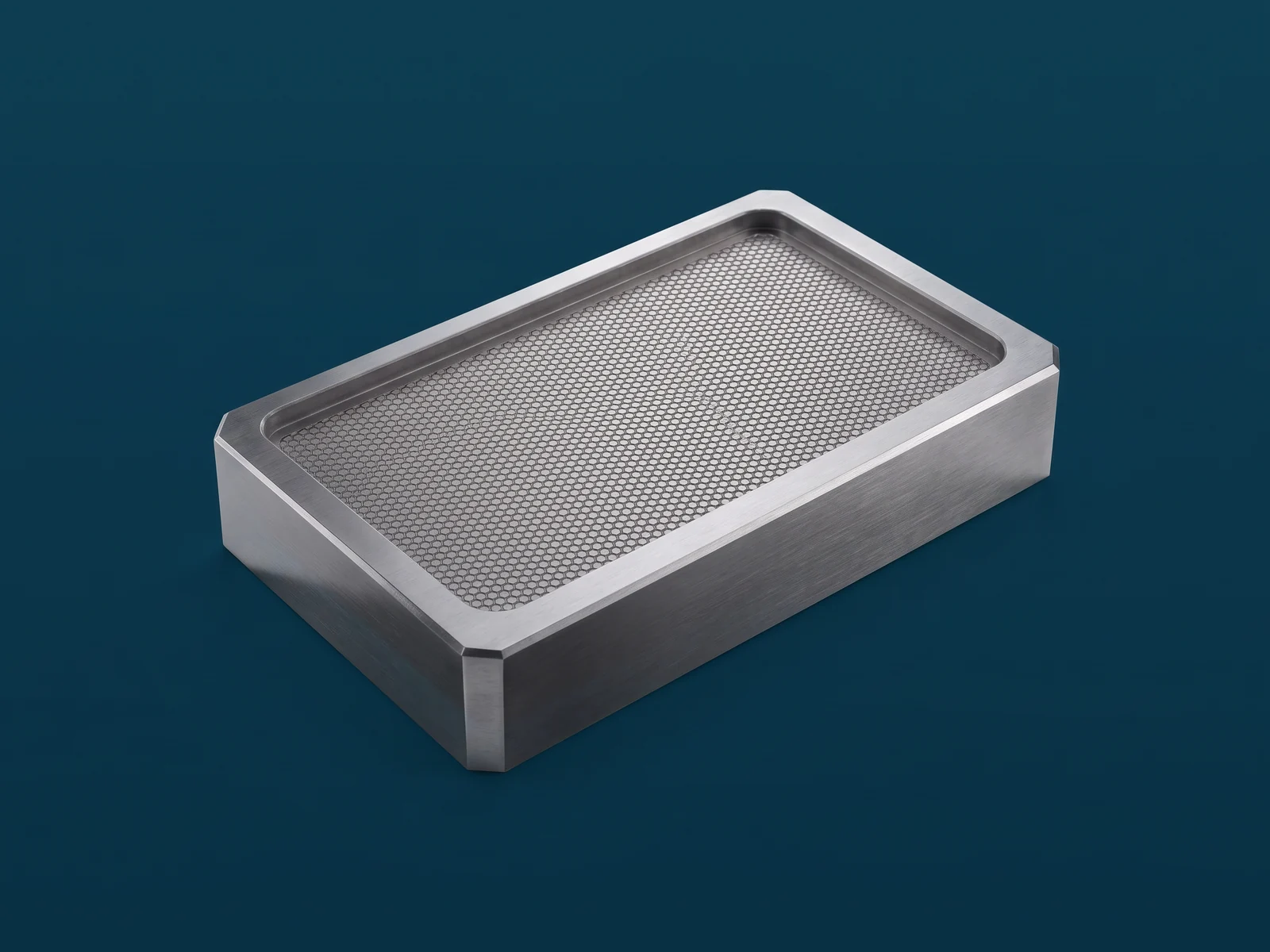
Water-repellent, ultra-black, coloured, low-friction and bond-ready surfaces, written directly into metal, glass and polymers. Femtosecond pulses create micro- and nanostructures without coatings or chemicals, and with minimal heat input.
Where femtosecond structuring works, from water-repellent and ultra-black surfaces to structural colour, low-friction textures, bonding preparation and mould inserts.
Superhydrophobic and self-cleaning surfaces
A hierarchical micro- and nanostructure on metal makes water bead up and roll off, taking dirt with it. The same principle helps against icing and fouling on sensors, heat exchangers and outdoor parts, without a coating that wears away.
Laser-induced periodic surface structures diffract light like a fine grating, so the surface shows colours that change with the viewing angle. Logos, decorative finishes and anti-counterfeit features are made without inks or pigments. Indylit 10 is enough for small logos and security features; Indylit 20 covers larger areas faster.
Deep micro- and nanostructures trap light, so the surface reflects very little over a wide range of wavelengths and angles. Ultra-black metal cuts stray light in optical instruments, sensors and space hardware without black paint that can flake or outgas.
Many parts need a surface that does something: repel water, absorb light, hold oil or bond to an adhesive. Coatings and chemical treatments add steps, wear off or rely on chemicals that are being phased out. A laser-made structure is part of the material itself.
Coatings wear off, chemicals add steps
Hydrophobic coatings, black paints, anodising and chemical etching each add a process, a material and a way to fail. They wear, peel or age, and several of the chemicals involved are under regulatory pressure. Longer-pulse lasers can texture too, but they melt the surface and blur fine structures.
What the process needs
Structures in the micrometre and sub-micrometre range
Minimal melt, burr or recast
Even texture over large and curved areas
The same function from part to part
Write the function into the surface
Femtosecond pulses create micro-dimples, grooves and self-organised nanostructures (LIPSS) directly in the material. Depending on the pattern, the same laser makes a surface water-repellent, black, coloured, low-friction or ready to bond.
Low-friction textures
Patterns of micro-dimples on shafts, pistons, bearings and seal faces store lubricant and trap wear debris. The result is lower friction and longer service life. The laser writes the dimples to a set depth and spacing, with a minimal raised edge that would need polishing.
Adhesives, paints and over-moulded plastics hold better on a clean, structured surface. Laser texturing removes oxides and contamination and creates anchoring structures in one dry step that can replace sandblasting, primers and chemical pre-treatment.
A texture written into a mould insert or embossing roll is copied into every moulded or embossed part. Micro-textures for grip, matte finishes, optical effects or water repellence are made directly in hardened tool steel.
Mounts on scanner stations and robot cells that texture large or curved parts.
Passive air cooling
No chiller and no water lines, even on large multi-axis machines.
Stable pulse energy
Pulse energy stability below 1% RMS keeps the texture even across a whole surface and from part to part.
Simple integration
Standard interfaces connect to scanner software, vision systems and line controllers.
Surface treatment methods compared.
A functional surface can come from a coating, a chemical process or a structure in the material itself. The difference shows up in durability and in the number of process steps.
Coatings and paints
Easy to apply; wear, peel and add a material to the part
Chemical etching and anodising
Uniform; chemicals, masks and waste treatment
Sand and bead blasting
Fast roughening; little control over the pattern
Nanosecond laser texturing
Fast; melt and recast blur fine structures
Femtosecond laser structuring
Defined micro- and nanostructures with minimal melt and no added material
The laser for surface structuring.
20 W average power for production texturing, with the clean pulses that fine nanostructures need.
Laser surface structuring changes the topography of a surface on the micro- and nanometre scale to give it a function, such as water repellence, low reflection, colour, low friction or better adhesion. The structure is part of the material, so nothing is added that can wear off or peel.
What are LIPSS?
Laser-induced periodic surface structures are regular ripples that form on many materials under ultrashort pulses. Their period is close to the laser wavelength or smaller. They are used for structural colour, wetting control and friction reduction.
Which materials can be structured?
Most metals, including stainless steel, aluminium, titanium and copper, as well as hardened tool steel, ceramics, glass and many polymers.
Is a laser-made superhydrophobic surface permanent?
The structure is permanent, but the water-repellent effect also depends on surface chemistry. On many metals it develops over days in air or faster with a short heat treatment after texturing. Long-term behaviour should be tested in the real application.
How fast can large areas be textured?
Area rate depends on the structure, the material and the laser power. Average power and scanner speed are the main levers, which is why Indylit 20 rather than Indylit 10 is the usual choice for production texturing. The rate has to be measured on your own structure.
Which LITILIT laser fits surface structuring?
Indylit 20 for large-area texturing, ultra-black surfaces, friction textures and moulds, where average power sets the speed. Indylit 10 for structural colour, fine features and smaller areas.
How does buying a laser work?
Tell us your material, process and volume. An application engineer reviews your request and suggests a laser and configuration. You then receive a quotation with pricing, lead time, payment and support terms.
Tell us your material, process and volume. Our application engineers suggest a laser and configuration, and we send a quotation with pricing, lead time and support terms.