Stent cutting, catheter drilling, implant surface texturing and permanent UDI marking. Femtosecond pulses process nitinol, cobalt-chromium, titanium and medical polymers with a minimal heat-affected zone, so parts need less post-processing.
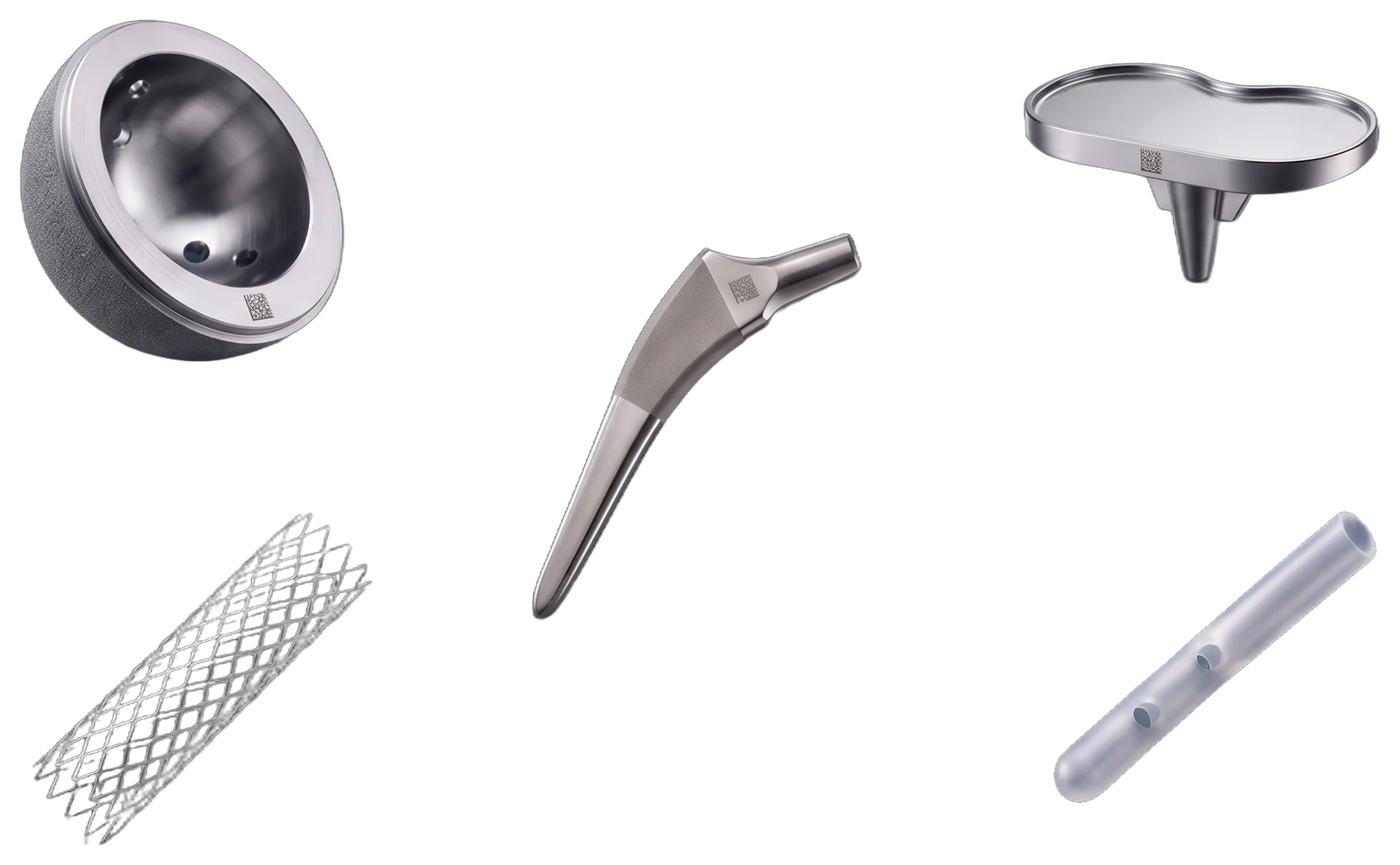
Where femtosecond processing works in medical device manufacturing, from stents and catheters to joint and dental implants, polymer implants and permanent UDI marks.
Stent cutting
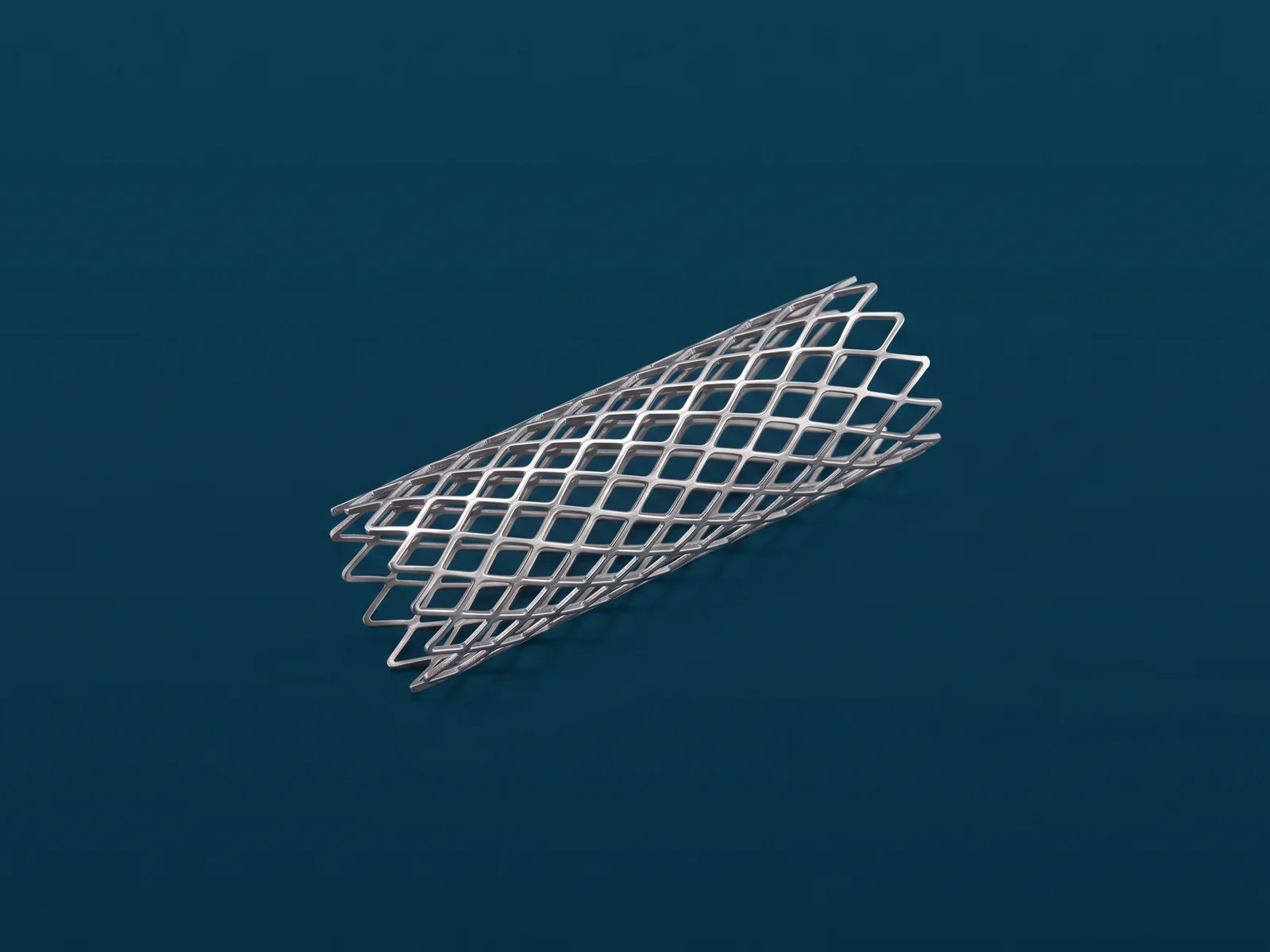
Stents are cut from thin tubes of nitinol, cobalt-chromium or stainless steel, with struts often less than 100 µm wide. Femtosecond cutting leaves smooth strut edges with little or no dross and a minimal heat-affected zone, which shortens descaling and electropolishing.
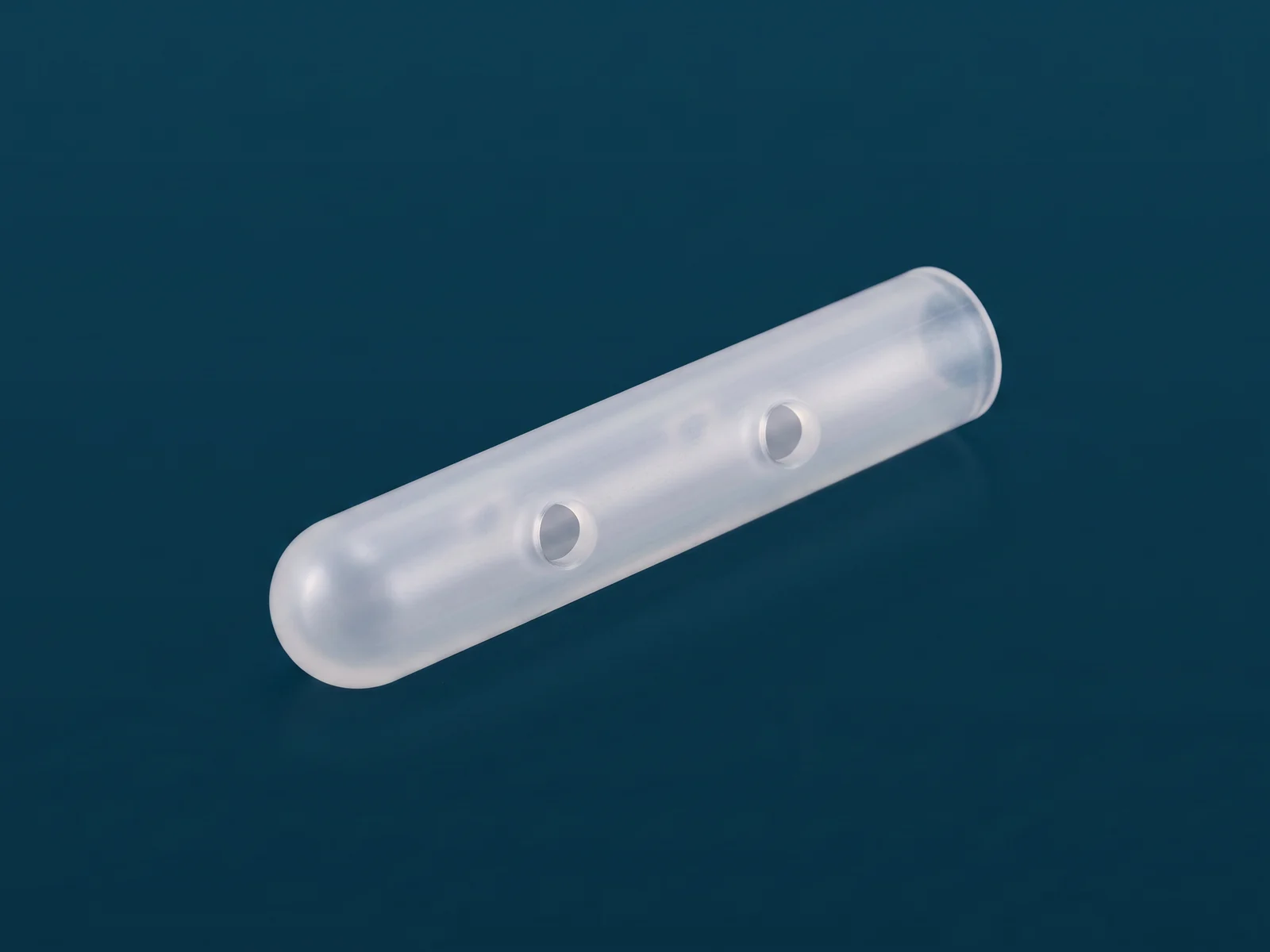
Catheters and balloon shafts need side holes, slots and skives in thin polymer walls, sometimes over a metal braid. Ultrashort pulses drill clean holes with minimal melting at the edges, so fluid flow and the strength of the wall stay as designed.
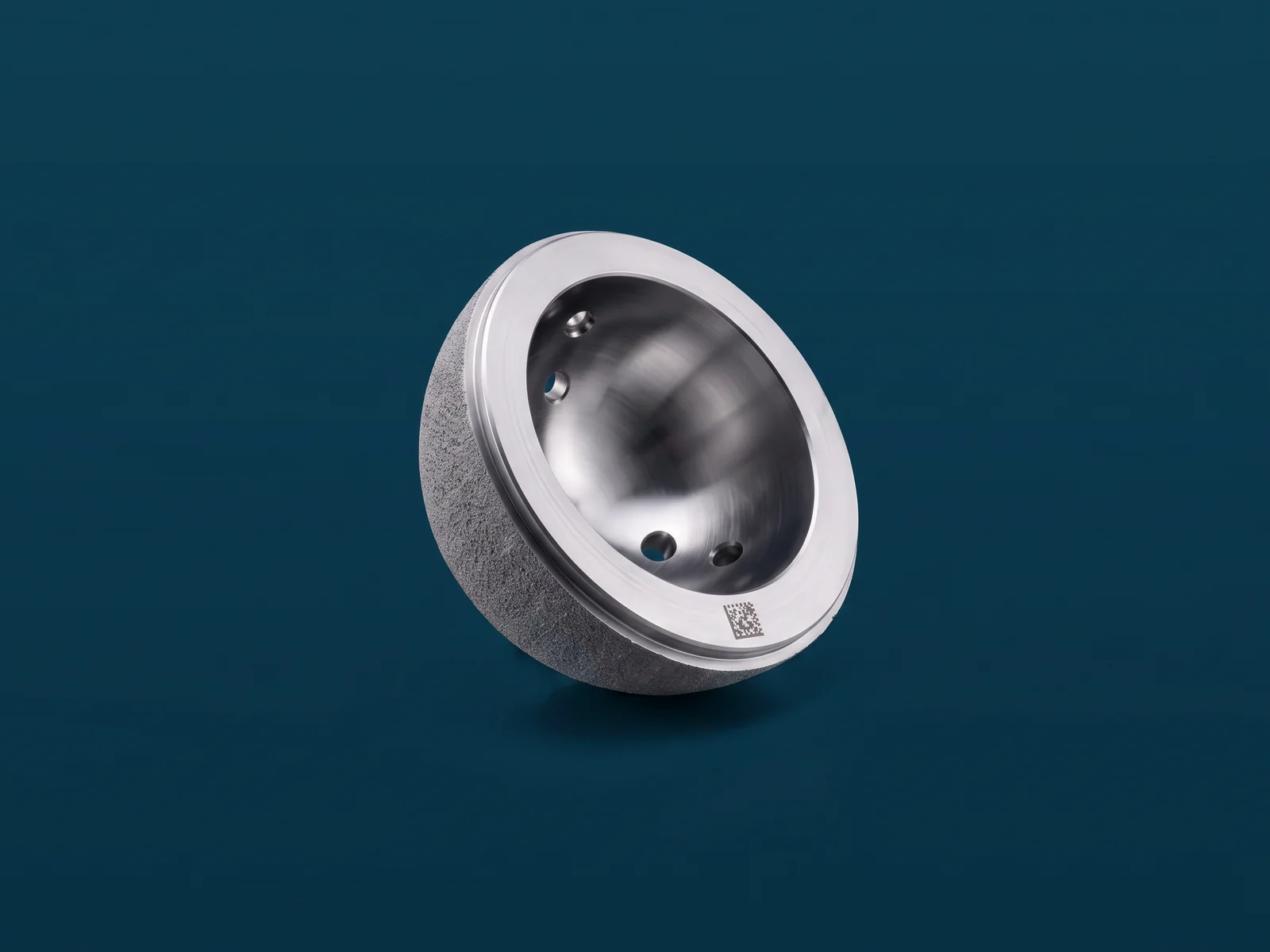
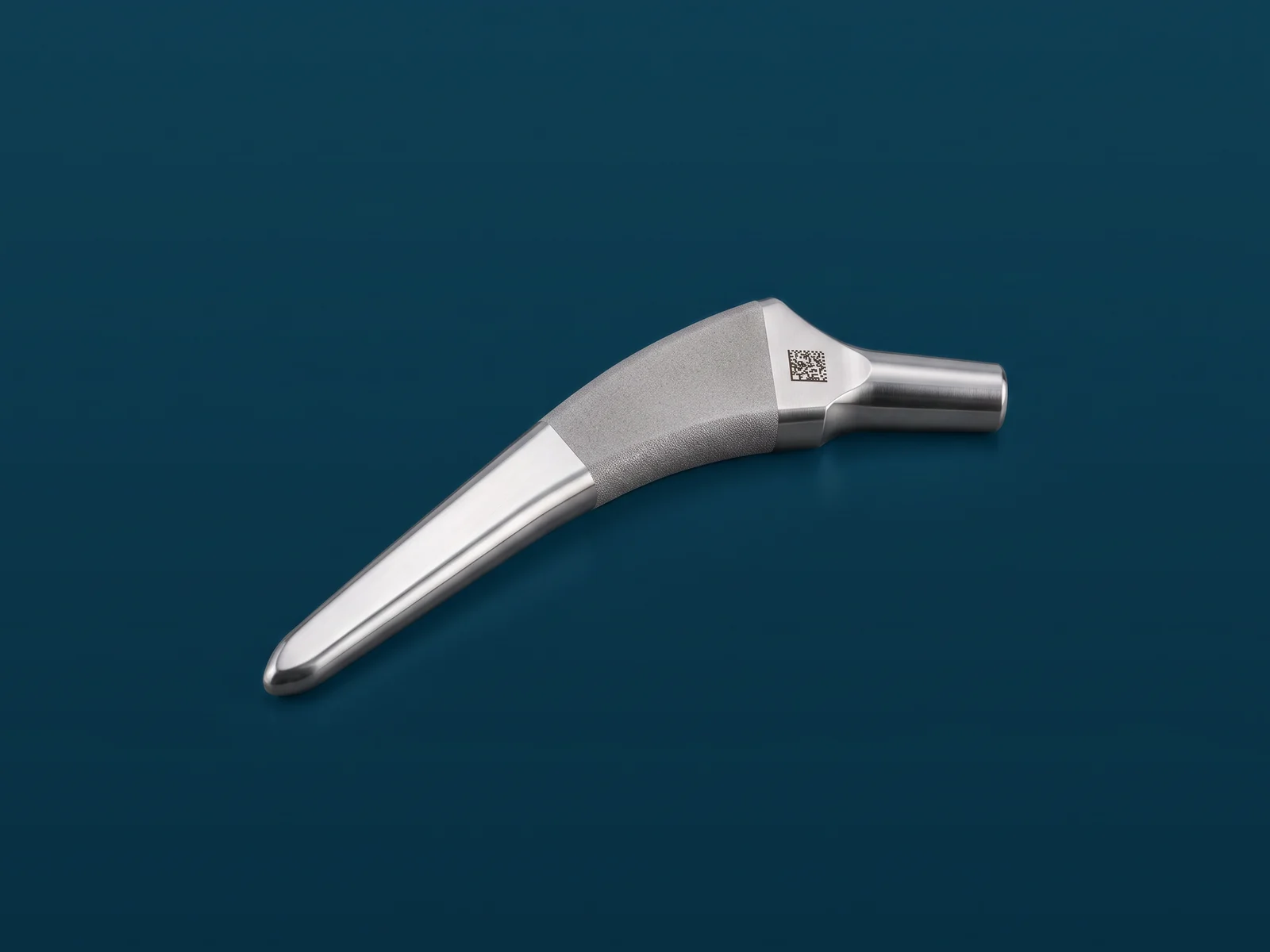
Hip cups, stems and knee components need defined surfaces: textured zones for bone contact and polished zones for bearing. The laser structures selected areas of titanium and cobalt-chromium parts with micro-textures, without blasting media left in the surface.
Medical devices combine small features, sensitive materials and strict validation. Heat from cutting or drilling changes the material next to the cut: nitinol changes its transformation behaviour, polymers melt, and metals form oxide and recast that must be removed before cleaning and passivation.
Heat damage means extra finishing
Fibre and nanosecond lasers cut stents and drill catheters fast, but leave dross, recast and a heat-affected zone. Every part then goes through descaling, electropolishing or deburring, and each extra step adds cost, scrap and validation work.
What the process needs
Cut edges with minimal dross, recast or burr
Minimal heat-affected zone in nitinol and thin metals
Clean holes and cuts in polymers with minimal melting
Results that stay the same in a validated process
Cut cold, finish less
Femtosecond pulses remove material before heat can spread. Stent struts come out with clean edges, catheter holes with minimal molten lips, and implant surfaces can be textured without changing the bulk material. Post-processing becomes shorter and easier to control.
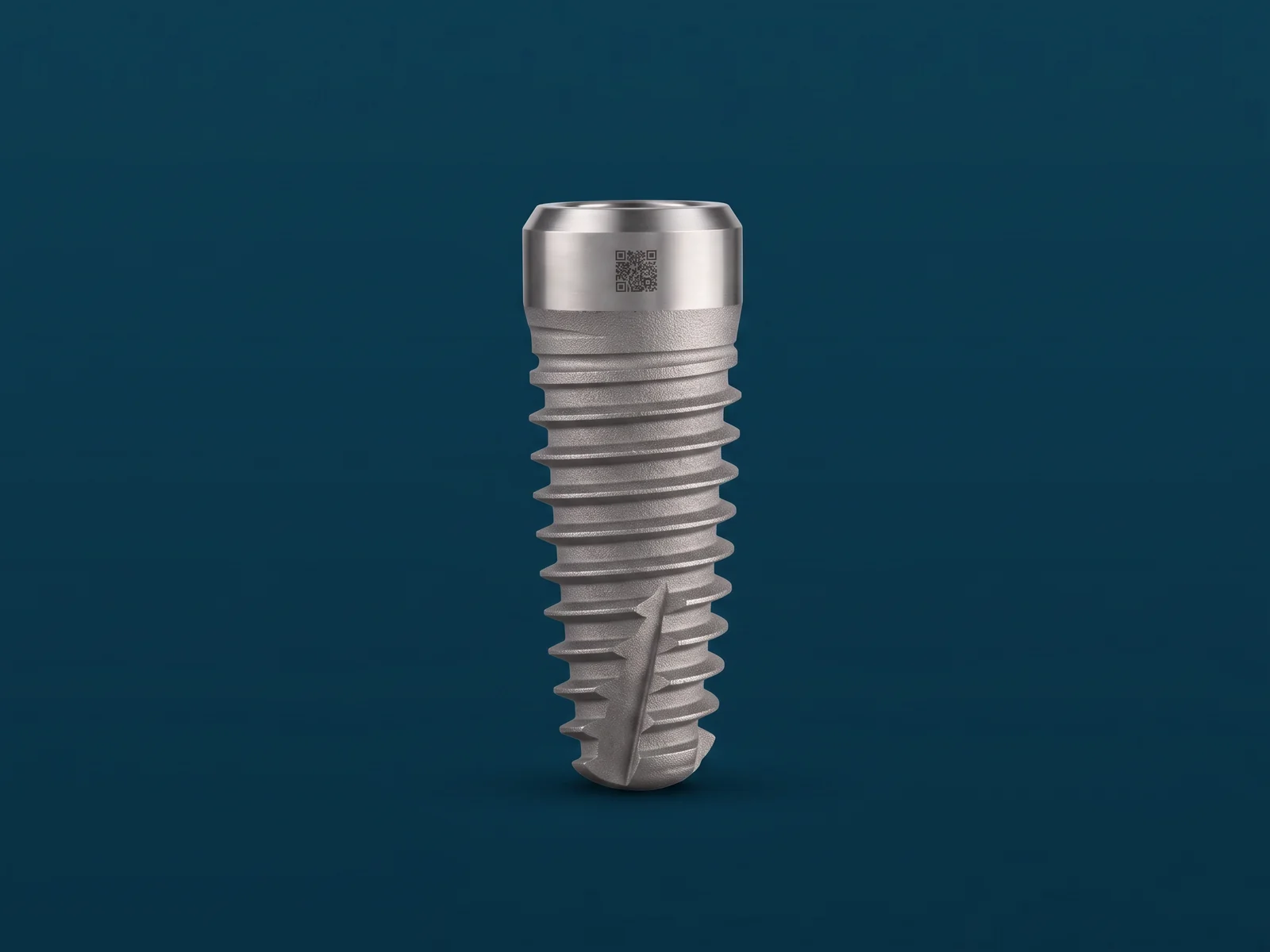
Dental implant surfaces
Dental implants are small and threaded, and the thread surface affects how they integrate with bone. The laser creates repeatable micro- and nanostructures on the threads and keeps the collar smooth, as an alternative or complement to blasting and acid etching.
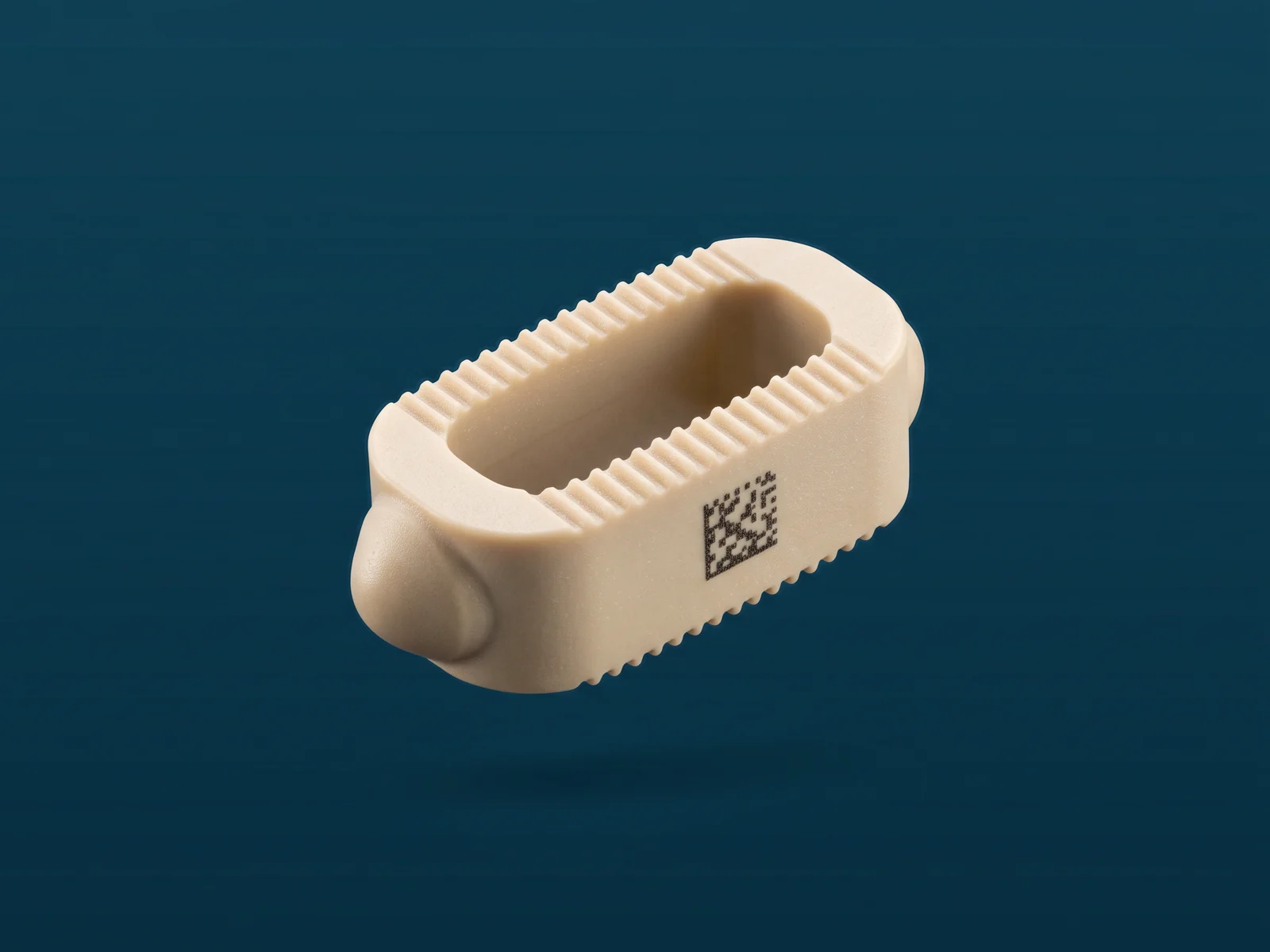
PEEK spinal cages, bioresorbable scaffolds and polymer housings are sensitive to heat. Femtosecond pulses cut, drill and texture them with minimal melting or discolouration near the edge.
Reusable instruments and implants carry a Unique Device Identifier that has to stay readable through cleaning, passivation and sterilisation. Femtosecond black marking structures the surface instead of growing an oxide, so the code keeps its contrast and the steel keeps its corrosion resistance.
Femtosecond pulses cut the strut pattern with little or no dross or recast and with a minimal heat-affected zone. For nitinol this matters because heat changes its transformation behaviour near the cut. Cleaner cuts also mean shorter descaling and electropolishing.
Can the laser drill catheters?
Yes. Side holes, slots and skives in thin polymer catheter walls are made with clean edges, minimal melting and little or no burnt residue. Depending on the design, holes can also be opened through the polymer jacket with minimal damage to a metal braid underneath.
Which medical materials can be processed?
Nitinol, cobalt-chromium, stainless steel, titanium and its alloys, platinum-iridium, bioresorbable metals and polymers, PEEK, Pebax, nylon, polyimide and PTFE.
Does the process support validation?
The laser is one part of a validated process. Pulse energy stability below 1% RMS, power stability below 0.5% RMS and parameter control through standard interfaces make the process repeatable; the results are documented in your own validation.
Can the same laser texture and mark implants?
Yes. Texturing of bone-contact zones and black UDI marking use the same laser with different parameter sets. The UDI marking page covers codes made to stay readable through passivation and sterilisation.
Which LITILIT laser fits medical manufacturing?
Indylit 20 for stent cutting, implant and dental texturing and UDI marking, with the average power for production speed. Indylit 10 for fine catheter holes and polymer parts, where 10 W is enough.
How does buying a laser work?
Tell us your material, process and volume. An application engineer reviews your request and suggests a laser and configuration. You then receive a quotation with pricing, lead time, payment and support terms.
Tell us your material, process and volume. Our application engineers suggest a laser and configuration, and we send a quotation with pricing, lead time and support terms.