Cutting cover glass and ultra-thin glass, drilling holes and vias, and writing channels and marks inside the glass. Glass is transparent to the laser, so femtosecond pulses act only at the focus and edges stay largely free of chips and microcracks.
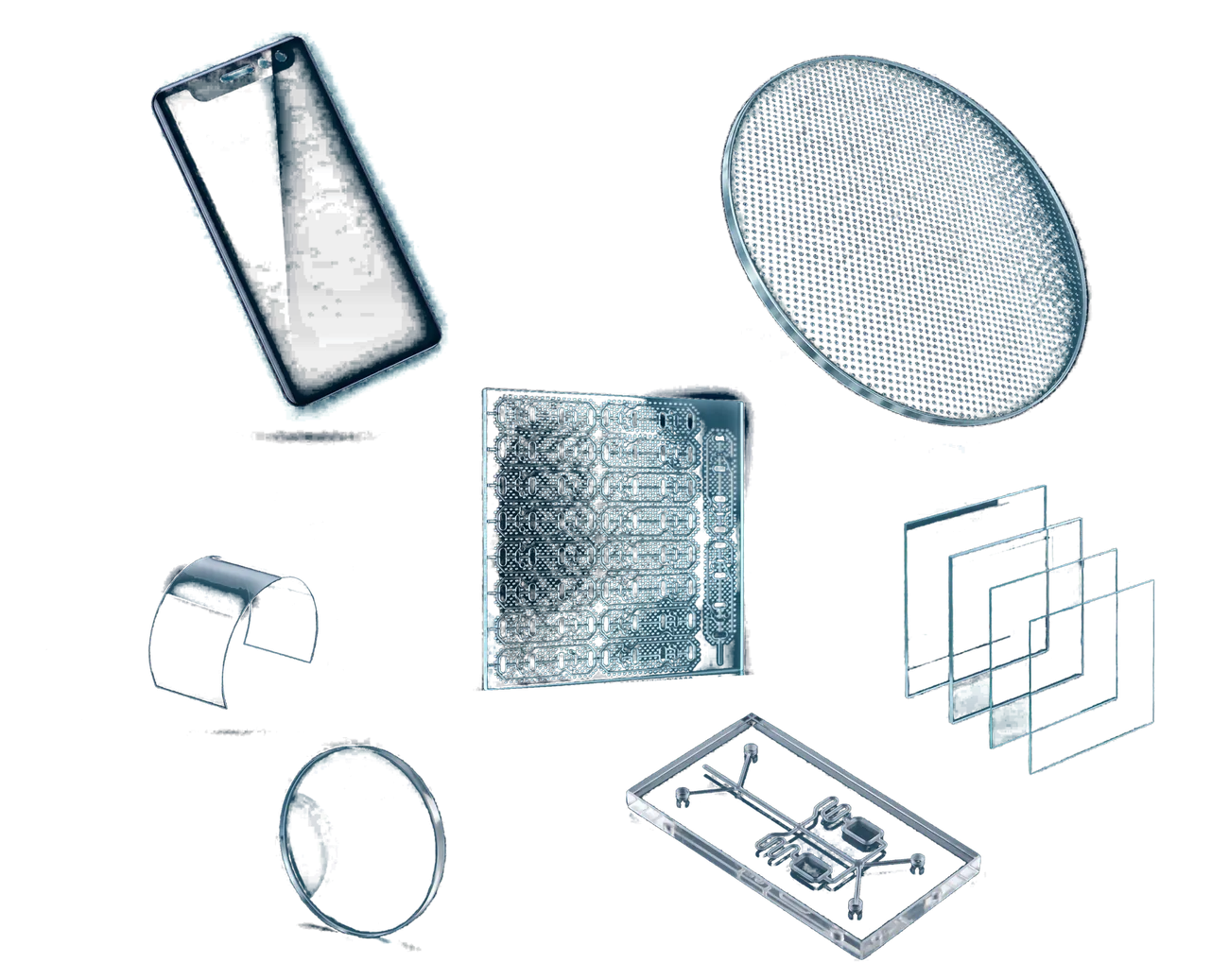
Where femtosecond processing works on glass, from consumer cover glass to optics, microfluidics and advanced packaging.
Smartphone and display cover glass
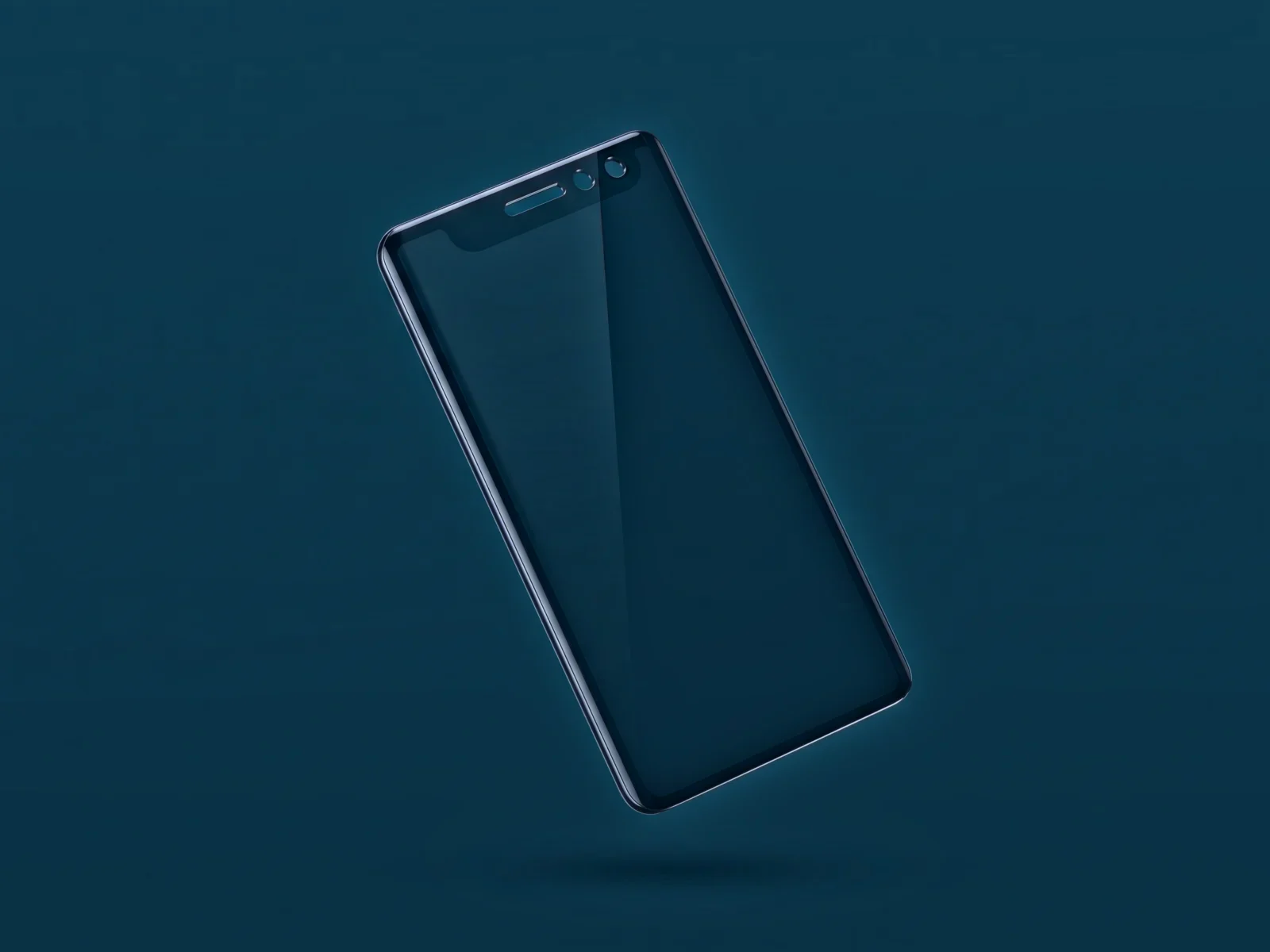
Cover glass needs free-form contours, rounded corners and camera openings. Mechanical scribing and edge grinding chip the glass and weaken the edge; a femtosecond beam modifies the full thickness along one line, so the part cleaves cleanly with minimal chipping.
Material
Aluminosilicate and soda-lime glass, strengthened or not
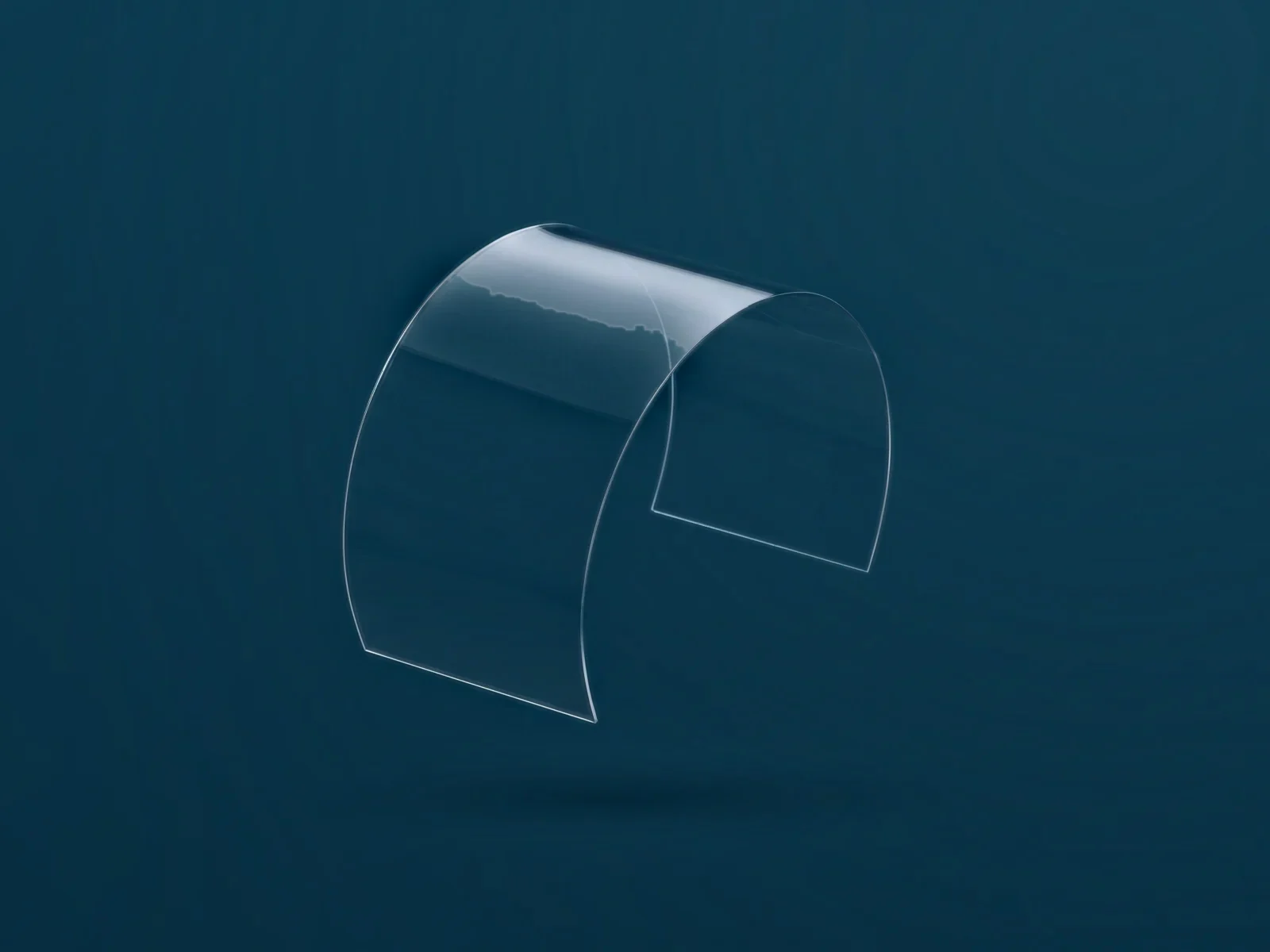
Foldable displays use glass thinner than a sheet of paper. A single crack left at the edge by a mechanical tool is enough to break it when it bends. Femtosecond cutting leaves an edge with minimal thermal damage, so the glass keeps its bending strength.
Material
Ultra-thin glass (UTG)
Typical thickness
30 – 100 µm
Replaces
Mechanical cutting followed by chemical edge treatment
Small holes in glass crack easily at the exit side, and mechanical drills wear fast and limit how small a hole can be. The laser removes glass layer by layer, from the bottom up for a clean exit; for very small holes, the glass is modified first and then etched open.
Glass is everywhere. Cutting it cleanly is the hard part.
Thinner glass, tighter contours and more holes per part leave less room for chipping and microcracks. Every defect at the edge is where a break starts.
Mechanical tools chip the edge
Scribing wheels, grinders and drills put force into a brittle material. They leave chipping and microcracks along the edge, and every crack lowers the bending strength of the finished part.
What the process needs
Clean edges with minimal chipping and heat-affected zone
Free-form contours, holes and channels in one tool
Micron-level accuracy on thin and large parts
Throughput that holds 24/7 on a production line
Absorb only at the focus
Glass is transparent to the laser, but at the focus the intensity is high enough for nonlinear absorption, so the pulse is absorbed only there. It cuts, drills or modifies the glass right there with minimal heating of the rest, and the edge keeps its strength.
Glass microchannels
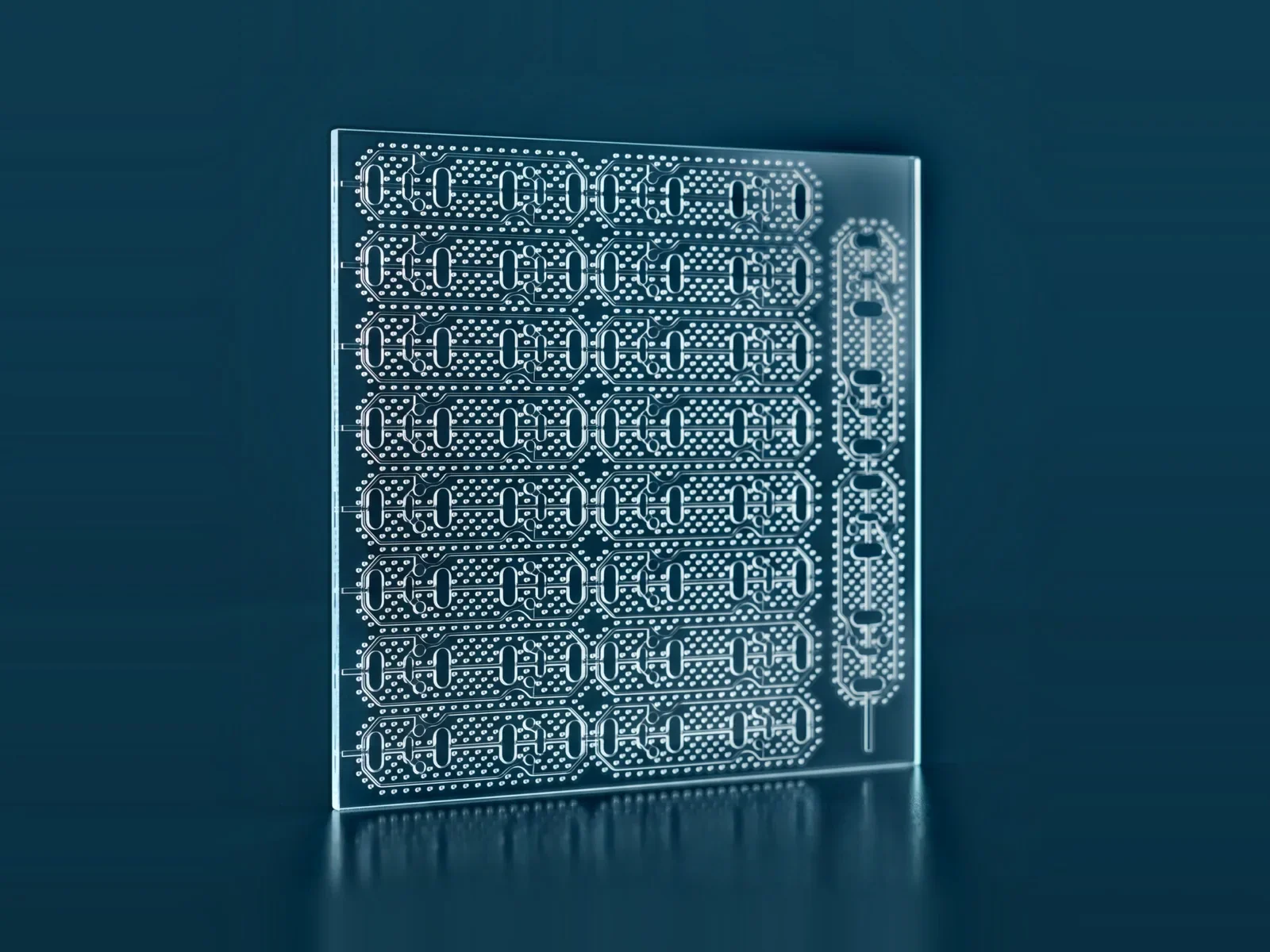
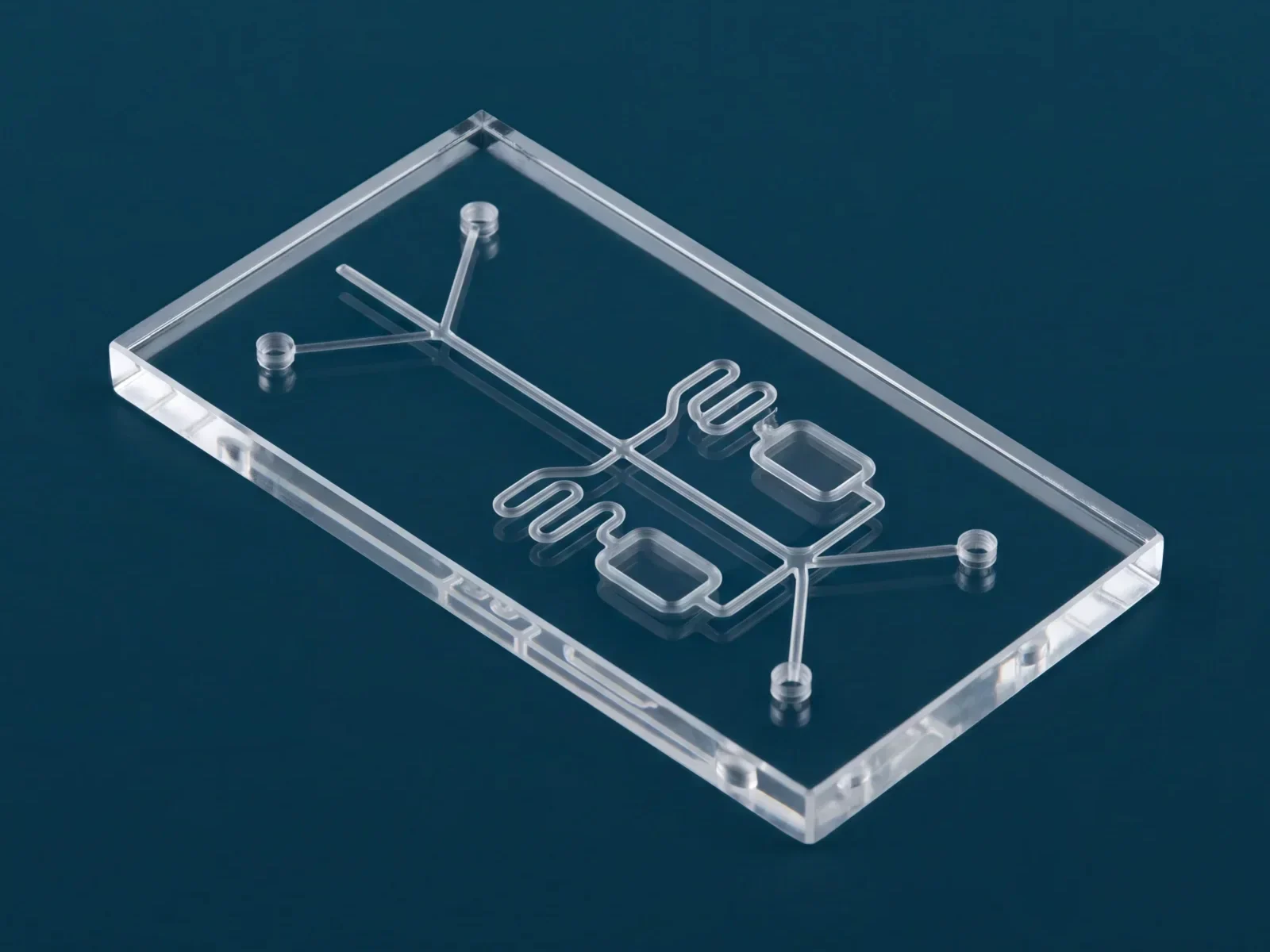
Microfluidic chips need channels sealed inside the glass. The laser modifies the channel path in 3D; a wet etch then removes the modified glass and leaves the channel, with the rest of the panel barely affected. Point-by-point writing needs far less pulse energy than a full-thickness line focus, so Indylit 10 is enough.
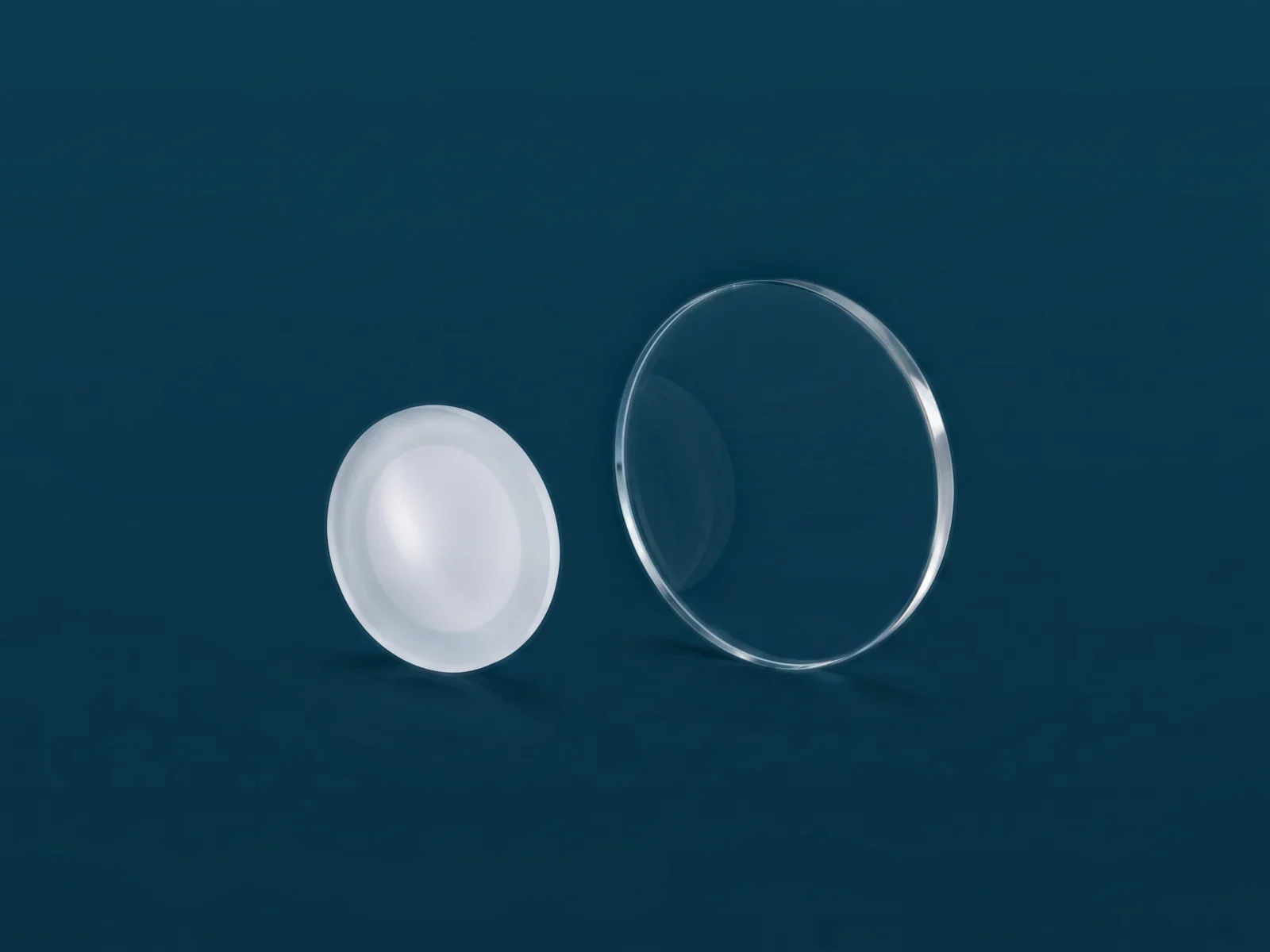
Lenses, windows and optical components should not carry a mark on the surface; a damaged edge scatters light. The laser cuts clean edges and writes codes inside the glass, below the surface, where they are protected from wear.
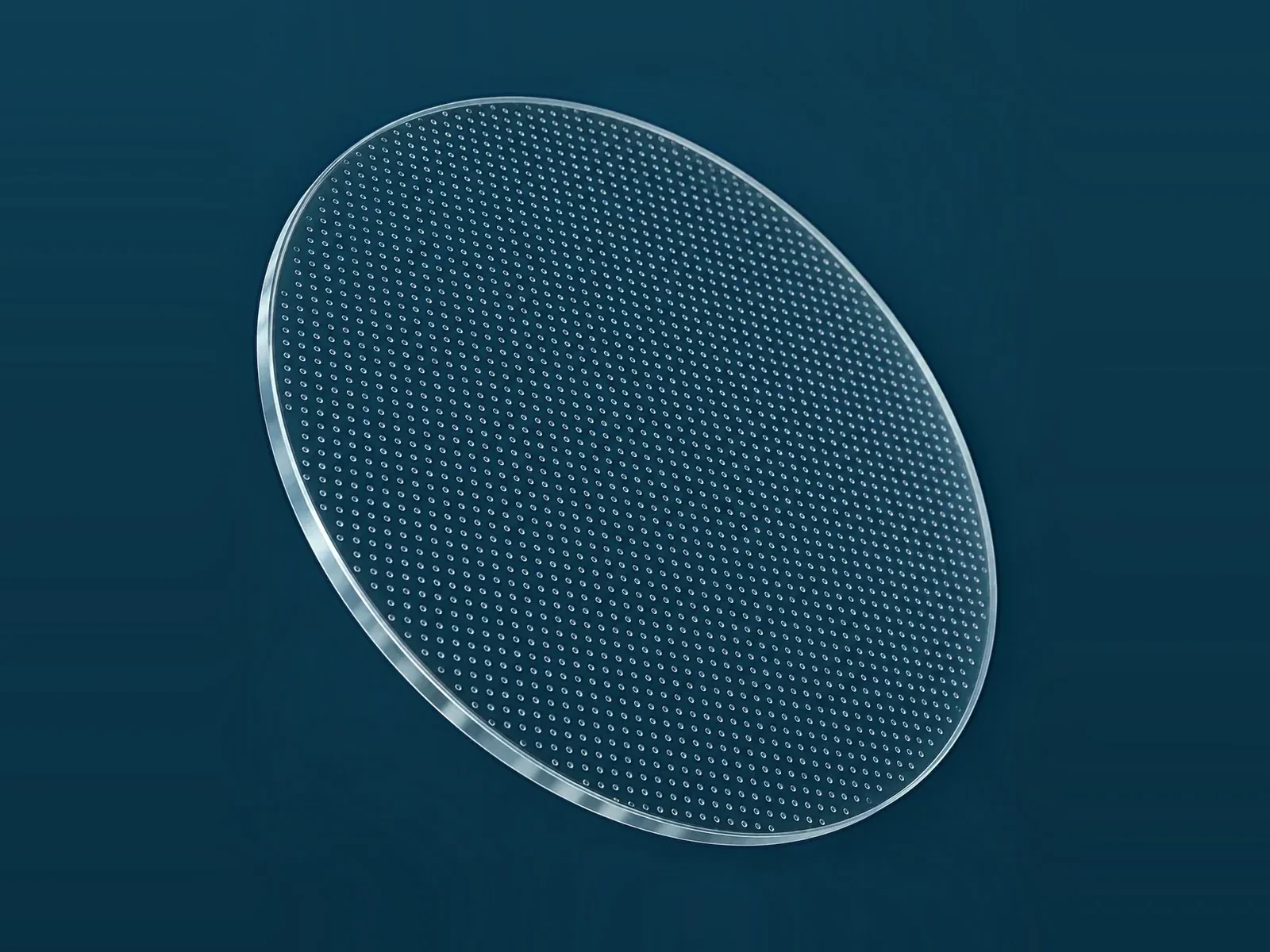
Glass core substrates for advanced packaging need millions of through-glass vias per panel. Each via is written through the glass as a modified line and then opened by a wet etch, so throughput scales with the laser's repetition rate and the number of laser heads.
A small head mounts directly on the motion system, close to the optics, so the machine stays compact.
Passive air cooling
No chiller and no water lines in the cleanroom. Fewer utilities to plan, fewer parts to service.
Simple integration
CAN and USB control, TTL pulse-picker triggering and an analog power input connect to the machine controller.
Scales to multi-head
Run several lasers side by side over one panel. Throughput grows with each head, not with a bigger laser.
Glass cutting and drilling methods compared.
Glass can be cut, drilled and structured in several ways. The method decides how strong the edge stays and how much finishing the part needs afterwards.
Mechanical scribe and break
Fast and cheap for straight cuts; chipping, limited contours, edge grinding needed
Mechanical and ultrasonic drilling
Exit-side chipping, tool wear, limited to larger holes
CO₂ laser cutting
Smooth for some glasses; heat-affected zone and stress, poor on thin glass
Nanosecond laser ablation
Flexible; microcracks, debris and tapered walls
Femtosecond cutting and drilling
Free-form contours and holes with clean edges and a minimal heat-affected zone
Femtosecond modification and wet etching
Vias, channels and cavities with straight, smooth walls
The laser for glass processing.
High pulse energy for thick glass and line foci, and short pulses for clean edges.
Glass is transparent to the laser, so energy is absorbed only where the beam is focused. A femtosecond pulse changes or removes the glass in that small volume before heat can spread. Moving the focus along the contour writes a line of modified glass, and the part separates along it with a clean edge.
Why is a laser-cut glass edge stronger?
Glass breaks where a crack starts, and most cracks start at chips and microcracks on the edge. Femtosecond processing leaves far fewer of these defects than a scribing wheel or grinder, so the edge often needs no grinding and the part keeps more of its bending strength.
Can ultra-thin glass be cut with a laser?
Yes. Ultra-thin glass for foldable displays is only a few tens of micrometres thick and breaks easily under a mechanical tool. A femtosecond laser cuts it without contact and with minimal edge damage, the kind that would start a crack when the display folds.
What is selective laser etching of glass?
The laser first modifies the glass along a path inside the material, without removing anything. A wet etch then dissolves the modified glass much faster than the rest. The method makes vias, channels and cavities with straight, smooth walls that are hard to reach any other way.
Which glass types can be processed?
Soda-lime, borosilicate, aluminosilicate and fused silica are all processed with femtosecond lasers, strengthened or not. Each glass reacts differently to the pulse, so pulse energy, duration and speed are set per glass and thickness.
Can the laser mark inside glass?
Yes. Focused below the surface, the pulse writes a mark inside the glass that is protected from wear and leaves the surface intact. It is used for codes and logos on optics, windows and medical glassware.
Which LITILIT laser fits glass processing?
Indylit 20 fits cutting thicker glass and writing vias, where high pulse energy and burst mode matter. Indylit 10 suits ultra-thin glass, microchannels, marking and other jobs that need less energy per pulse.
How does buying a laser work?
Tell us your material, process and volume. An application engineer reviews your request and suggests a laser and configuration. You then receive a quotation with pricing, lead time, payment and support terms.
Tell us your material, process and volume. Our application engineers suggest a laser and configuration, and we send a quotation with pricing, lead time and support terms.