
Buying for production?
Ask about lead times, volume pricing, supply capacity and long-term availability.
In January 2023 a Neolit laser rode through the Dakar Rally in a car door compartment, unprotected. After a crash it was working as it should.
Results
LITILIT wanted to assess the durability of its Neolit ultrashort pulse laser outside the lab. Racer Benediktas Vanagas had assumed that lasers are sensitive and fragile devices that need special conditions to work. The Dakar Rally offers constant shaking and jolting: more than 500 kilometres every day over dirt, rocks, sand and dunes.
The Neolit, a book-sized box, travelled in the driver’s storage compartment attached to the car door. It had not been specially protected. The test looked at:
Vanagas placed the laser in the compartment during the prologue stage. It stayed there until the car hit a rock, which ended the team’s race. The crew came back safe and sound. According to the team, it was the first time an ultrafast laser had been carried on the Dakar track.
According to LITILIT, the Neolit’s one-piece construction gives high stability and protection against vibration and temperature changes.
“Even though we had not specially protected the laser, it survived the journey and the accident and is working as it should. We found the laser to be extremely robust, reliable and resistant to external factors such as shock and impact.”
After the journey and the 19.8 g impact, the laser was working as it should. With this laser LITILIT was also a finalist in the SPIE Prism Awards 2022. Read the original announcement in our news.

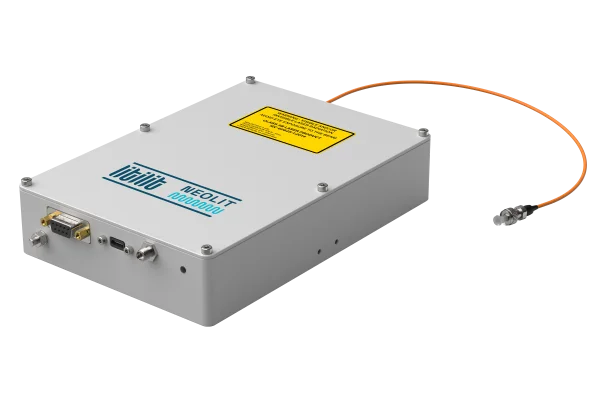
The laser used in this test. 1020–1070 nm, 1–10 ps pulses, 10–40 MHz.
Tell us about it. Our application engineers will suggest a laser and configuration for your process.
Tell us the material and the result you need. A laser engineer will get back to you.
Ask about lead times, volume pricing, supply capacity and long-term availability.